
 E-Paper



How Orans sustain women, livestock, and life in Rajasthan
This article is authored by Saloni Khandelwal, independent researcher, New Delhi.

 Prefer HTon Google


Imagine this: In the desert of Rajasthan, the day begins while it’s still dark. Women wake up first, with empty cans in their hands, to milk their cows and goats. The animals feed on the Orans, sacred groves that have been like a mother to these communities for generations.
These groves are more than just trees. They are the heartbeat of life here. When the Orans disappear, everything starts to fall apart. The women lose their small earnings, their animals go hungry, and families have no choice but to leave the villages their ancestors called home. What’s being lost isn’t just land or trees it’s an entire world of memories, dignity, and a bond with the earth that has kept them alive for centuries.
In Jaisalmer district, Bhadariya Oran, spread over 17,804.13 hectares, is the largest Oran in India. According to estimates, Rajasthan has over 6,00,000 hectares of Oran land, comprising nearly 25,000 Orans.
The Orans have traditionally been sources of fodder, fuel, timber, forest produce, roots, and medicinal herbs. They were considered symbols of prosperity for the communities that possessed them. Additionally, the Orans have played a significant role in promoting livestock-based economies and supporting the development of pastoral communities in Rajasthan.
In our state, sacred groves are not only important from cultural and spiritual perspectives, but are also extremely vital for the ecological balance of the region.
Think of the Orans as lush green islands in the middle of the desert sun. They aren't just trees; they're entire neighbourhoods for animals. Deer find shade here, birds like pelicans and lapwings build their nests, and even shy creatures like wild cats and jackals call these groves home. Sometimes, they become a welcome rest stop for birds traveling thousands of miles.
A 2020 report from the Indian Wildlife Institute highlighted the vulnerability of desert wildlife to high-tension electricity lines, underlining the fragility of these ecosystems.
And the magic of the Orans doesn't stop with the animals. Their roots hold the earth together, keeping the desert sands from spreading. Most importantly for the families living nearby, these groves are nature's own food bank. When the land outside is dry and brown, the Orans still provide greenery, making sure the goats and cows have something to eat. It's this quiet, daily gift that keeps life going for everyone people and creatures alike.
Beyond their environmental role, Rajasthan’s Orans form the economic and social foundation for rural areas, Rajasthan is the second largest livestock economy of India in which Western Rajasthan holds share, turning these landscapes into engines of autonomy and tradition. For countless families, the milk produced by livestock grazing in these groves represents the primary and often only independent income source for women. This revenue, earned from selling milk, ghee, and butter, directly fuels household needs, funds children's education, and provides a crucial measure of financial dignity.
They function as a natural desert pantry and pharmacy. Trees like the ber, amla, khejri, and sangri provide nutrient-rich fruits, pods, and seeds for daily meals. Their branches supply firewood for cooking, while the undergrowth offers medicinal herbs and plants for household remedies and rituals.
The erosion of these lands, therefore, strikes a double blow. It directly threatens milk production and the fragile economic independence of women. Simultaneously, it severs access to vital non-timber resources, depleting both nutrition and centuries of inherited knowledge on sustainable foraging and healing. In regions surrounding large groves like the Degaray Mata Oran, which sustains tens of thousands, this loss isn't an abstract ecological concern it is the way of life and the very basis of daily survival.
When this happens, it hits families hard in their wallets. With their main source of income gone, they are forced to leave the villages their families have always lived in. They move to faraway towns and cities, searching for any odd jobs they can find. In the end, a whole way of life starts to fall apart. A community that once thrived and took care of itself in the desert is being taken apart, piece by piece. Losing the Orans means more than losing trees it means losing everything that has held these people together for hundreds of years.
The pressures threatening the Orans are largely modern and external. High-tension electricity lines, solar energy projects, and corporate land acquisitions increasingly encroach upon these sacred spaces. In some areas, livestock risk injury or death from poorly planned infrastructure. While developers promise short-term employment or incentives, the long-term losses for entire communities are severe. Women, once independent earners, are often reduced to low-wage labour or domestic work in distant towns, severing the link between their labour and empowerment. Families lose both income and identity, creating cycles of vulnerability that are difficult to reverse.
The crisis of the Orans highlights a profound conflict between short-term economic development and long-term community resilience. Protecting these groves is not just an environmental imperative; it is a matter of social justice, women’s empowerment, and cultural survival. Community-led conservation efforts where villagers organise petitions, awareness campaigns, and rituals to protect the Orans offer hope, but they require support from policy and legal recognition. Without enforcing communal rights and regulating corporate encroachment, these efforts remain vulnerable.
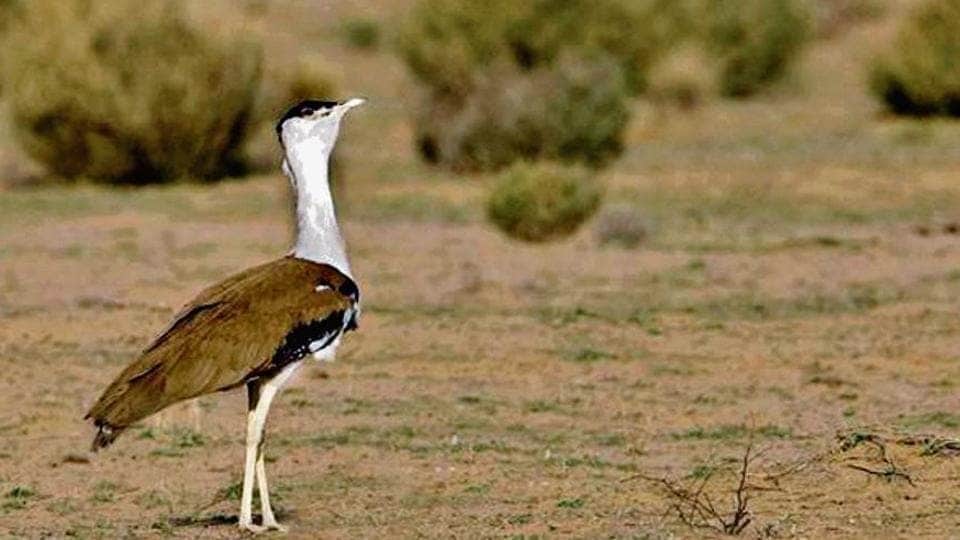
The ecological importance of the Orans extends to wildlife as well. Rajasthan’s arid zones host species that are rare or even unique to the region. The state bird, the Great Indian Bustard, once numbered in the thousands, now reduced at just 120–130 individuals due to habitat loss and collisions with high-tension power lines. Other avian species, such as pelicans, social lapwings, yellow-eyed pigeons, and even the melanic variant of Little Egret, rely on the Orans for feeding and nesting. Grazing lands and water reservoirs in these groves also support jackals, deer, wild cats, squirrels, monkeys, and reptiles. High-tension lines installed across the Orans by solar energy projects are causing catastrophic bird deaths; reports suggest that in some regions, 6.25 birds per kilometre die due to high-voltage wires. These infrastructure projects, intended to develop the desert, are erasing the very life that has long sustained both people and wildlife.
The loss of the Orans also exacerbates the environmental vulnerabilities of Rajasthan. As centuries-old trees are cleared and grasslands vanish, temperatures rise by an estimated 3–5 degrees annually, soil erosion accelerates, and desertification spreads further into human settlements. High-tension lines pose risks not only to wildlife but to camels and other livestock, which are critical for transport and livelihoods in these arid regions. A camel with a rider may reach 13 feet in height; with wires set at 20 feet, the narrow margin is enough to be fatal, creating risks for both animals and humans.
Government policies have, in many cases, worsened the problem. Much of Rajasthan’s Oran land, traditionally managed and protected by communities, was recorded as state-owned land after independence. This allowed companies to acquire leases for solar and infrastructure projects, often side-lining local custodians. The result is a paradox: Communities that have preserved the Orans for centuries are excluded from decision-making, while corporate and political interests exploit the land for profit.
The loss of the Orans is thus not a singular problem , it is a cascading crisis. Ecology, economy, and society are intertwined, and the disappearance of sacred groves threatens all three.
(The views expressed are personal)
This article is authored by Saloni Khandelwal, independent researcher, New Delhi.


