
 E-Paper



Policy reform can change India’s oil and gas exploration game
This article is authored by Aruna Sharma, practitioner development economist and retd secretary, GoI.

 Prefer HTon Google


India with largest populated state and young population need for fuel for transport and industries is a mandatory requirement. Fuel for transport though electric vehicles are encouraged but still a long way to go, dependence of petroleum and its products will continue to be requirement for transport and Industry. India has been importing its crude requirement and have high dependency, exploring possibilities on shore and off shore has been focus for few decades for India, but now to encourage investments in exploration will need a relook in the policies, introspect and work towards outcome-oriented approach and ring fencing the initial large expenses by the explorer.
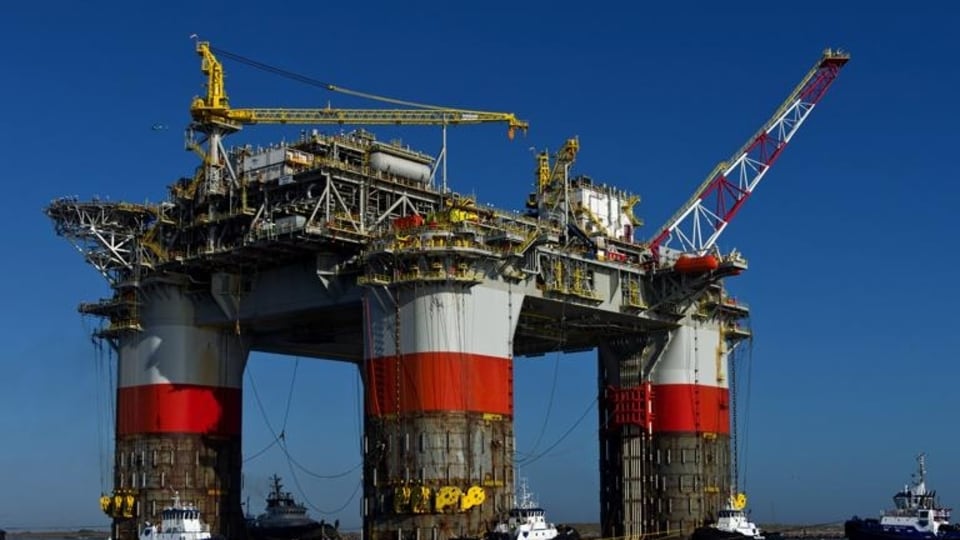
The Russia-Ukraine war and the Strait of Hormuz crisis have delivered a similar lesson for India as to constantly work to reduce dependence on imported crude. India imports 90% of its crude requirement, putting pressure on its import bill and leaving the country vulnerable to external shocks. This makes it crucial for the country to focus on increasing its domestic oil and gas production by opening its unexplored basins.
Of India’s 26 recognised sedimentary basins, roughly 75% to 90% remain unexplored, with vast hydrocarbon reserves. Unlocking this potential is critical to India’s energy self-reliance goal. This makes the recent approval of the Samudra Manthan – National Offshore Exploration Scheme a welcome step.
Under this scheme, the government has reduced maritime no-go zones from 13.67 lakh to just 24,832 square kilometres, opening 99% of India’s coastal waters. It further emphasises modern seismic data, common offshore infrastructure and local oilfield capabilities to expedite exploration and make it faster and more efficient. The concern, however, is the proposal to reimburse up to 50% of drilling costs, capped at ₹675 crore per well, for 60 deepwater exploration wells. While it may provide some relief to investors by reducing the upfront cost, it is not lucrative enough to attract investment from global players.
Oil and gas exploration is a risky sector. Investors pump millions and billions of dollars into investments and spend years developing wells before expecting any return. Even if a well starts producing, it is not certain that the resources discovered will justify the expenditure. The cost and risk are doubled in the case of deepwater and ultra-deepwater exploration. For a country like ours, which does not have indigenous technologies or capabilities for deepwater exploration comparable to countries that have spent decades exploring regions such as the North Sea and the Gulf of Mexico, relying on foreign investment is the only choice. And with so much policy uncertainty and high-risk factors, India needs to offer investors a more predictable and commercially viable policy environment.
The lack of investor confidence is already evident in India’s recent bidding rounds. The Open Acreage Licensing Policy (OALP) bid round-X, covering 25 blocks, was launched last year. The bidding deadline for deepwater and ultra-deepwater oil and gas has now been extended to September 17, 2026, following a subdued response from private players. The question is whether the latest government intervention will change investor sentiment or private participation will continue to remain low.
India has already experimented with the previous policy. The move from NELP’s production-sharing model to HELP’s revenue-sharing framework in 2017 marked a significant shift in India’s approach to oil and gas exploration. It was done with the intent to simplify the process. Yet, international players account for less than 10% of India’s oil and gas production.
Considering previous attempts, the recent proposal to reimburse part of the money spent on exploration wells therefore needs a thorough review. While such support can reduce some of the exploration expenditure in the event of an unsuccessful or high-cost exploration attempt, it does not fully address the overall financial risk involved. Also, the cap of 60 deepwater exploration wells is ambiguous.
The regime needs to be reformed in a way that ensures certainty, transparency, and equitable risk-sharing. Samudra Manthan’s success will ultimately depend on whether it can make India’s deepwater and ultra-deepwater oil and gas basins more attractive, predictable and commercially viable for investors.
India’s problem is may not emerge as a lack of resource. It has the basins; what it needs is a competitive policy reforms in the oil and gas sector to expedite exploration and production and reduce dependence on imports.
(The views expressed are personal)
This article is authored by Aruna Sharma, practitioner development economist and retd secretary, GoI.


