
 E-Paper



Making the India-EU FTA work for green manufacturing
India’s concluded EU trade agreement could boost exports of textiles, footwear, chemicals and metals by lowering tariffs.

 Prefer HTon Google


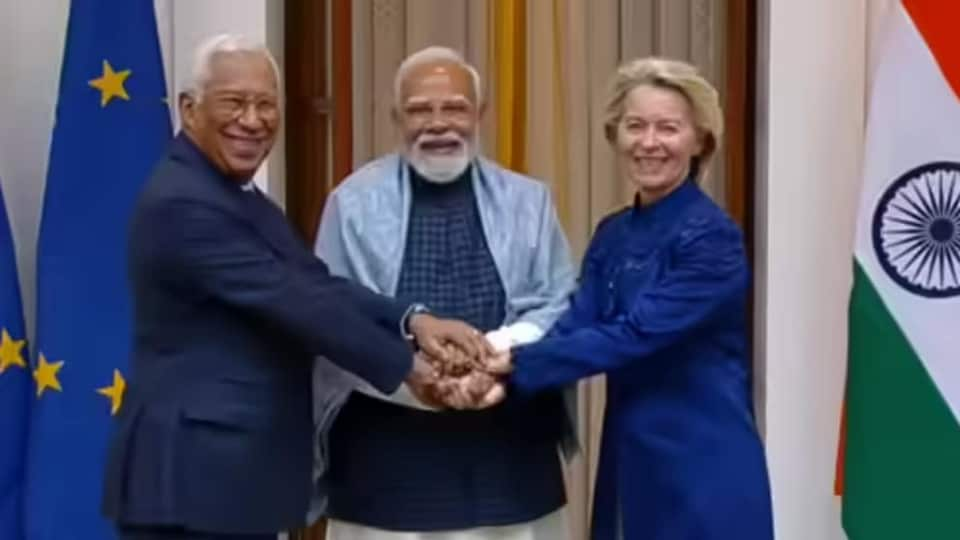
India and the European Union (EU) concluded negotiations on their free trade agreement (FTA) on January 27, 2026. However, the agreement is yet to enter into force. On the EU side, it must pass through an elaborate approval process involving the Council of the EU and the European Parliament. India must also complete its domestic approval processes. All this could take several months. The intervening period presents an opportunity for the Indian government and industry to prepare so that India can take full advantage of the agreement.
The FTA will reduce or eliminate tariffs on a wide range of Indian products, potentially giving them an advantage over exporters from countries without comparable agreements, including China. The advantages could be substantial in some sectors. EU import duties of up to 12% on textiles and clothing and 17% on leather and footwear will be eliminated for qualifying Indian products when the agreement enters into force. Tariffs on many chemicals, plastics, rubber products and base metals will also be eliminated, either immediately or in phases.
Some clean-technology equipment will also benefit, although the tariff advantages will be small. EU import duties of 2.7% on wind-powered generating sets and lithium-ion batteries will fall to zero for qualifying Indian products. Solar modules, however, already attract zero duty, so the FTA will provide no additional tariff advantage for them.
There could be another advantage. Although EU regulations generally apply irrespective of the country of origin, Chinese manufacturers may face greater scrutiny, particularly because of concerns about government subsidies and their effects on competition. For example, the EU's Foreign Subsidies Regulation has already affected Chinese clean-technology companies. In February 2026, the European Commission opened an in-depth investigation into Chinese wind turbine manufacturer Goldwind.
Notwithstanding these advantages, Indian manufacturers seeking to expand exports to the EU will have to comply with applicable regulations concerning product quality, safety, environmental safeguards, energy and resource efficiency, recyclability, waste management, traceability, and certification. These requirements vary across products and are becoming increasingly stringent.
Particularly important for carbon-intensive industries is the EU's Carbon Border Adjustment Mechanism (CBAM). CBAM places a carbon price on the greenhouse gas emissions embedded in imports of specified iron and steel, aluminium, cement, fertilisers, electricity and hydrogen products. EU importers must surrender CBAM certificates corresponding to emissions embedded in covered goods imported from January 1, 2026 onward, with the first surrender due on September 30, 2027. The resulting costs could partially or fully offset, or even exceed, the gains from tariff concessions.
CBAM is of special significance to India because steel and aluminium already account for approximately 6% of its merchandise exports to the EU. These sectors also have considerable potential for further export growth. Moreover, under its Green Hydrogen Mission, India has ambitious plans to become a major exporter of green hydrogen.
Although the FTA does not exempt Indian exports from CBAM, its Annex 14-A provides for a technical dialogue between India and the EU on important aspects of carbon border adjustment measures. These include emissions monitoring and verification, default emissions values, and recognition of carbon prices paid in India. India will also receive treatment no less favorable than other countries on flexibilities in implementing carbon border adjustment measures. It also provides for technical assistance, capacity building and wider support, including financial resources, for India's emissions-reduction efforts. These provisions are welcome, but their practical value will depend on what the dialogue and cooperation deliver.
A challenge for Indian manufacturers is developing the systems needed to demonstrate compliance with a complex set of EU regulations. This would require measurement, reporting, verification, testing and certification, which can be expensive to establish and undertake. The burden could be disproportionately heavy for micro, small and medium enterprises (MSMEs). Without adequate support, smaller manufacturers may find it difficult to take advantage of the FTA provisions and the opportunities arising from the EU's efforts to diversify supply chains and reduce dependence on China. The government, industry associations and export promotion agencies could help manufacturers, particularly MSMEs, demonstrate compliance with EU regulations by facilitating access to affordable testing, certification and verification services. India's domestic Carbon Credit Trading Scheme should also be implemented credibly to strengthen the case for recognising carbon prices paid in India under CBAM.
Circularity is another opportunity. Recycling and resource recovery reduce dependence on virgin materials and can lower manufacturing emissions. However, international buyers will need confidence in material quality, recycled content and traceability. India's recycling ecosystem remains fragmented and relatively underdeveloped, with significant weaknesses in collection, segregation, processing and quality assurance. Circularity must be treated as an industrial strategy rather than a peripheral environmental objective.
Beyond the opportunities and challenges arising from the FTA, decarbonization of Indian manufacturing remains an overarching priority. Green electricity alone would not be enough for deep decarbonisation of hard-to-abate industries such as steel, fertilisers and cement. Green hydrogen and its derivatives could play an important role in decarbonising some such industries. In this regard, the prices of green hydrogen and ammonia discovered in various tenders show promise. Decarbonising Indian manufacturing would require strong public policy support and substantial investments in green infrastructure and technologies. The FTA provides an opportunity to accelerate this transformation.
(The views expressed are personal)
This article is authored by Indu Shekhar Chaturvedi, former secretary, ministry of new & renewable energy, and Jaisal Sarma, public policy professional, MSL.


