
 E-Paper



Exclusive | Muzaffar Ali recalls casting a 25-yr-old Nana Patekar in Gaman, his acting debut: He wasn't manufactured for Bollywood
Veteran filmmaker Muzaffar Ali recalls his memories of working with late actor Nana Patekar, and knowing him for 50 years.

 Prefer HTon Google


Nana Patekar was all of 25 when filmmaker Muzaffar Ali spotted him for the first time at a stage play. Hewent on to cast Nana in Gaman, his debut as an actor, and the rest is history. Today, as we mourn the loss the actor, Muzaffar goes down memory lane to recall his first encounter with Nana.
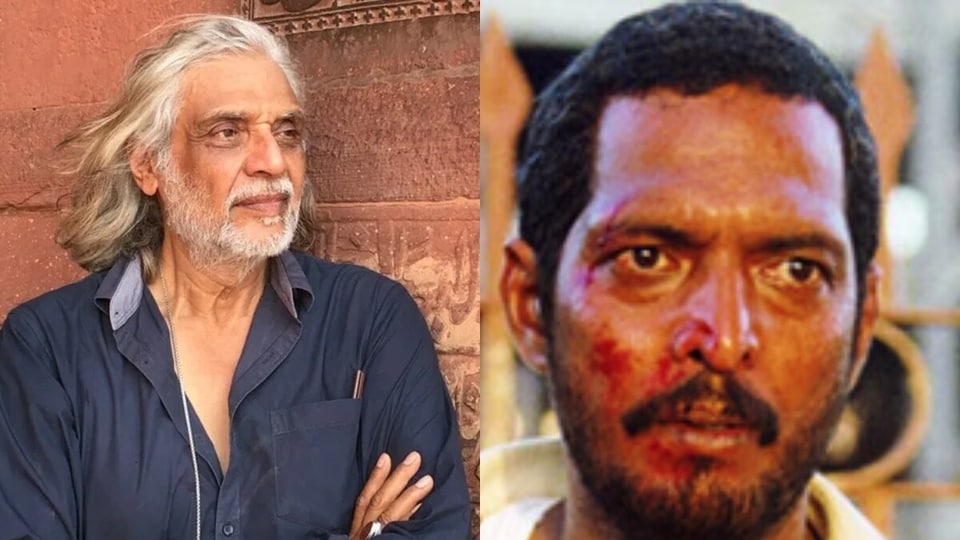
“It was in 1976, when I was casting for Gaman, that I saw a Marathi version of The Threepenny Opera in Dadar. I was mesmerised by the nimble, sharp performance of a young twenty-five-year-old actor. He was like a Kalari sword—swift, precise and dangerous—in his words as much as in his body language. From that day, Nana Patekar became vital to my life," Muzaffar tells HT City in an exclusive chat.
Muzaffar further recalls how Patekar stood out to him amid the emerging pool of Marathi talent that he encountered during the making of the film, “He was a phenomenon beyond the cliched metaphors of Bollywood. A parallel world of extraordinary Marathi talent was emerging from the soil of Maharashtra, and I was keen to absorb that energy into Gaman. Nana was one of the young forces I discovered there.”
Their association went beyond the film, with Nana also contributing to the visual and publicity aspects of Ali’s work, Muzaffar recalls.
“Nana was far more than a talent I could consume within the limited frame of a single 35mm production. He was also a graphic designer, and he took care of my stickers, publicity material and outdoor media. Our association therefore moved naturally between cinema, theatre, design and life," shares the 81-year-old.
Ali also remembers the playful equation they shared, including moments when they appeared together on stage.
“Very often, we would be called together on stage. Nana would say, with that characteristic mixture of mischief and affection, that I owed him five thousand rupees—and that even if I returned it ten times over, he would never accept it.”
For Ali, Patekar’s roots in theatre and Maharashtra were central to what made him such a distinctive performer.
He says, “There was something wonderfully irreverent about him. He was not manufactured for Bollywood. He arrived from another tradition—from the theatre, from Maharashtra, from a culture of performance where the actor had to command the stage before he could command the camera. Like Smita Patil, he represented a new face of Indian cinema emerging from Maharashtrian soil. He carried with him the raw intelligence of theatre and the instinctive immediacy of the street. He did not merely act a role; he occupied it. His words had an edge, his silences had weight, and his body seemed to speak even when he was still.”
For Ali, however, Nana’s significance ultimately extended beyond his work as an actor.
“For me, Nana remains more than an actor I encountered while making Gaman. He became part of a journey in which theatre, cinema, design and friendship constantly crossed paths. He leaves behind a vacuum that is difficult to fill. A debt we can never repay.”


