
 E-Paper



What’s Lakshmi-maxxing and why are Indians calling it out?
The newest global wellness trend turns Goddess Lakshmi’s imagery into a blueprint for beauty, femininity and abundance.

 Prefer HTon Google


The term ‘maxxing’ essentially means going all-in on improving or optimising a particular aspect of life. Lakshmi-maxxing applies that idea to femininity, beauty, aura, abundance and prosperity, drawing inspiration from the imagery and symbolism associated with Hindu goddess Lakshmi.
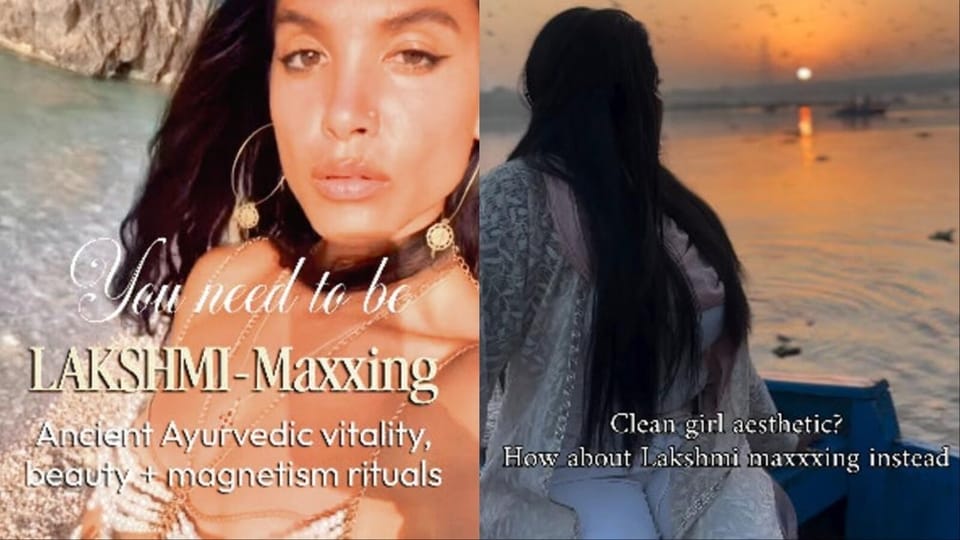
The trend is seen as a more spiritual take on wellness. Instead of focusing on supplements, fitness trackers or productivity hacks, it is being described as a trend centred on rituals, femininity, self-care, beauty and attracting abundance.
How ‘Lakshmi-maxxing’ took off
The trend was reportedly popularised on TikTok by Ayurvedic practitioner Lisa Power. She began sharing ‘Lakshmi-maxxing’ videos in July. One of her Instagram videos, posted in late July, has garnered 72.1K views. In the caption, she wrote, “Everything that is lush, fertile, radiant, harmonious and deeply nourishing belongs to Lakshmi,” and spoke about bringing Lakshmi into one’s consciousness and spiritual practice.
Her suggestions included waking up during Brahma Muhurta, practising daily abhyanga (self-massage), treating pleasure as a ritual and drinking warm water from a copper vessel after waking up, among other wellness practices. Since then, several creators have picked up the concept, interpreting ‘Lakshmi energy’ through everything from clothing and beauty routines to self-care and lifestyle choices.
Indians push back
The conversation online reflected a frustration over how Indian cultural elements are often repackaged for global audiences, from Prada’s Kolhapuri-inspired sandals to IKEA’s chrome plates that resemble traditional Indian thalis.
Content creator-writer Jasdeep Kaur said in a video on Insta that it reduces “Goddess Lakshmi to its gemstone gender roles propaganda”.
Creator @lozucam said, “Stop maxxing Indian culture and start crediting it.”
Meanwhile, one user commented on Insta, “It’s the new India gen and gene babe, no one got the right to take what’s ours,” while another simply wrote, ”This is seriously offensive.”


