E-Paper



A strong El Nino is inevitable — history shows its effects will hit hardest in 2027
WMO said El Nino will likely peak towards year-end, with rainfall and temperature disruptions expected to continue well into 2027.

 Prefer HTon Google


El Niño is back, and it is going to be a big one. The World Meteorological Organization (WMO) said on Thursday that the Pacific climate pattern has firmly set in, will strengthen into a "very strong" event by the end of 2026, and has a near-100% chance of lasting through February 2027. WMO said its language on the event was the most emphatic in the 50-year history of its updates, and the climate ripple effects will run into 2027.

For India, the immediate hit may be modest, but trouble will likely follow over a more longer term – at least until next spring.
Mahesh Palawat, vice-president at Skymet, said the withdrawing monsoon will probably escape the worst of it, but the months ahead will not. "It can alter rainfall distribution and raise temperatures. Its immediate impact on the withdrawing southwest monsoon may be limited, but it could influence the northeast monsoon and increase the possibility of a warmer-than-normal winter," he told HT.
“If El Niño persists into early 2027, India may face an enhanced risk of an unusually warm pre-monsoon season and heatwaves. However, El Niño alone does not determine India's weather; the Indian Ocean Dipole, snow cover, local sea temperatures and other atmospheric factors will also shape the eventual impact.”
Anjal Prakash, an IPCC author and professor of public policy at FLAME University, called the WMO warning "a red flag for India." "With August already 16% rain-deficient and September forecast below-normal, the event threatens kharif yields, water security and rural incomes, while pushing temperatures to record highs. For policymakers, this is also a macro-economic and food-security risk. We need immediate drought-proofing in vulnerable districts, flexible crop advisories, and pre-positioned relief," he told HT, referring to rain data for the just concluded month.
The Indian record over the last six decades bears out both the caution and the caveat, according to analyses accessed by HT. Every drought India has suffered in the last three and a half decades has come in an El Niño year, according to a 2014 working paper by economists at the Indian Council for Research on International Economic Relations (ICRIER). But, the paper stated, only about 11 of 23 El Niño years since the 1950s have actually produced Indian droughts. Balaji Rajagopalan of the University of Colorado Boulder, whose 1999 paper in the journal Science remains a standard reference on the link, put it simply: Indian droughts “have all coincided with El Niño, but not all El Niños have produced droughts.”
The single biggest reason for that gap is the IOD Palawat pointed to — and the last two very strong El Niños show it clearly.
Also read: As super El Nino strengthens, study suggests that climate change is intensifying El Ninos
Why the strongest El Niño of the century failed to dry India out
The two most recent very strong events show how differently the same pattern can play out. In 1997, the standard Pacific temperature gauge — the Niño 3.4 index — peaked at about +2.3°C, the highest reading of the 20th century, per NOAA. In 2015, it climbed higher, to about +2.6°C. And yet the 1997 monsoon came in near normal. The 2015 monsoon collapsed to 86% of the long-term average — the worst deficit in six years. In Marathwada, Maharashtra, the numbers were catastrophic: the region ended the season 40% short, saw just 28 mm of rain in July against a normal near 200 mm, and its kharif pulses crop was cut by more than half, according to a Current Science paper.
The 2015 damage was also compounded by 2014, itself a deficient monsoon at 88% of the long-period average — the first back-to-back deficient years in decades, meaning soils and reservoirs were already stretched thin when the second failure arrived.
What separated 2015 and 1997 the two years was the Indian Ocean Dipole (IOD) — the phenomenon Palawat flagged. Think of it as a see-saw of sea-surface temperatures across the Indian Ocean: warm in the west, cool in the east marks a "positive" phase, and that phase channels more moisture into India. In 1997, the positive IOD was the strongest of the 20th century, first documented in a 1999 Nature paper. In 2015, it was neutral to negative. Later work by experts at the Indian Institute of Tropical Meteorology (IITM), Pune, showed a strong positive IOD can dampen, or even entirely cancel out, the El Niño signal over India.
WMO's outlook for September–November 2026 does forecast a positive IOD, with a seasonal average of +0.9°C. That is India's best natural cushion against a Pacific El Niño. But it is also no guarantee.
The heatwaves may be inevitable
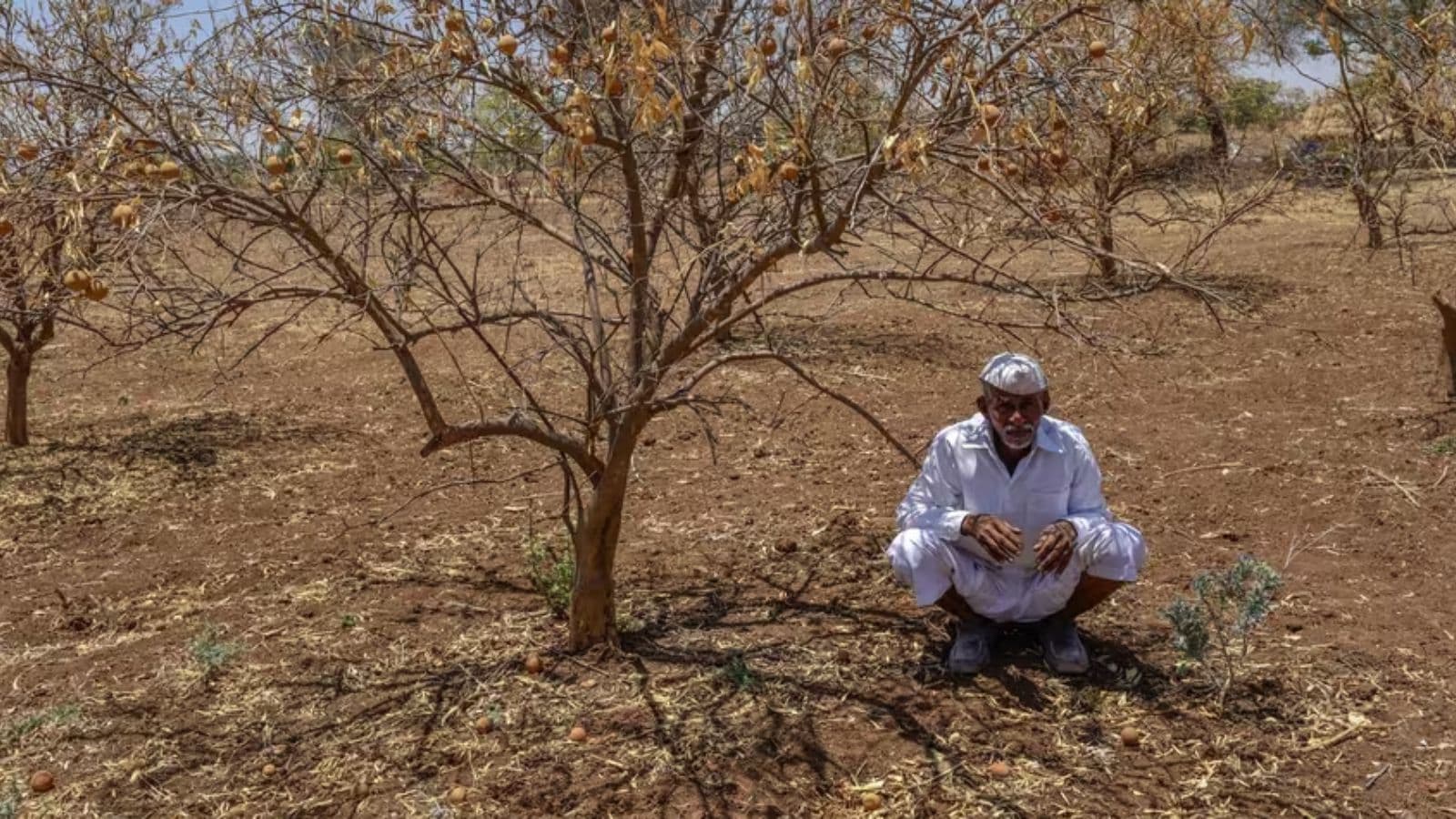
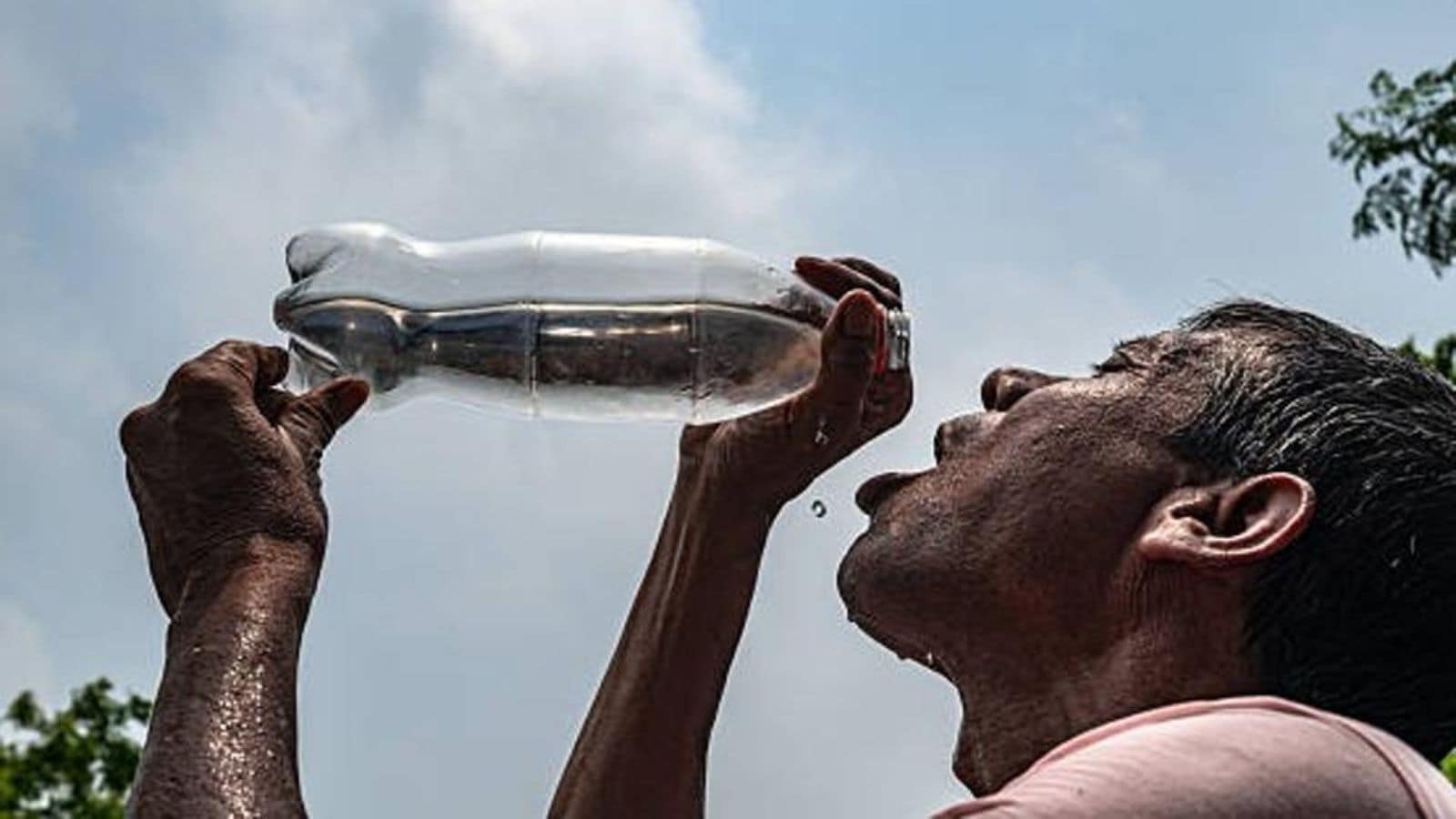
A 2024 study in the journal Global and Planetary Change found that heatwave days rise sharply over India during the 'decaying phase' of strong El Niños — the year after the event peaks. In 1998, the year after the 20th century's strongest El Niño, the country recorded what remains its deadliest heatwave. Dholpur in Rajasthan touched 49.5°C, the highest reading in 42 years at the time; the National Disaster Management Authority later estimated 3,058 deaths, most in Odisha. In May 2016, following the 2015 event, Phalodi in Rajasthan hit 51.0°C — the highest temperature ever recorded in India, breaking a mark set in Alwar in 1956.
In 2010, after a moderate 2009 El Niño that had already delivered the third-worst monsoon since 1901, India logged its hottest year on record to that point. The Ahmedabad heatwave that year killed an estimated 1,274 people and pushed India to draw up its first Heat Action Plan. In 2024, after the 2023 El Niño, Churu clocked 50.5°C, Odisha's April heat spell was its longest since 2016, and IMD declared the year the warmest since 1901.
Also read: El Niño to amplify in coming months, likelihood of extreme weather events: WMO
Why do these heatwaves occur?
The paper found heatwave days rise sharply over south-central and northwest India in particular, driven by a high-pressure system that stretches from the Western North Pacific to the Bay of Bengal, choking off cloud cover and drying the lower atmosphere.
Earlier work by experts at IIT Gandhinagar, published in Meteorological Applications in 2016, showed El Niño weakens the moisture-carrying south-westerlies over the Arabian Sea, producing "persistent warmer days during the pre-monsoon" and pushing back the arrival of the monsoon. The Indian Ocean itself warms in the wake of a Pacific El Niño, but with a three-to-four month delay — and the following spring inherits that heat.
The rabi problem, and why the 2027 wheat crop matters
For years, a good winter crop has bailed India out of a bad monsoon. In 2009-10, the monsoon failed but winter rains held, and agricultural GDP still grew 1.9% — against a 7% fall (roughly $8 billion) after the 2002 event. Foodgrain output hit a record 357.73 million tonnes in 2024-25, per the agriculture ministry.
That safety net works only when winter runs cold and spring warms up slowly. India's winters are getting warmer. A Climate Trends analysis found February in northern India is warming faster than any other month — at about 0.69°C a decade — with March and April close behind.
In 2021-22, when March and April ran 2–3°C above normal, wheat yields dropped by 2–3 quintals per acre, and India banned wheat exports in May 2022. A 2008 estimate by agricultural scientist P.K. Aggarwal — that each 1°C of warming puts 4–5 million tonnes of wheat at risk in the Indo-Gangetic Plains — still holds. A warm El Niño winter cuts short the wheat plant's grain-filling window and exposes the crop to punishing March–April heat. That was the story in 2015-16, and again in 2023-24.
Also read: India braces for harsher summer, weaker monsoon as El Niño grips equatorial Pacific
Three factors to watch for 2026-27
The IOD. If it strengthens into 2019 territory — when a record positive IOD helped push the monsoon to 110% of normal despite a dry start — the damage will be softened. If it fades as it did in 2015, the deficit could be brutal.
The winter. A February that runs more than a degree above normal across the wheat belt would put the 2027 rabi crop at real risk of terminal heat damage.
The decay-year spring. Every very strong El Niño since 1997 has been followed by a record-breaking heatwave — Dholpur in 1998, Ahmedabad in 2010, Phalodi in 2016, Churu in 2024.
WMO Secretary-General Celeste Saulo said on Thursday the event demanded "exceptional preparation and response." For India, that reads as a to-do list: heat action plans in cities, wheat contingency stocks in the food ministry, judgment calls on rice and onion export bans, and reservoir management in the drier states. Most of it needs to be in place well before June.