E-Paper



El Niño to amplify in coming months, likelihood of extreme weather events: WMO
In India, a strong El Niño negatively impacts the monsoon season, while also contributing towards extreme weather events

 Prefer HTon Google


El Nino conditions in the tropical Pacific are forecast to strengthen rapidly into a strong event between July and September, the World Meteorological Organization (WMO) said on Friday, raising the likelihood of heatwaves, droughts and heavy rainfall across large parts of the world.
The WMO’s Global Seasonal Climate Update said multi-model ensemble forecasts from leading global producing centres show consistent, significant warming of ocean temperatures across the central and eastern equatorial Pacific, with seasonal-average sea-surface temperature anomalies expected to exceed 2°C in key monitoring regions.
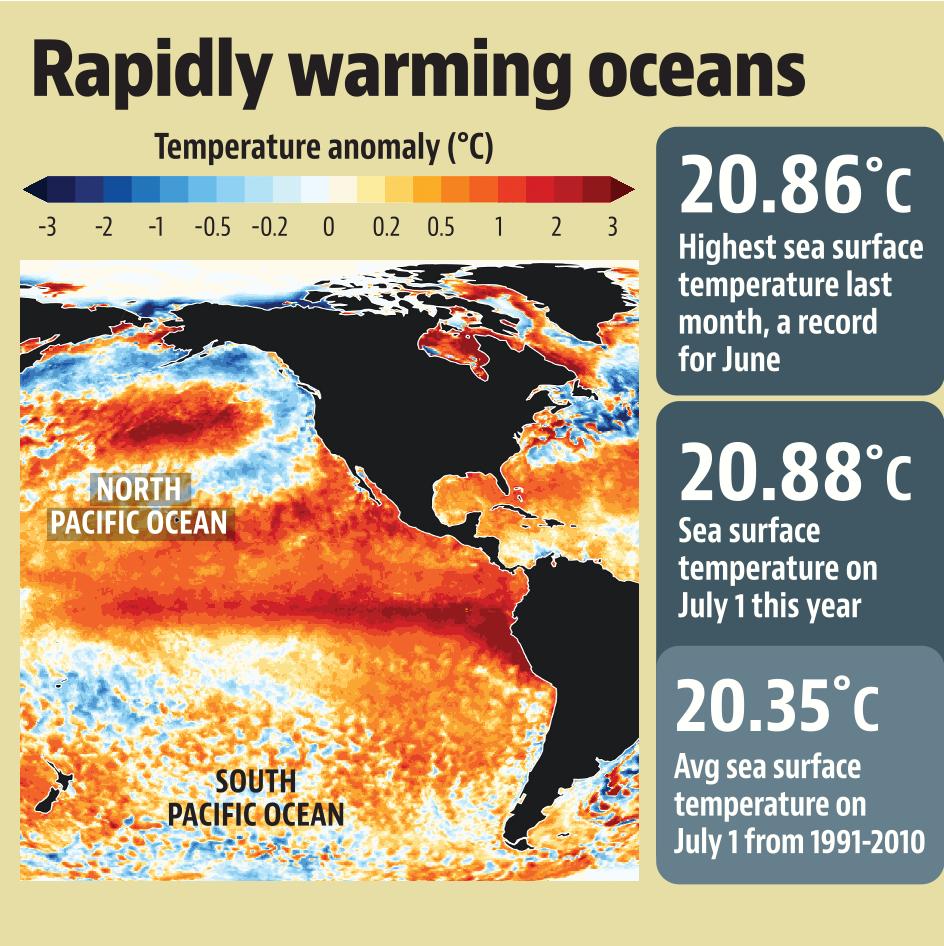
El Nino is a naturally occurring climate pattern marked by above-average sea-surface temperatures in this region; it typically develops between March and June, peaks between November and February, and exerts its strongest influence on global temperatures the year following its onset. Events usually occur every two to seven years and last nine to twelve months.
Also Read | Earth’s climate more out of balance than at any time in observed history: WMO
In India, it is linked to a weaker monsoon. Officials at the India Meteorological Department (IMD) said the warning changes nothing — the strengthening was already built into its monsoon forecast weeks ago.
“El Nino conditions are already underway and are forecast to strengthen rapidly into a strong event… This will intensify the chances of drought and heavy rainfall and the risk of heatwaves on land and marine heatwaves in many regions of the world,” said WMO Secretary-General Celeste Saulo.
She added that the WMO community had “launched an unprecedented mobilisation to coordinate activities across the United Nations and at regional level to support governments, humanitarian organizations and climate-sensitive sectors,” calling advanced seasonal forecasts and early warnings vital to saving lives and cushioning economic impact.
IMD confirmed on June 12 that El Nino conditions had emerged over the equatorial Pacific and would impact the rainy season negatively, noting also that the Indian Ocean Dipole was neutral — a state that typically cannot counteract El Nino’s suppressive effect on monsoon rainfall, unlike a positive IOD, which can partially offset it by warming the western Indian Ocean and feeding monsoon moisture. That confirmation came as India recorded a 40% monsoon deficit in June — the fifth-driest June since 1901 — with July now forecast at 94% of the long-period average, and the full season projected at 90% of LPA.
Asked whether WMO’s strong-event forecast alters this outlook, IMD said it does not. “IMD’s forecasts account for El Niño and it gradually strengthening. Typically, it peaks by the end of the year, by which time the monsoon rains are long over. We are also expecting some good rains across the country till July 15, so there is no immediate impact or change in our earlier forecasts,” said OP Sreejith, scientist and head of the climate monitoring and prediction group at IMD.
WMO said the forecast models show remarkable agreement and high confidence in the outlook, with El Niño expected to continue strengthening through the Northern Hemisphere autumn and its influence extending across many regions globally. The equatorial Atlantic basin is expected to remain generally warmer than average.
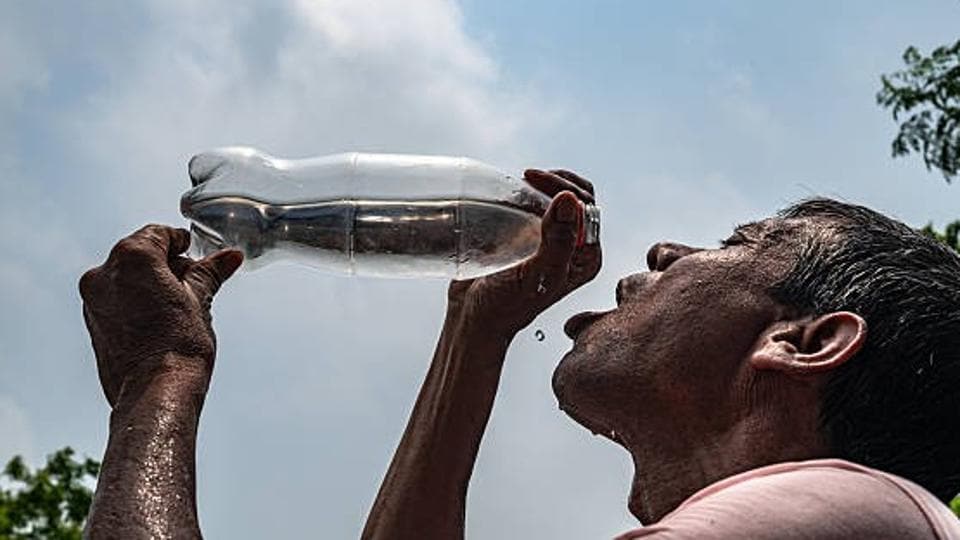
The risk WMO describes is playing out at the FIFA World Cup 2026, where heat has affected several hundred thousand people across host cities, with a major heat dome forecast over the East Coast of North America ahead of the July 4 weekend, when several stadiums are due to host matches.
A new analysis from Climate Central, shared on Friday, found the heatwave is, at its peak, at least five times more likely because of climate change. The analysis flagged an uneven physical burden building across the tournament’s draw: stadiums in New Jersey’s MetLife Stadium, Miami, Philadelphia and Toronto have no air conditioning, unlike Houston, Dallas and Atlanta, meaning teams drawn into the former face materially harsher conditions heading into the knockout rounds.
In Miami, where Argentina play Cape Verde on July 3, temperatures are forecast to reach 86.6°F (30.3°C) — 8.7°C above normal — with humid heat made at least ten times more likely by climate change.
In Philadelphia the next day, where Paraguay face France, forecast temperatures of 96.3°F (35.7°C) are 5.3°C above normal, with humid heat seven times more likely. By contrast, England and Mexico have a cooler evening fixture in Mexico City on July 5, while Vancouver’s more temperate conditions will host Switzerland or Algeria against Colombia or Ghana on July 7.
“The biggest mistake people make is focusing on the air temperature. That number is measured in the shade. Elite footballers are competing in the heat of direct sunshine while producing huge amounts of body heat through exercise. In hot, humid conditions, evaporating sweat becomes their only effective cooling mechanism, and when humidity is high that cooling system starts to fail. The result is physiological strain that is far greater than the weather forecast alone would suggest,” said Professor Ollie Jay, professor of Heat and Health and director of the Heat and Health Research Centre at the University of Sydney. At least two group-stage matches have already been played above the threshold at which FIFPRO, the global players’ union, recommends games be postponed or delayed. Hundreds of fans have been treated for heat-related illness in Houston and Miami, and fan festivals in Toronto, Houston and Atlanta have been disrupted or cancelled.