
 E-Paper


Brajendra K Parashar is a Senior Journalist with the Hindustan Times, based in Lucknow, with nearly three decades of experience covering governance, public policy, politics and development in Uttar Pradesh. Over the years, he has reported extensively on key sectors, including energy and renewable power, mobility and transport, road safety, agriculture and allied sectors and issues related to farmers, rural development, taxation under the Goods and Services Tax (GST) and public administration. A seasoned political correspondent, Parashar closely tracks the Bharatiya Janata Party (BJP) and has covered every major election in Uttar Pradesh right from three-tier panchayat elections and urban local body polls to Assembly and Lok Sabha elections. He also reports regularly on the proceedings of the Uttar Pradesh Legislature, bureaucracy, governance, policy decisions and administrative developments with focus on their impact on public life. His reporting is known for its strong analytical approach, extensive use of official data. His areas of interests include investigative journalism, long-form political and policy analysis, data-driven reporting, elections and institutional reforms. Parashar holds a postgraduate degree in Political Science with First Division from Aligarh Muslim University (AMU), followed by a Diploma in Journalism and Mass Communication from the same university. His inclination towards journalism began during his student days, when he regularly contributed letters to editors and articles to newspapers and magazines. In the mid-1990S, his essay, “Should India Switch Over to the Presidential Form Of Government?”, published in Politics India magazine edited by noted constitutional expert Subhash C Kashyap, was adjudged the best entry in a national competition. His work has received professional recognition, including the Hindustan Times Journalist of the Month Award for an impactful series on drinking water issues during the 2010 Lok Sabha election campaign. Originally from Kasganj in western Uttar Pradesh, Parashar is currently based in Lucknow where continues to report on politics, governance and public policy.
100 days of Yogi govt 2.0: State tackles power crisis with proactive approach
As the Yogi Adityanath-led UP government gears up to celebrate its 100 days in power for a second term, the power situation seems to be slowly improving in the state

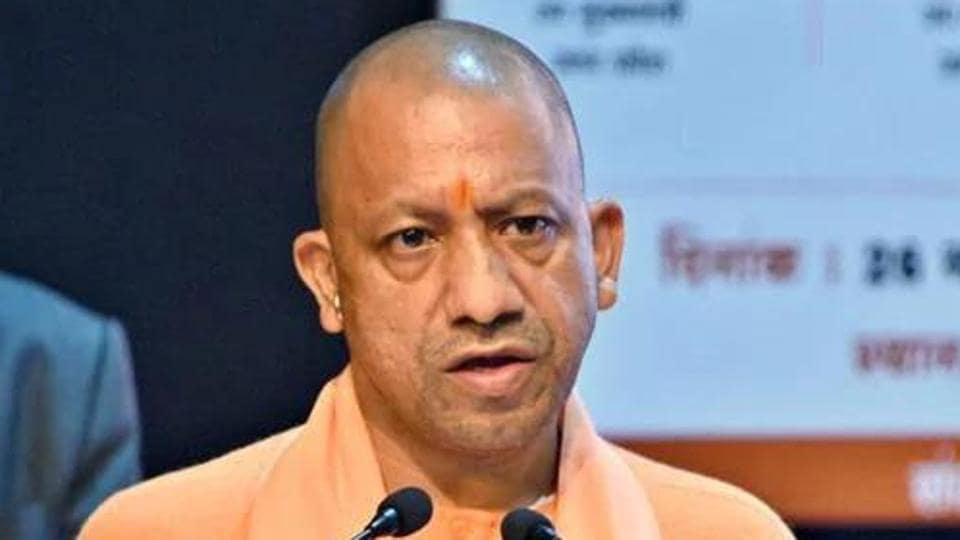
As the Yogi Adityanath-led UP government gears up to celebrate its 100 days in power for a second term, the power situation seems to be slowly improving in the state.
Early onset of summer amid depleted coal reserves had triggered an acute power crisis just days after the new state government was sworn in.
The authorities spent most of their time dealing with the crisis and managing availability of coal in the thermal plants.
With electricity demand soaring and power generation dipping due to coal shortage, there was a widespread crisis that lasted for about two months.
Also Read: ‘100 worthless days’: RLD’s swipe at UP CM Yogi as he presents report card
Villages and semi-urban towns faced load shedding for 10-12 hours every day. Big cities also faced frequent power cuts largely because of recurrent local faults in the overloaded distribution network.
Amid the crisis, the Centre directed states, including Uttar Pradesh, to buy imported coal to the extent of at least 10% of their requirement in the thermal plants.
This move, however, was tricky given the fact that buying expensive foreign coal will lead to higher costs for the consumers.
“After the formation of the new government in Uttar Pradesh, the biggest challenge in the field of energy was the power crisis with rising temperatures, mainly due to non-supply of coal to the thermal power stations of the state,” All-India Power Engineers Federation (AIPF) chairman Shailendra Dubey said.
“Although the state government was not responsible in any way for the coal crisis, the poor financial condition of discoms and mismanagement of energy corporations aggravated the problem,” he added.
This was probably the first time in the last five years that a power crisis of this magnitude engulfed the state.
Energy minister AK Sharma and the entire UPPCL management were left in a fix on how to deal with the coal crisis but CM Adityanath chalked out a plan to arrest the crisis.
“Chief minister Yogi Adityanath took two important decisions in the power sector amid this crisis. First, he decided that under no circumstances will costly foreign coal be imported for thermal power stations to avoid consumers being burdened with tariff hike. Secondly, he ordered government departments would have to pay power arrears directly to the power distribution companies through centralised payment,” he said.
According to Dubey, it was because of CM’s involvement and power personnel’s hard work that the power crisis in Uttar Pradesh was not as severe as reported in other states.
UP Rajya Vidyut Upbhokta Parishad chairman Avadhesh Kumar Verma pointed out that Adityanath government’s policy of zero tolerance on corruption was best demonstrated in the power sector.
“We saw a number of engineers and employees being sacked and suspended on the issue of corruption,”
The government and the UPPCL, according to him remained sensitive to the issues related to consumers.
“Despite poor financial state of discoms, the government did not allow them to propose any tariff hike for the third consecutive year,” he said.
The government took the decision for the installation of meters in 3.66 lakh unmetered consumers’ homes but it remains a work in progress.


