
 E-Paper





Vishal Mathur is Technology Editor for Hindustan Times. When not making sense of technology, he often searches for an elusive analog space in a digital world.
Vivo X500 Pro Max’s photography masterclass, and also welcomes Apple loyalists
Vivo’s new flagship pairs stabilised 200-megapixel zoom lens with restrained, true-to-life Zeiss colour science, setting the photography bar for 2027 flagships
Updated on: Nov 26, 2026, 15:31:27 IST


Share via
Copy link
The smartphone camera, as an idea, is in an astonishing place. Not just the leaps in overall capabilities, but the smartphone space is defined by two very distinct approaches. Within that, there is a clear course correction happening as well, something I’ll illustrate, as we assess the latest flagship from Vivo, the X500 Pro Max. A 200-megapixel telephoto camera and the optional 200mm and 400mm equivalent lens options if you need that for long-range photography, offer good versatility to build with. But there are two contentions to weigh on.
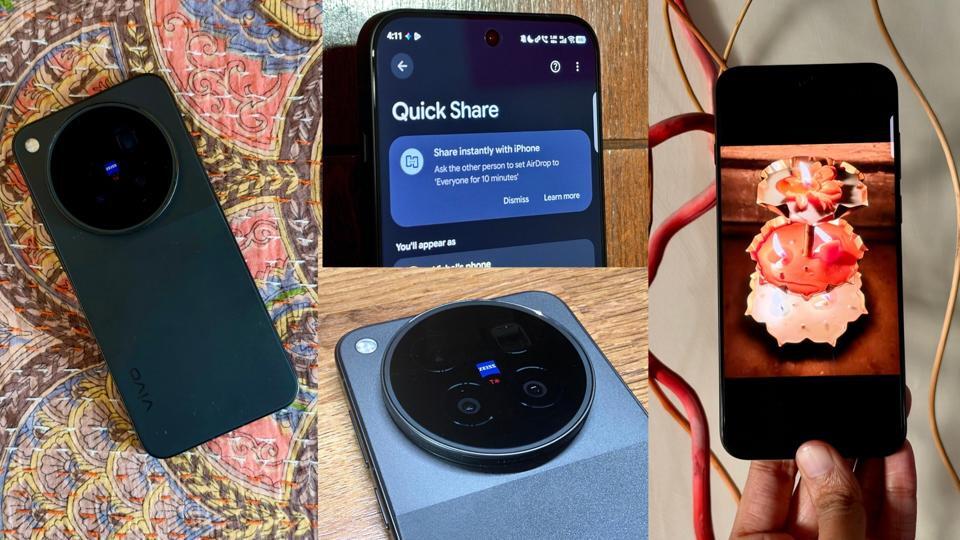
We are in an era where flagships generationally have a tough time justifying pricing inflation with genuine forward experiential steps. The Vivo X500 Pro Max has managed that, resoundingly, particularly with the camera and the evolution of Origin OS. Secondly, there is the looming shadow of the Vivo X300 Ultra that was released a few months ago—brilliant across the board, be it the cameras, overall performance and in being an Android flagship as a collective. And if I may crystal gaze for a moment, the X500 Pro Max has a solid foundation to compete not just with the Oppo Find X10 Pro Max, but also an inevitable arrival of the Xiaomi 18 Pro Max at some stage.
Also Read: From ₹1 lakh to ₹2 lakh: As flagship phones get 30% costlier, buyers rethink value
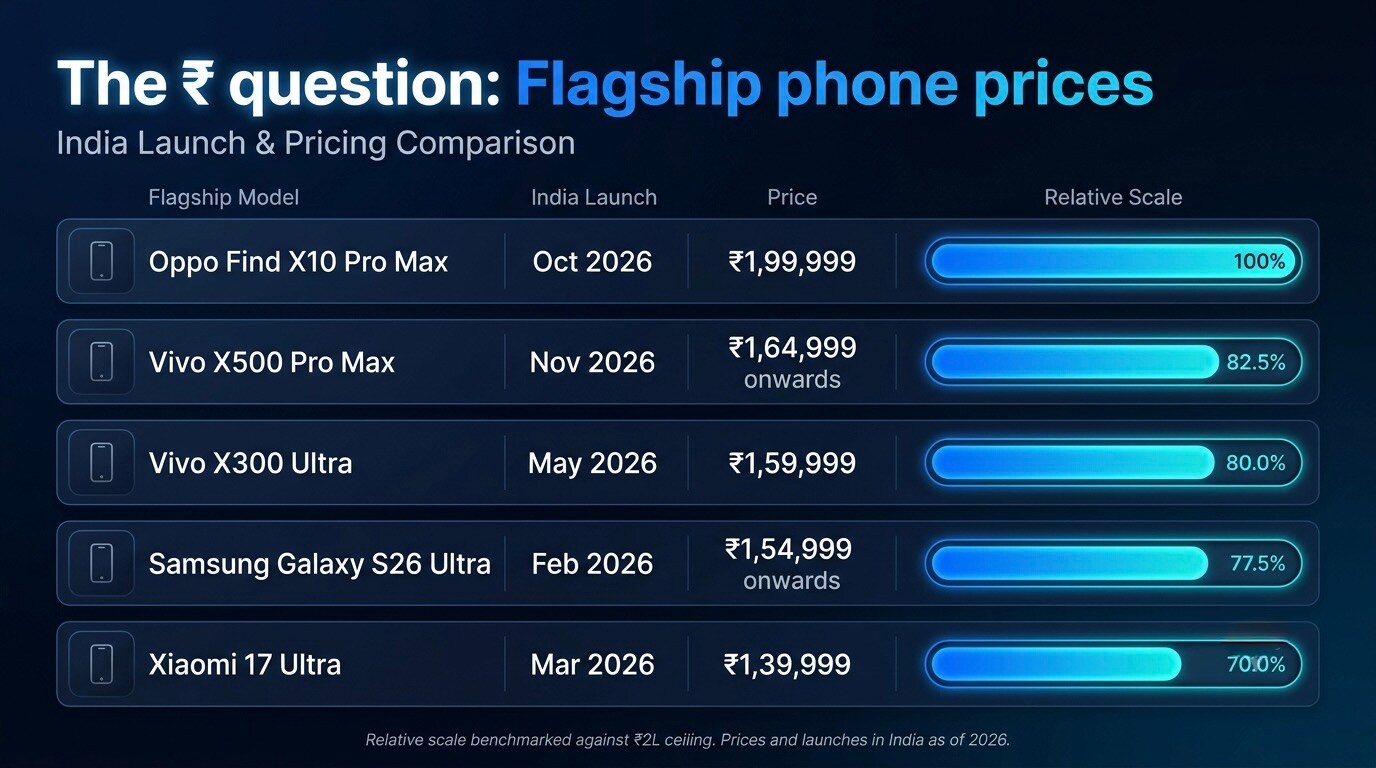
Pricing was therefore a complication. Vivo sees the X300 Ultra currently retailing for around ₹1,59,999 and slots the X500 Pro Max at ₹1,64,999 onwards. My question is this—how long does that remain on sale? On the point of the variants, there is a smaller window than usual between the 12GB+256GB spec and the ₹1,79,999 you’ll part with for 12GB+512GB. Go for the latter, if that’s within the realms of the budget. The Photography Kit bundle is currently with the higher spec, and that’s priced at ₹2,29,999. Difficult to have an opinion on pricing and value these days, as subjective as those matters are, considering smartphone makers have very little room due to component pricing inflation.
Cameras absolutely dominate the list of reasons as to why you’d consider a Vivo flagship phone, and it’s sensible to begin with that. The main camera is a 50-megapixel, a Sony LYTIA L910 sensor that’s 1/1/28-inch with 24mm focal length and gimbal-like (it is actually the CIPA 7.0 professional stabilisation standard) optical image stabilisation (OIS). The highlight here has to be the 200-megapixel telephoto, which is a 1/1.4-inch Samsung ISOCELL HP10 sensor with 85mm focal length and OIS. Completing the troika is a 50-megapixel ultra wide, which is a bit more humdrum, considering it’s a Samsung JN5 sensor from 2024, if memory serves me well.
The main camera, for starters requires you to tweak a setting from the outset. This by default pixel bins photos to 12.5-megapixel, which while great for saving space, does mean you’ll notice some pixelation if you crop or zoom in. I’d suggest selecting the 25-megapixel as the default setting for most photos you click, for a meaningful improvement as far as detailing goes. The other thing you need to do is set this to Zeiss Natural setting for colour saturation, for the most realistic processing.
Also Read: India’s smartphone market is shrinking, and phone prices have never been higher
Once you get the settings right, photography results are incredible across lighting conditions—in terms of detailing, colour reproduction and realism. When certain photos really need it, including those with complex natural lighting, the dynamic range really steps up to give that realistic representation of the moment you’ve tried to capture. Photos between 2x and 10x also don’t compromise anything on the finer elements of a photo.
A positive change that I continue to notice is the dialling down of the artificial detail boosting that had become apparent in the past couple of years. There is a natural flow to the gallery as you absorb the moments of a vacation later, rather than unnatural skies or a landscape that didn’t look this green. That said, some processing tweaks are needed to add a bit of realism to skin tones, which in moments, this phone tends to brighten up a smidgen more than necessary.
The star of the show is certainly the 200-megapixel telephoto, which allows you to get really close to the subject. And more often than not, without compromising on the details. I felt that a 50x or a 100x zoomed photo is much easier to manage on the Vivo X500 Pro Max with lesser shake and easier centering of the subject, than on a Samsung flagship or even the latest iPhone—that’s exactly the sort of result Vivo would have been looking to achieve with the elaborate OIS for this sensor.
Also Read:Tech is expensive, but is there light at the end of the tunnel?
Videos get a significant upgrade too. All cameras on the Vivo X500 Pro Max support 4K60 video recording resolution, in which the latter is the frames per second number. The main camera can also do 4K240 at 1x and 2x while the telephoto can also record at 4K120, as well as both can do 8K30 too. Dolby Vision, check. Log, check. Compared to photos, depending on how you’ve set up the elaborate filters and setting there, most videos have a bit more restrained colour. I believe the idea is to have a more neutral basis for video editing. Telephoto autofocus tracking will be very handy, more than you may realise initially, if you are recording a fast moving subject in the distance.
Everything about the Vivo X500 Pro Max is as you’d expect on a flagship which demands you part with top money. The design, for instance, takes a lot of inspiration from the X300 Ultra’s subtle dual-tone finish. The Eternal Black colour, for instance, has a glass fibre and spray-coated texture finish. I also notice a less profound ring around the camera island. Look at the back of this phone from a perfectly flat side view, and you’ll notice what Vivo calls the Tideline Design, where the area around the camera island is very gently raised compared to the lower part of the phone—they’re taking some cues from nature, a shore and how a tide interfaces with it.
I must note that the 7,800mAh battery has been incredibly well optimised. This is particularly true for standby battery frugality—leave a fully charged Vivo X500 Pro Max at 10pm and you’ll wake up to it at still 100% (or on some days, 99%) charge at 6am. Even during the day with active usage and apps working in the background, this is sipping charge very gently. Getting two days, with the battery reducing from 100% to 25%, is pretty much the way of life with a Vivo X500 Pro Max. Does this make it the most battery efficient phone in the current flagship lineup? I’d peg this ahead of the Oppo Find X10 Pro Max and the Samsung Galaxy S26 Ultra.
Also Read:Gravity, dust and regret: The cost of repairing a foldable smartphone
Last but not least, are the improvements to Origin OS 78 that’s based on Android 17—and a thing worth noting here is how Vivo is making this versatile across devices, something we recently also noticed with the Vivo X Fold6 which specifically added utilities for the foldable’s display real estate. Here, you’re sure to find utility with a broader compatibility with Apple devices—Quick Share works with AirDrop, Office kit file transfers are compatible with Mac and iPad, Apple Watch will work with this phone, AirPods get Spatial Audio support and battery display within Origin Island and iCloud is baked into the File Manager app. There is a sensible realisation that Vivo must appeal to users who may otherwise also have some Apple devices within their reach.
Before you do part with the cash for the Vivo X500 Pro Max, chances are there will be a second glance at the spec sheet, particularly the Mediatek Dimensity 9600 Pro chipset choice. It is not a Qualcomm chip, will likely be your biggest contention. Vivo has, for a while now, bet on MediaTek’s chip for their flagships and results have been impressive. Nothing tells me it’ll be any different this time, because the Dimensity 9600 Pro feels absolutely capable of delivering a flagship experience—including sustained performance.
It is genuinely difficult to hold up anything as a shortcoming with the Vivo X500 Pro Max. Everything is generationally refined, the camera experience continues to stride, flagship level of performance and battery life, as well as the versatile option of the photography kit (this specifically, whether or not you buy it, is more subjective than anything else). Can I go so far as to say this is setting the benchmark for this year’s camera flagships? I’ll have to wait for Xiaomi’s latest flagship to pronounce my take on the matter, but Vivo and Zeiss as always have done enough to give this that substance. The Oppo and Hasselblad tonality and processing comes very close, but this may just edge it with the Zeiss Natural mode.
It is not that the Vivo X500 Pro Max doesn’t have room for improvement. The lack of Qi2 magnet integration means newer generation faster wireless chargers are off the agenda, till you get a case with those. Secondly, some may complain that the 90-watt charging speed is a step behind flagships, such as the Xiaomi 18 Pro Max (100-watt), and they’d have a point. Last but not least, is the pricing. This generation of flagship phones demand top money, but are you getting that much evolution for your experience, compared to the flagship you may already be using? The answer, defines the decision.
ABOUT THE AUTHOR
Get Latest News, breaking headlines, and top India News, and today real-time updates from across the nation. Stay informed on politics, government policies, crime, Today Weather, and major developments on Hindustan Times


