
 E-Paper



‘A true mental education will prepare man for a higher life’ – Saint of Pondicherry
Commemorating Women’s Day on March 8 with the Mother’s writings on education.

 Prefer HTon Google


“Of all lines of education, mental education is the most widely known and practised, yet except in a few rare cases there are gaps which make it something very incomplete and in the end quite insufficient,” said the Mother, often hailed as the Saint of Pondicherry.
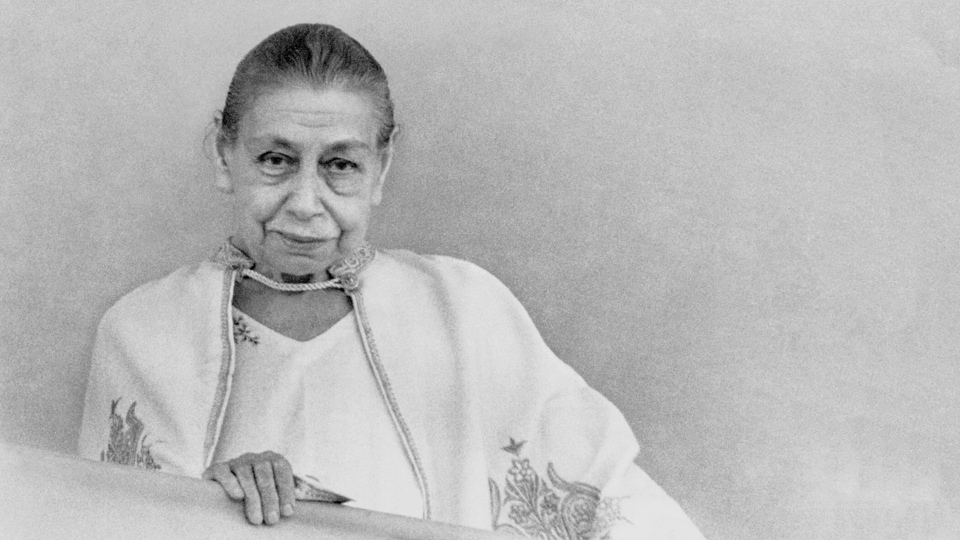
Her 146th birth anniversary on 21st February was commemorated throughout the world dotted with Sri Aurobindo Ashrams, institutes, and centres of learning. Women’s Day, March 8, is an opportunity to acknowledge the contribution of the Mother, who was born Mirra Alfassa in Paris, and spent over five decades nourishing and nurturing her adopted land, India.
Education was integral to the teachings and practices of both Sri Aurobindo and the Mother. In a Bulletin of November 1951, she explained, “Generally speaking, schooling is considered to be all the mental education that is necessary. And when a child has been made to undergo, for a number of years, methodical training which is more like cramming than true schooling, it is considered that whatever is necessary for his mental development has been done. Nothing of the kind.”
The Mother felt the training given in education “cannot impart to the human mind the faculties it needs to become a good and useful instrument.” She described it as a system of gymnastics to increase the suppleness of the brain. “From this standpoint, each branch of human learning represents a special kind of mental gymnastics, and the verbal formulations given to these various branches each constitute a special and well-defined language,” she said.
Also Read | International Women's Day 2024: Why girls' education can't wait
“A true mental education, which will prepare man for a higher life, has five principal phases,” the Mother said, enumerating the phases which follow one after another: “These five phases, in brief, are (1) Development of the power of concentration, the capacity of attention. (2) Development of the capacities of expansion, widening, complexity and richness. (3) Organisation of one’s ideas around a central idea, a higher ideal or a supremely luminous idea that will serve as a guide in life. (4) Thought-control, rejection of undesirable thoughts, to become able to think only what one wants and when one wants. (5) Development of mental silence, perfect calm and a more and more total receptivity to inspirations coming from the higher regions of the being.”
The 1951 Bulletin detailed the Mother’s thoughts, and in the post-pandemic world where mental health issues have become widespread, her words hold meaning for not just children or young adults but every living being. “Undeniably, what most impedes mental progress in children is the constant dispersion of their thoughts. Their thoughts flutter hither and thither like butterflies and they have to make a great effort to fix them,” she said. “Yet this capacity is latent in them, for when you succeed in arousing their interest, they are capable of a good deal of attention. By his ingenuity, therefore, the educator will gradually help the child to become capable of a sustained effort of attention and a faculty of more and more complete absorption in the work in hand. All methods that can develop this faculty of attention from games to rewards are good and can all be utilised according to the need and the circumstances. But it is the psychological action that is most important, and the sovereign method is to arouse in the child an interest in what you want to teach him, a liking for work, a will to progress. To love to learn is the most precious gift that one can give to a child: to love to learn always and everywhere, so that all circumstances, all happenings in life may be constantly renewed opportunities for learning more and always more.”
Also Read | International Women's Day 2024: Breaking barriers and making world more inclusive
To enrich and widen the mind is a recurring theme in the Mother’s writing. For children, she wanted to show “that everything can become an interesting subject for study if it is approached in the right way. The life of every day, of every moment, is the best school of all, varied, complex, full of unexpected experiences, problems to be solved, clear and striking examples and obvious consequences. It is so easy to arouse healthy curiosity in children, if you answer with intelligence and clarity the numerous questions they ask.”
When the Mother penned her thoughts on the ‘higher idea’, the central idea, her focus was on providing clarity and removing contradictions that arise in minds that have been ripened and become more capable of forming general ideas: “With them almost always comes a need for certitude, for a knowledge that is stable enough to form the basis of a mental construction which will permit all the diverse and scattered and often contradictory ideas accumulated in his brain to be organised and put in order.”
She explained, “This ordering is indeed very necessary if one is to avoid chaos in one’s thoughts. All contradictions can be transformed into complements, but for that one must discover the higher idea that will have the power to bring them harmoniously together. And if you want to make the totality of your thoughts into a dynamic and constructive force, you must also take great care as to the choice of the central idea of your mental synthesis; for upon that will depend the value of this synthesis. The higher and larger the central idea and the more universal it is, rising above time and space, the more numerous and the more complex will be the ideas, notions, and thoughts which it will be able to organise and harmonise.”
On her 146th birth anniversary, the international township of Auroville, Sri Aurobindo International Centre of Education, innumerable Sri Aurobindo Ashrams, schools, and centres of learnings are testimony to her custodianship of the spiritual and material legacies of Sri Aurobindo for over five decades.


