E-Paper



Archaeological survey begins at Bhojshala complex in Dhar
A team of the Archaeological Survey of India (ASI) on Friday began a scientific survey of Bhojshala, a protected 11th-century monument in Madhya Pradesh’s Dhar district, as the Supreme Court refused to interfere with a high court order on the exercise at the contentious site

 Prefer HTon Google


A team of the Archaeological Survey of India (ASI) on Friday began a scientific survey of Bhojshala, a protected 11th-century monument in Madhya Pradesh’s Dhar district, as the Supreme Court refused to interfere with a high court order on the exercise at the contentious site.
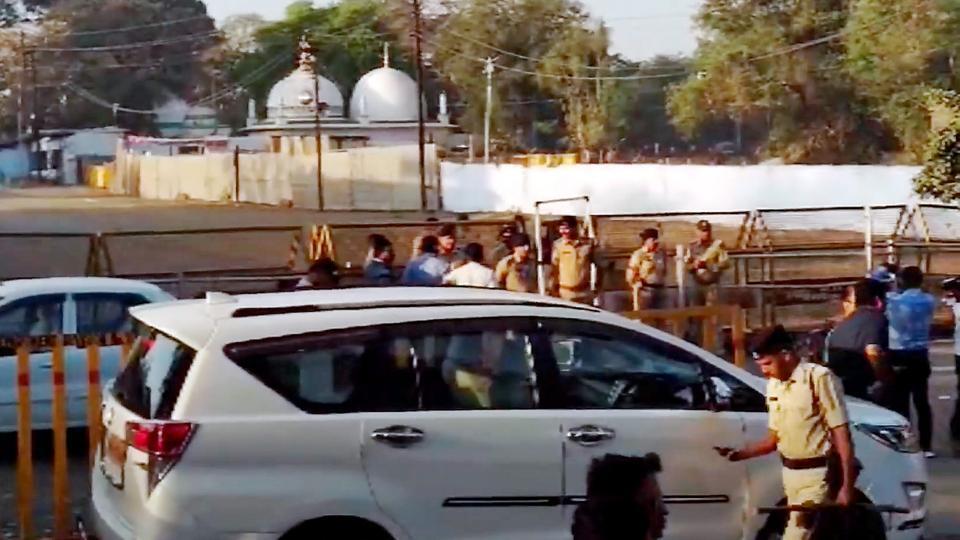
While the Hindus consider the Bhojshala to be a temple dedicated to Vagdevi (Goddess Saraswati), the Muslims call it Kamal Maula Mosque.
According to Dhar superintendent of police (SP) Manoj Kumar Singh, a 15-member ASI team reached the complex at 6am with a group of senior local police and district administration officials. “The ASI team worked till noon and left before the Friday ‘namaz’ by Muslims. It will resume on Saturday morning,” he said.
Singh also said that the survey is being conducted under the surveillance of 60 cameras installed at the premises. The mobile phones of all officials and labourers were seized before they were permitted entry, he said.
The SP also said that ‘puja’ on Tuesdays and ‘namaz’ on Fridays will be held as per practice.
While ASI Bhopal superintendent Manoj Kurmi refused to comment on the survey, an official, who did not wish to be named, said: “We identified the spot which will be surveyed. The markings were done and measurements of the area were also taken.”
The development came as the Supreme Court dismissed a petition seeking an urgent hearing and a stay on the survey. The plea was moved by Maulana Kamaluddin Welfare Society, representing the Muslim side, against the Madras high court’s March 11 order for the scientific survey.
“We cannot stay the survey without hearing the other side,” a bench headed by justice Hrishikesh Roy said.
Noting that the matter was listed for hearing on April 1, the bench, which also comprised justice PK Mishra, said: “We will take it up on that day”.
On March 11, the high court’s Indore bench directed ASI to conduct a scientific survey of the Bhojshala complex by forming a committee of five members, and submit a report within six weeks. The court allowed the exercise on the lines of a Supreme Court directive for a survey within the Gyanvapi mosque in Varanasi.
The high court’s order came on a petition filed by the Hindu Front for Justice on May 2, 2022, against offering of namaz at the Bhojshala and ASI’s 2003 order that prohibited Hindus from offering daily puja in it.
The state government and ASI have supported the petition to determine the character and nature of contentious premises.
Welcoming the survey, Gopal Sharma, convener of Bhoj Utsav Samiti (an outfit that claims that Bhojshala is a temple), said: “We are excited for the survey. On the first day, the team reportedly identified the area that will be surveyed.”
Dhar shehar qazi Waqar Sadiq said: “We respect the decision of the high court, but we have not been given any information about the survey.”
On Thursday, a meeting was also held with representatives of both Hindu and Muslim communities, Singh said.