‘At COP27, focus will be on action, not on promises’
New Delhi: Ahead of the UN Climate Change Conference (COP27) opening on November 6 in the Egyptian resort town of Sharm El Sheikh, the COP27 Presidency has made it clear in a statement on Wednesday that this meeting will be labelled the “implementation COP
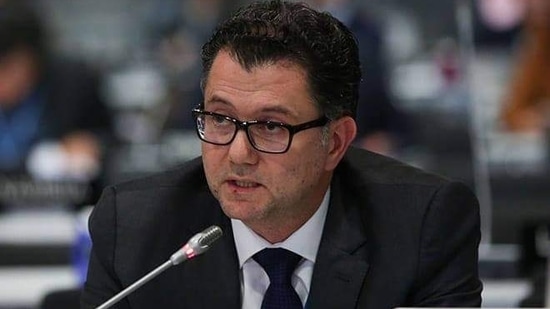
New Delhi: Ahead of the UN Climate Change Conference (COP27) opening on November 6 in the Egyptian resort town of Sharm El Sheikh, the COP27 Presidency has made it clear in a statement on Wednesday that this meeting will be labelled the “implementation COP.” The wide gap between pledges and actual emissions reductions required to meet the Paris Agreement goals of keeping global warming well under 2 degrees Celsius (°C); the backsliding of rich nations on delivery of finance; the lack of response to the finance needs of developing countries which is estimated to be $ 5.6 trillion up to 2030 are all crucial issues of implementation that will be discussed at COP27, Mohamed Nasr, Egypt’s chief climate negotiator said in a telephonic interview with HT. Edited excerpts:
Mohamed Nasr, Egypt’s chief climate negotiator.
What according to you will be the most important issues in terms of negotiations and outcome at COP27? Loss and Damage is important as part of the technical negotiations; on the bigger picture what is very important is the political commitment of heads of states and governments that climate change is still on the global agenda. The pledges made before need to be fulfilled and a new round of pledges, especially on finance or adaptation, are expected . So, it is a mix of what political stakeholders say and the negotiations.
Rich nations have failed to deliver on the $100 billion a year climate finance promised, and there are reports that wealthy nations are pushing for the United Nations Green Climate Fund (GCF) to seek donations from big businesses and the super-rich as government donations. How will you address the trust deficit?There is a context there. The $100 billion package was put forward in 2009 to be achieved in 2020, to allow developing countries to quickly start energy transition in order to achieve the Paris Agreement goals. So, the package was a token of assurance, to provide confidence that money will be there at scale. $100 billion in 2009 is $700 billion in 2022. But $100 billion itself will not make a difference in the climate scene. As per latest assessments, developing countries alone, to meet their NDCs, not even enhanced NDCs, need $ 5.6 trillion up to 2030. The $100 billion is a mobilisation and provisional goal. In other words, the $100 billion is a benchmark that assesses the commitment on delivery. Let’s not forget that when we faced Covid-19 , the international community could mobilise $10 -15 trillion in one year. The money is there. We have political commitment which is very clear and we have clear plans coming from many countries. But what is missing is appropriate finance. We saw pledges coming in Glasgow on finance for the adaptation fund. Many of them have not been delivered. It’s unfortunate that in this process we make headlines that make people very happy but it doesn’t trickle down. So, as COP27 Presidency we are focusing on implementation. Let’s see who is delivering on their pledges and where are the bottlenecks. We will also look at the success stories to see how they can be scaled up.
What role does India play in COP27 negotiations? India has always played a major role in the negotiations on behalf of the developing countries. India is one of biggest emitters and developing countries. They have similar concerns as all other developing countries be it on fighting poverty, improving infrastructure and industrial base, increasing renewable energy capacity. India also has the potential. It is a part of the G20, it is a major industrialised country and it is setting an example in solar energy. It has a leadership role. I hope PM Modi will be able to join us because his voice and India’s voice will be very important to go forward at the leaders’ summit level. Negotiations — we all know the positions and that will be worked out. It’s important to bring forward India’s voice to the overall discussions here.
The Glasgow Pact that came out of COP26 last year is very weak on Loss and Damage. It only mentions a dialogue to facilitate ideas on the issue. How will you ensure concrete steps on Loss and Damage at COP27?The Glasgow dialogue on Loss and Damage was a step in the right direction. Before that the discussion on loss and damage was mostly under Warsaw International Mechanism for Loss and Damage (to implement appropriate approaches to address losses) and a generic discussion on Loss and Damage. There was nothing very specific. The Glasgow dialogue created the first step but it was not enough. Hopefully this year we will be able to work on something that builds on the first step and takes us a couple of steps further. If parties agree hopefully, it will provide clarity and response to the calls by all developing countries on loss and damage.
Do you think the world has failed to keep the 1.5°C goal alive? Latest UN reports are say there is no credible pathway to keep global warming under 1.5°C and that the current pledges take us to 2.8°C. The Paris Agreement goal is to limit global warming to well below 2, preferably to 1.5°C, compared to pre-industrial levels. In Glasgow, we succeeded in keeping the 1.5°C goal alive in the pact. Plans to meet 1.5°C goal need a lot of work for all countries but in particular the major economies. Major economies and developing countries have different starting points. From our point of view the idea of just transition has always been crucial. We need assurances that in doing the transition that we all agreed to in Paris and the enhanced phase of transition that we agreed to in Glasgow, the social and economic dimensions will not be lost. Climate and environment are important but in mitigation, social and economic dimensions of development ought to be considered. If these assurances are provided, then I think countries will be able to come with more ambitious NDCs. If the right finance is provided which is a major gap we are facing, in terms of scale, access, instruments, less conditionality..., the cost of finance is very high and this year it has gone higher. There is a broad agreement that the current situation is not liveable as we are seeing. We are in 1.1 degree warming and the impacts are extreme. Everybody has to work towards the 1.5°C goal but we should do it in the right way. We agreed to the endgame in Paris but we are still struggling in identifying the pathways to achieve that goal.
How is Egypt impacted by climate crisis?
We are recording all kinds of impacts. We have the slow onset events like sea-level rise. If you visit Alexandria, you will see a lot of water breaks and infrastructure to reduce impact of sea level rise. Then you have desertification which is spreading fast. The fluctuation in rainfall is impacting the Nile river. There are longer droughts in the sources of Nile that makes it very difficult to plan for future economic and social activities. Over and above this, heat waves and dust are causing extreme, killer impacts. Food prices are shooting through the roof pushing vulnerable communities into poverty. Government has to subsidise we are also dealing with increasing price of electricity. There is impact on shared resources (with other countries) also which I believe is a worrying issue. Grazing land, water, nomad communities crossing the border, a lot of impacts are there in the African and the South Asian context.
You have said in a recent interview that we should not let the 1.5°C goal die on African soil. Africa is very vulnerable to climate change. What are your personal worries?There are a lot of concerns when it comes to mitigation pledges and commitments. The concerns are coming from potential backsliding of countries who have the capacity of reducing emissions. These countries have already achieved most of their development goals. Today’s geopolitical situation has to be considered, of course. But immediate actions are needed to deal with immediate concerns. This is not happening.

 E-Paper