
 E-Paper



Delhi high court judgment will serve as much needed balm for victims of 1984 anti-Sikh riots
If today, Sajjan Kumar stands convicted for his role in the 1984 anti-Sikh riots, it is because the CBI and not police was the investigating and prosecuting agency.

 Prefer HTon Google


From late evening of October 31 to November 3 in 1984, a daughter saw her father being set on fire, a wife looked on helplessly as her husband and son were dragged by lumpens and bludgeoned to death with iron rods and a brother lost three siblings. He identified them from the watch one was wearing and the other two, from their half-burnt clothes.
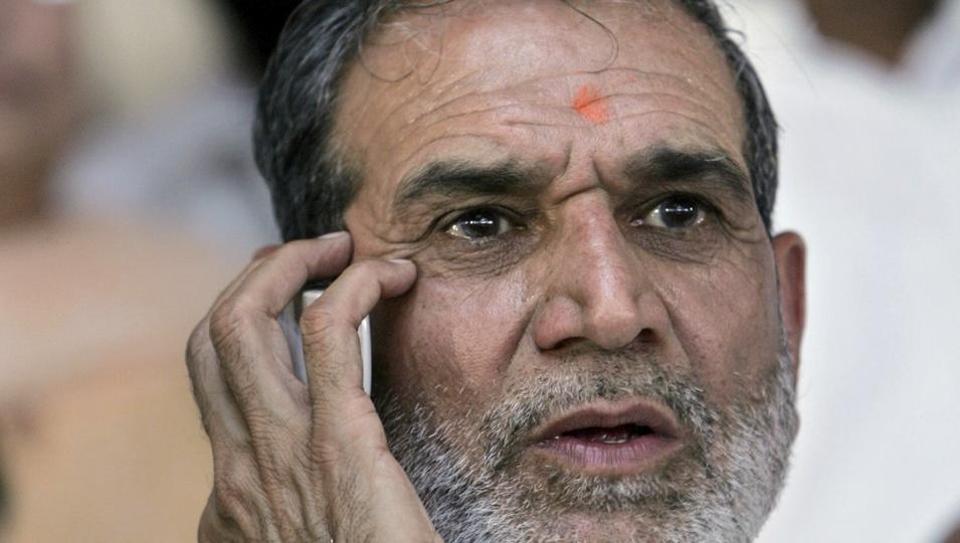
Daughter Nirpreet Kaur, wife Jagdish Kaur and brother Jagsher Singh have lived a wretched life in the pursuit of justice, perhaps because their claim is that they saw a powerful Congressman and Member of Parliament of the area, Sajjan Kumar, exhort the mob and order the killing of Sikhs in Raj Nagar locality, in Delhi Cantonment.
Finally, after a long wait of 34 years, justice has knocked on their door. Until then, each of the three variously approached the police and the many commissions of inquiry to give a first-hand, ‘I witnessed the carnage’ account, but it stayed buried in affidavit after affidavit.
For them, revisiting 1984 was always a painful memory; the denial of justice a second stab in the heart.
They say that they saw Sajjan Kumar, and heard him, saying, “Ek bhi sardar zinda nahi bachna chahiye... en sardaron ko maro, enhone hamari maa ko mara hai,” (not even one Sikh should be spared. Kill them, they have killed our mother), but till the year 2011, no court of law even heard their testimonies.
As their lawyer, HS Phoolka once said: “Whenever it came to commissions of inquiry, Sajjan Kumar’s name appeared prominently, but whenever it went to the police, his name disappeared.”
If today, Sajjan Kumar stands convicted, it is because the Central Bureau of Investigation (CBI) and not the police was the investigating and prosecuting agency.
The Congress leader was acquitted by the lower court, even though the public prosecutor RS Cheema, in his concluding remarks in the session’s court, said that the riots were a conspiracy of terrifying proportions that indict the police. Simply put, his argument was that the men in uniform took the side of the rioters.
According to police rules, all movements of police officers are recorded minute by minute in the thana daily diary but the diaries for those days were totally blank.
In Raj Nagar, specifically, Jagdish says she saw the chowki in-charge applaud the mob and ask them, ‘kitne murge bhun diye’ (how many Sikhs have you roasted). All this, while the bodies of her husband and son lay nearby.
The policemen did the same in Delhi Cantt, tagging over 30 deaths, including Nirpreet’s father, Nirmal Singh, into a single FIR. Sajjan Kumar’s name was never put in the list of the accused and the summons for Nirpreet were sent to an address that never belonged to her.
Respite for the victims came only after the Nanavati Commission submitted its report in 2005 and concluded that there was ‘credible evidence’ against Sajjan Kumar. Affidavits filed by Jagsher and Jagdish finally counted for something. The case against Kumar was entrusted to the CBI.
They stood strong, through the threats and the lure to turn hostile. The pressure was so acute and the frequency of threats so alarming, the victims applied for police protection; and they couldn’t be from the Delhi police. The CBI director finally wrote to the DGP Punjab and got them gun-toting policemen who would shadow them to court.
It is important to detail each step that derailed justice for over three decades. Finally, the CBI secured the testimony of a joint secretary in Delhi government’s home department, who told the court that the director of prosecution had signed off on a file, saying the sanction to prosecute Kumar should not be granted.
With Kumar’s conviction, the thousands who still await justice can hold on to some hope. The same evidence did not hold good in the sessions court, but with the High Court reversing that order, the victims can breathe easy in the belief that even though justice was delayed, it was not entirely denied.
The victims spent close to a life time testifying to Kumar’s role. He has now been sentenced to life imprisonment in a strong judgement in which the court held that the accused ‘enjoyed political patronage.’
Kumar’s sentencing will now add speed and hope to the many other cases that are still being investigated. 1984 saw the worst riot — many like to call it genocide — in which over 3,000 Sikhs were brutally killed. For all those who witnessed these deaths, the judgement comes as a long needed balm.


