
 E-Paper



Delimitation bill: Does the math favour the Opposition in Lok Sabha?
The delimitation bill, which proposes an expansion of the Lok Sabha from 545 to 850 seats, has met a wall of resistance from a unified Opposition.

 Prefer HTon Google


The Central government faces a high-stakes legislative showdown as it prepares to introduce the Constitution (131st Amendment) Bill, 2026 during a three-day special session of Parliament starting Thursday.
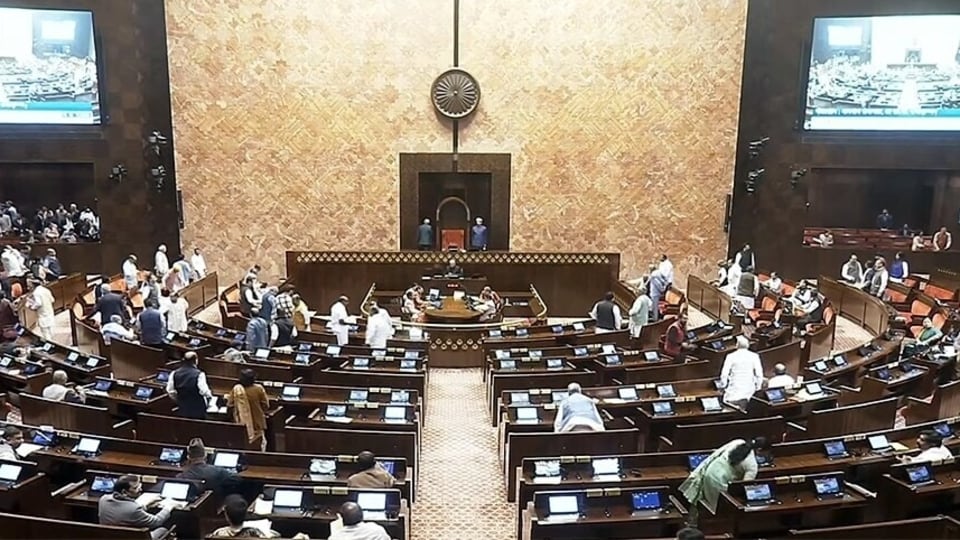
The bill, which proposes to expand the Lok Sabha from 545 to 850 seats, has met a wall of resistance from a unified Opposition.
The government has linked the expansion to implementing the Nari Shakti Vandan Adhiniyam (33% women’s reservation), but the Opposition calls it a “political stunt” to push through a controversial delimitation exercise.

As a constitutional amendment, the bill requires a “special majority” under Article 368. This means it must be approved by a majority of the total membership of each House, as well as by at least two-thirds of members present and voting.
Lok Sabha
In the Lok Sabha, the current effective strength stands at 545 members. If all MPs are present and vote, the bill would need the support of at least 360 members to pass.
Of the total seats, 543 are elected, while two are nominated to represent the Anglo-Indian community.
The ruling NDA currently has 293 MPs, leaving it short by 67 votes.
The Opposition bloc has 234 MPs, enough to prevent the government from reaching the required two-thirds majority.
Even a smaller grouping within the Opposition could stall the bill.
The four largest Opposition parties, Congress, Samajwadi Party (SP), Trinamool Congress (TMC) and Dravida Munnetra Kazhagam (DMK), together account for a substantial chunk of seats. It would make it difficult for the government to push the legislation without cross-party backing.
Uncertainty also surrounds the decision of key allies such as the Telugu Desam Party (TDP), which has 16 MPs and has expressed concerns over the potential impact of delimitation on southern states.
Rajya Sabha
In the Rajya Sabha, where the bill will be taken up after clearing the Lok Sabha, the ruling NDA is in a relatively stronger position but still short of the required two-thirds majority.
Of a total strength of 244 members, the bill would require at least 163 votes if all members are present and voting. The NDA’s strength is 141.
The required number could come down if Opposition members abstain or are absent during voting, since the two-thirds requirement applies only to those present and voting.
| House of Parliament | Total members | Votes needed to pass (2/3) | What the govt (NDA) has | The gap |
| Lok Sabha (Lower House) | 545 | 360 | 293 | -67 |
| Rajya Sabha (Upper House) | 244 | 163 | 141 | -22 |
Opposition voices
The Opposition, at a Wednesday meeting chaired by Congress President Mallikarjun Kharge, agreed to oppose the bill because of its "politically motivated" link to delimitation.
They said that using the 2011 Census to redraw maps is a "backdoor entry" to redraw the electoral field before the 2029 elections.
Congress leader Rahul Gandhi and Samajwadi Party’s Akhilesh Yadav have both termed this a "conspiracy".
Tamil Nadu Chief Minister MK Stalin has announced a statewide black flag protest against the proposed changes. He called the delimitation plan a “black law” and warned of serious consequences if the Centre proceeds without addressing state concerns. He also set fire to the bill.
“We have decided to oppose this bill but I want to tell you we are not against women’s reservation. We are against the delimitation provisions in the bill,” Kharge said.
Congress general secretary KC Venugopal said the government was trying to “bulldoze a deeply flawed, unconstitutional and anti-federal delimitation exercise” with undue haste.
TMC leader Derek O’Brien described this as a “devious agenda.”
The government has defended the bill, maintaining that it is a historic step towards women’s empowerment. Union minister Kiren Rijiju said there was wide agreement in principle on women’s reservation and seemed confident that the required support would be secured.


