E-Paper



Farmers loot fertilisers amid shortage in MP
Home minister Narottam Mishra said that there were reports of hoarding and supply of substandard fertilisers in DAP bags and the government has decided to invoke national security act (NSA) against the businessman for black marketing and illegal hoarding of fertiliser.

 Prefer HTon Google


Farmers looted bags of DAP fertiliser from a warehouse in the third such incident in Chambal division of Madhya Pradesh in the last five days, police said. There is an acute shortage of DAP, especially in the northern parts of the state just before the winter crop sowing season and farmers are becoming desperate, they added.
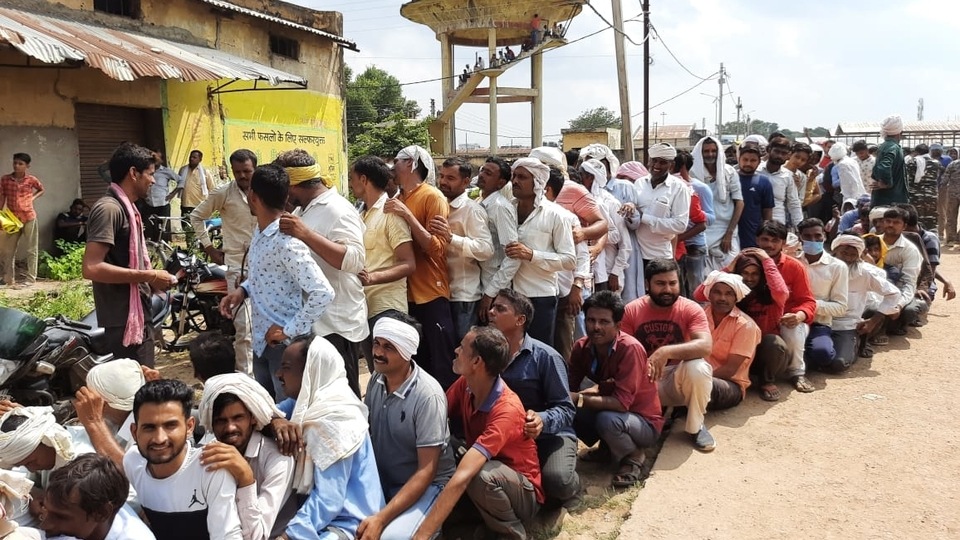
The farmers in the region have also resorted to blocking roads, demanding distribution of DAP. Most of the warehouses are almost empty and the supply is not in consonance with the demand, said local government officials.
Chief minister Shivraj Singh Chouhan on Tuesday said there was no shortage of fertiliser in the state. MP requires 4 lakh tonne of DAP for the Rabi season and the state has already received 2.5 lakh tonne, the CM said.
Home minister Narottam Mishra, however, said on Thursday that there were reports of illegal hoarding and supply of substandard fertilisers in DAP bags and the government has decided to invoke national security act (NSA) against the businessman for black marketing and illegal hoarding of fertiliser.
On Monday farmers, who were waiting in the queue in grain market in Sabalgarh in Morena, looted more than 50 bags of fertiliser from a truck, police said. Police said a group of farmers stole fertiliser bags from warehouses of cooperative societies in Fup and Mehgaon area of Bhind in two separate incidents. An FIR has been registered only in one of these cases, said police.
Bhind superintendent of police Manoj Kumar Singh suspended Fup police station in-charge Anita Gurjar for not registering FIR and taking action against farmers who stole fertilizers on Saturday night.
State officials and experts said the major reasons behind the crisis are changes in crop pattern, black marketing and farmers defaulting on loan repayments. Farmers are eligible for fertiliser at subsidised rates only if they have repaid loans.
Agriculture expert Vinayak Tomar said: “ 61% of total mustard production of the state takes place in Morena, Bhind, Sheopur and Gwalior. With the sudden increase in the price of mustard from ₹4800 per quintal to ₹8000/per quintal, many farmers, who used to sow wheat and bajra, have started sowing mustard for winter crop also. Mid-September and October is the best time for sowing mustard so the demand for fertiliser has increased suddenly.”
Then there is black marketing.
“The (state) agriculture department gives fertilisers to cooperative societies according to the agricultural land of registered farmers. There is a ban on open sale of fertilisers from the societies to stop black marketing in UP and Rajasthan (the fertiliser from the state is illegally shipped there). Similarly, societies are not providing fertilisers to defaulter farmers, who have not cleared their loans,” said Shiv Mangal Singh, former president of district cooperative bank in Morena. He added that the DAP has premium rate of ₹1200 per bag but being sold at ₹1500.
Gwalior and Morena district administration raided warehouses of two traders in past two days and recovered more than 200 bags, which were being hoarded.