E-Paper



First antigen kit of Indian make gets ICMR approval
The test, named Pathocatch Covid-19 Antigen Rapid testing kit, is developed and manufactured in India. It will be immediately available for orders and will be priced around Rs 450.

 Prefer HTon Google


The Indian Council of Medical Research (ICMR) on Wednesday approved a second rapid antigen test kit, by Mylab Discovery Solutions, to diagnose coronavirus disease (Covid-19). This is the first Indian made test kit to be granted an approval.
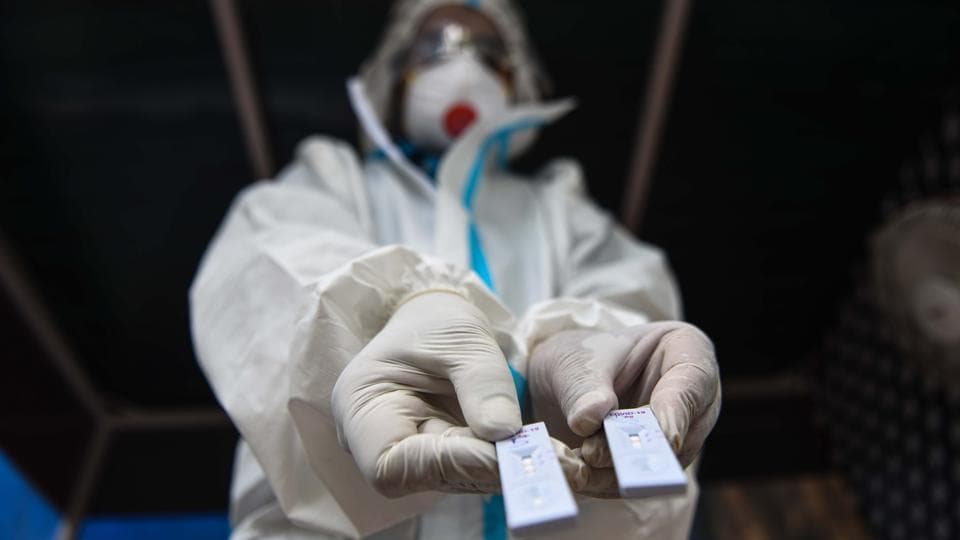
The test, named Pathocatch Covid-19 Antigen Rapid testing kit, is developed and manufactured in India. It will be immediately available for orders and will be priced around Rs 450.
“Mylab team is working really hard to fight this pandemic in every possible way. After bringing an affordable RT-PCR test to reduce dependence on foreign kits, we launched Compact XL to accelerate Covid-19 testing. Now, with the approval for an antigen testing kit, we will cover whole spectrum of Covid-19 testing and leave no stone unturned to fight this pandemic,” said Hasmukh Rawal, managing director, Mylab Discovery Solutions.
Mylab’s real time reverse transcription polymerase chain reaction (rRT-PCR) test kit was also the first indigenous test kit that received ICMR approval for use in India.
Antigen-based testing is being used alongside rRT-PCR to scale up the country’s overall testing and treat patients early. Rapid antigen test is quicker than the rRT-PCR, as it takes just about 30 minutes, compared to about five hours for rRT-PCR testing. The process does not require a sophisticated laboratory, which is a key requirement for rRT-PCR tests.
“That is the only way to break the transmission scale, by identifying those who are infected and isolating them so that they don’t spread the disease further,” said Jacob John, former head, virology department, Christian Medical College, Vellore.
Prior to this, the ICMR had approved antigen test kits by SD Biosensor, a south Korean company, which has a branch in Manesar of Haryana.