
 E-Paper



In Chhattisgarh polls, Tamradhwaj Sahu emerges as Congress’ campaign face
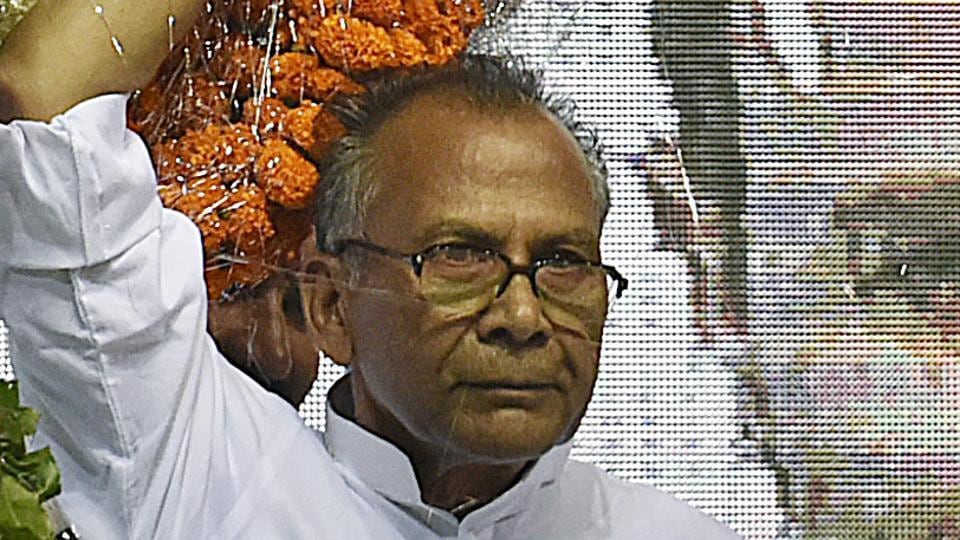
The Congress may project as the face of its Chhattisgarh campaign the party’s lone Lok Sabha member from the state, Tamradhwaj Sahu.


The Congress may project as the face of its Chhattisgarh campaign the party’s lone Lok Sabha member from the state, Tamradhwaj Sahu, who has been asked to contest the upcoming assembly polls in a bid to overcome infighting between state party chief Bhuphesh Baghel and state in-charge PL Punia, according to senior party leaders familiar with the development.
The leaders added that the tide turned against Baghel and Punia after a CD controversy last month where a third leader can be purportedly heard bargaining for seats with Baghel. The Congress has dismissed the controversy and denied any reports of infighting. “Sahu is being slowly projected as campaign face of the party and that is why he was asked to contest from Durg (Rural) assembly constituency,” said one senior party leader who asked not to be named, adding that the decision was taken after the infighting between Baghel and Punia was out in the open.
The Congress central leadership on October 12 formed a core committee, of which Sahu is a part along with four other state leaders, to manage the elections. The 69-year-old MP from Durg is a strong OBC leader and a member of the influential Sahu community. Polls to the 90-member state assembly are due on November 12 and 20 in which the Congress is seeking to end the 15-year tenure of the BJP. Sahu’s
emergence as the face of the party can also be gauged from two facts, a second leader pointed out.
One, his candidature was declared, replacing Pratima Chandrakar, from Durg (Rural) in the third list released by the party on October 27. Two, his face has started appearing in campaign material across the state over the last month, along with that of the leader of opposition in the Chhattisgarh assembly TS Singh Deo, former Union minister of state for agriculture Charan Das Mahant and senior tribal leader Arvind Netam.
When asked about his candidature, Sahu said he is only abiding by the party’s decision. “I am a disciplined soldier of the party and follow the directions, as I did when I was told to contest assembly poll,” he said.
The Sahu community comprises mostly farmers and small businessmen and constitutes about 16% of Chhattisgarh’s population. In at least 18 of the 90 assembly constituencies, they are about 40% of the electorate.
Getting Sahu votes is crucial for the Congress in the state where the vote share difference the party and the ruling BJP was less than one percentage point in the 2013 Assembly elections. Scheduled caste and scheduled tribes constitute about 42% of the voting population.
The two leaders cited above said the Congress first made Sahu head of the party’s national OBC cell about six months ago then nominated him to the Congress Working Committee at the same time. “By elevating the Sahu leader to the CWC, we are giving a signal, that he could be the next chief minister,” said the second Congress leader. “After ST , the Sahu is the only community which votes en masse, and till the last elections a majority of them were supporting the BJP. But this time they will vote for the Congress,” said Sandeep Sahu, an office bearer of Congress OBC cell. When asked if Sahu would be projected as the next CM, Congress state spokesperson RP Singh said: “The people will elect the CM . There is democratic way of selecting a CM candidate in the Congress, unlike BJP where Raman Singh is an autocrat.”
-kW0H-U20214218012MgB-250x250%40HT-Web.jpg)


