
 E-Paper



India stings Pakistan over its minority record at IMF meet for $1.4 bn aid
At the IMF meeting, Surjit Bhalla pointed to reports to show that minorities such as the Hindus, Sikhs, Christians and Ahmadiyya communities are treated with disadvantage in Covid-19 relief

 Prefer HTon Google


At the International Monetary Fund (IMF) meeting on April 16 that gave a green signal to $1.4 billion aid to Islamabad to enable the country to face the economic impact of the coronavirus, the Indian representative had red-flagged concerns that Pakistan’s Covid-19 spending might discriminate against its minorities and could be diverted to enhanced security spending.
Surjit S Bhalla, who is the executive director for India on the board of the IMF, had stressed that Pakistan’s health and social safety net spending should be comprehensive, targeted and non-discriminatory. He also pointed out that budgetary resources should be made available to all regions of Pakistan as the Covid-19 situation was much worse in Balochistan and Sindh province.
Bhalla pointed to reports to show that minorities such as the Hindus, Sikhs, Christians and Ahmadiyya communities - the most vulnerable in Pakistan’s society - are treated with disadvantage in mitigation response by the federal and provincial government authorities, people familiar with the proceedings of the IMF meeting told Hindustan Times.
Also read: Imran Khan hits mute on Saarc Covid-19 pledge, India sends $1.7 mn relief
The Indian economist also asked Pakistan to carry out effective and targeted disbursement of social sector spending that focuses on the most vulnerable category and not undeserving beneficiaries.
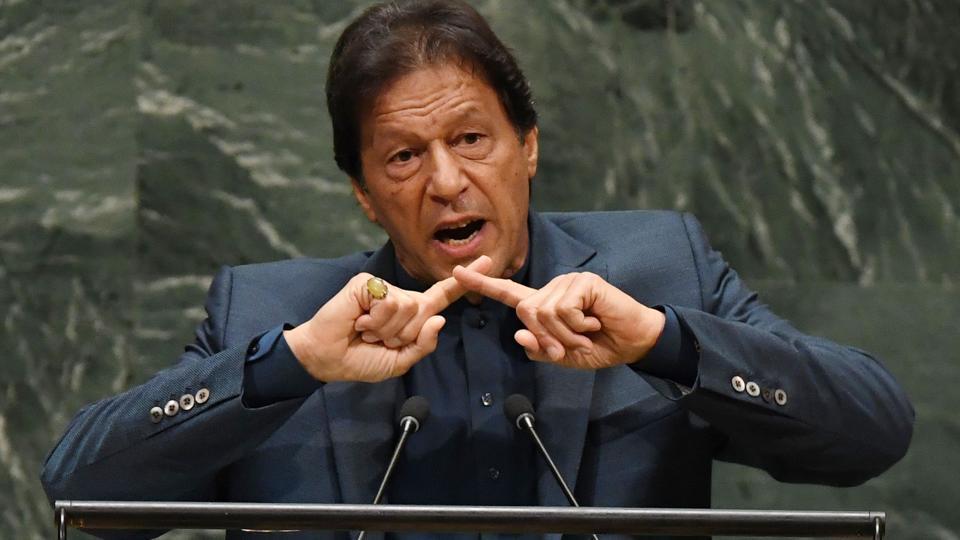
The jab at Pakistan for its treatment of its minorities is seen to be linked to Prime Minister Imran Khan’s criticism of Prime Minister Narendra Modi, alleging that the move to scrap Jammu and Kashmir’s special status and the enactment of the Citizenship Amendment Act was an effort to target Muslims.
It is a point that Imran Khan had made in his speech to the 2019 UN General Assembly also, provoking a sharp comeback by a young Indian diplomat who reminded PM Khan that it was his country that had shrunk the size of its minority community from community from 23% in 1947 to 3% today, that had subjected its minorities to “draconian blasphemy laws, systematic persecution, blatant abuse and forced conversions”.
Bhalla said the Imran Khan government’s Covid-19 response did not appear to be equitable either and was accused to have held back funds from Balochistan and Sindh provinces though the situation in these areas was severe.
Also read| Covid-19 virus accidently leaked by intern at Wuhan lab: Report
The IMF, which has projected that the Pakistani economy will contract by 1.5 per cent over the next year due to Covid-19, had cleared disbursement of $1.386 billion under the Rapid Financing Instrument at its Thursday meeting.
Pakistan is a longtime recipient of help from the IMF and is already under a three-year, $6 billion programme that was approved last year. Indian officials say Pakistan has, since 1958 availed IMF funds and bailouts on 22 occasions and appeared to be facing increasing risks of debt sustainability.


