E-Paper



Five more cheetahs at Kuno Park to be released in the wild
The Centre has decided to release five more cheetah from acclimatisation camps into free-roaming zones at the Kuno National Park.

 Prefer HTon Google


The Centre has decided to release five more cheetah from acclimatisation camps into free-roaming zones at the Kuno National Park before the onset of monsoon in June, the environment ministry said on Monday following an assessment by a team of experts from South Africa and India.
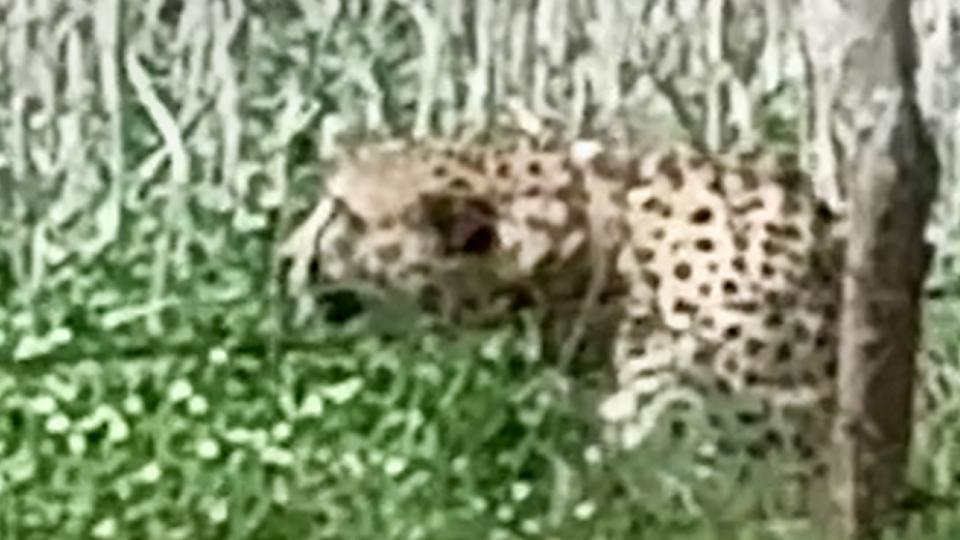
The cheetahs will be allowed of move out of the national park and will not necessarily be “recaptured unless they venture into areas where they are in significant danger”, the ministry said in a statement.
So far, four of the eight cheetahs brought from Namibia have been released from the fenced acclimatisation camps into free-ranging conditions in KNP.
The cheetahs were chosen for release based on their behavioural characteristics and approachability by the monitoring teams.
A team comprising Adrian Tordiffe, veterinary wildlife specialist, University of Pretoria, South Africa; Vincent van der Merwe, manager, Cheetah Metapopulation Project, South Africa; Qamar Qureshi, lead scientist, Wildlife Institute of India, and Amit Mallick, inspector general of forests, National Tiger Conservation Authority, visited KNP on April 30.
“The team inspected most of the cheetahs from a distance and evaluated the current procedures and protocols for managing the animals. All the cheetahs were in good physical condition, making kills at regular intervals and displaying natural behaviour,” the statement read.
The ministry said that projects of this magnitude and complexity tend to face many challenges.
“This is the first intercontinental reintroduction of a wild, large carnivore species and therefore there is no comparable historical precedent,” the ministry’s statement said.
“Due to careful planning and execution, all 20 cheetahs survived the initial capture, quarantine and lengthy transport to the purpose-built quarantine and larger acclimatization camps in KNP in Madhya Pradesh. Releasing the cheetahs into free-roaming conditions poses substantial risks,” the statement said.
Eight cheetahs from Namibia were released in Kuno on September 17 last year, in the first leg of the translocation project after a decades-long effort to restore a species that was declared extinct in 1952, owing to poaching and shrinking grasslands. Twelve South African cheetahs were brought on February 18.
Of these, two cheetahs, Sasha and Uday died in March and April, respectively. There are now 18 cheetahs at the national park, along with four cubs born to Namibian cheetah Siyaya.
The remaining cheetahs will remain in the acclimatisation zones for the monsoon season, and their situation will be reassessed in September.
“It is impossible to recapture Cheetahs when they stray out and cheetahs love to explore. So, we have decided to release five very habituated ones in the wild because we can still try to bring them back if they stray. Rest of the six will remain in the enclosure and will be relaxed. The staff will walk them and see if they can be approached with vehicles,” Merwe said.
The experts, however, expressed disappointment that Mukundara Hills National Park in Rajasthan was not being considered as an alternative site for the cheetahs.
“We know from our experience of reintroductions in Africa that mortalities are to be expected. Reintroduction involves a challenging phase when cheetahs encounter different dangers. We wanted Mukundara from day one for our cheetahs. It is very sad that due to various complicated issues, Mukundara is not yet being considered. When it comes to reintroduction of cheetahs, we do not put all eggs in one basket. It is not recommended. We have been told that Nauradehi and Gandhisagar parks are being fenced. We hope that is completed soon. It’s great that we haven’t lost any cheetahs in India to snares or leopards yet. Leopards are a threat to cheetahs in SA also,” said Vincent van dan Merwe, Manager, Cheetah Metapopulation Project, The Metapopulation Initiative, South Africa.
While the environment ministry did not provide details on the Mukundara Hills National Park as a site, it said that it is difficult to assess the carrying capacity of KNP until the cheetahs have properly established their home ranges.
“Like Kuno, no protected areas in India are fenced (unlike in South Africa). Animals are thus free to move in and out of the park as they wish. Cheetahs are known to range widely during the initial few months after being reintroduced… movements are unpredictable... It is important that individual cheetahs do not become totally isolated from the reintroduced group during this phase as they will then not participate in breeding and will thus be genetically isolated,” the ministry said.
The cheetah, who gave birth to four cubs in March, will remain in her camp to hunt and raise them, the ministry said, with Merwe adding that male and female cheetahs will be allowed to interact so they can breed.
Project Cheetah hopes to benefit global cheetah conservation efforts by providing up to 100, 000 km2 of habitat in legally protected areas and an additional 600,000 km2 of habitable landscape for the species.