E-Paper



India-UK trade deal: Indian exports rise 8%, imports fall 17% in first 2 months
The CETA provides zero-duty access for nearly 99% of India’s exports, covering almost 100% of trade value

 Prefer HTon Google


Indian merchandise exports to the United Kingdom (UK) rose 8% on an annualised basis to $2.43 billion in August and September this year, the first two full months after the India-UK free trade agreement came into force in mid-July, according to the latest data. Goods imports from Britain fell by 16.8% in these two months to $1.36 billion, data showed.
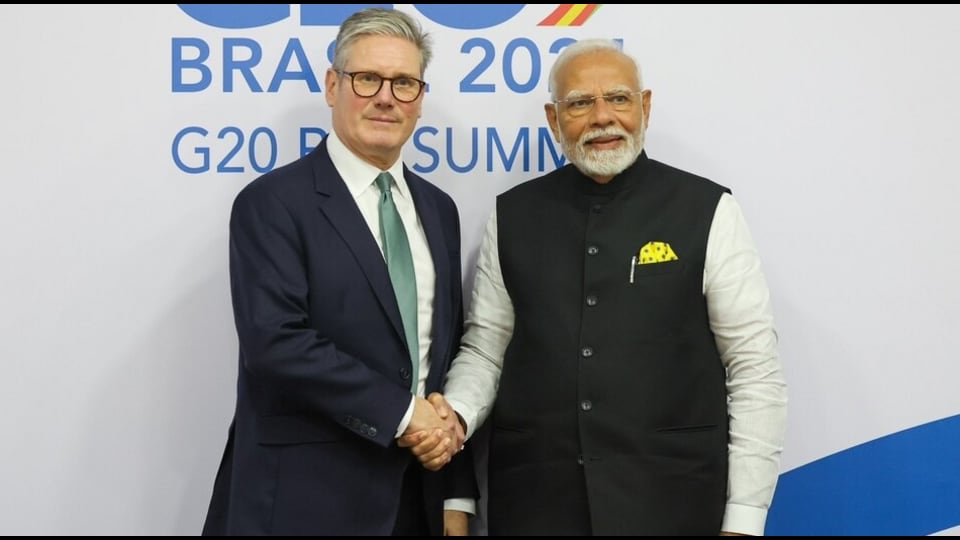
The India-UK Comprehensive Economic and Trade Agreement (CETA) was operationalised on July 15 this year.
India’s merchandise exports to the UK, which fell about 4.2% to $1.2 billion in July 2026 as compared to $1.25 billion, had a double-digit year-on-year growth of over 10% to $1.26 billion in August 2026 and about a 5.5% increase to $1.17 billion in September this year.
Indian exports grew from July this year. The imports from the UK declined in September 2026. Shipments of British merchandise in July 2026 rose by nearly 12% to $639 million from 571 million in July 2025. Imports year-on-year surged over 24% to $733 million next month in August, only to record a sharp 40% fall to $630 million in September 2026 as compared to $1.05 billion in the same month of the previous year.
Both economies are yet to realise the full potential of CETA as traders from both sides are gearing up, government officials and trade experts said. The trend is positive as August (the first full month after CETA) recorded robust mutual gains. The sharp decline in imports from the UK in September is also because of a fall in imports of precious metals like silver.
A comprehensive analysis of the reasons would be possible after country-specific, commodity-wise granular data are released, which comes with a lag.
According to provisional trade data for the first half of 2026-27 released by the commerce ministry on October 15, India’s merchandise exports to the UK rose by 7.22% to $7.32 billion in April-September 2026 as compared to $6.83 billion in April-September 2025.
India’s merchandise imports from the UK recorded a 1.6% decline to $4.06 billion in the first half of 2026-27 as compared to $4.13 billion in the first half of 2025-26, the data showed. Experts said imports from the UK would also grow over time within the ease of import quotas for high-value items such as automobiles and whiskies.
For Britain, CETA removes or reduces tariffs on 90% of tariff lines, covering about 92% of India’s goods imports from the UK. This includes key UK exports such as whiskies and gin from 150% to 75% at entry into force and 40% after staging. Similarly, UK car manufacturers can benefit from a quota reducing the tariff from up to 110% to 10%.
The India-UK CETA provides zero-duty access for nearly 99% of India’s exports, covering almost 100% of trade value, experts said. Most of these items include labour-intensive products such as textiles, leather goods, marine products, gems and jewellery, toys, engineering goods, chemicals, and auto components, they added.
Apart from tariff elimination, CETA also provides for simplified rules of origin, boosts services trade and professional mobility. A Double Contribution Convention between the two countries exempts workers and their employers from paying social security contributions.