E-Paper



Before Bihar-Kashmir combo deal, here’s what Markandey Katju offered
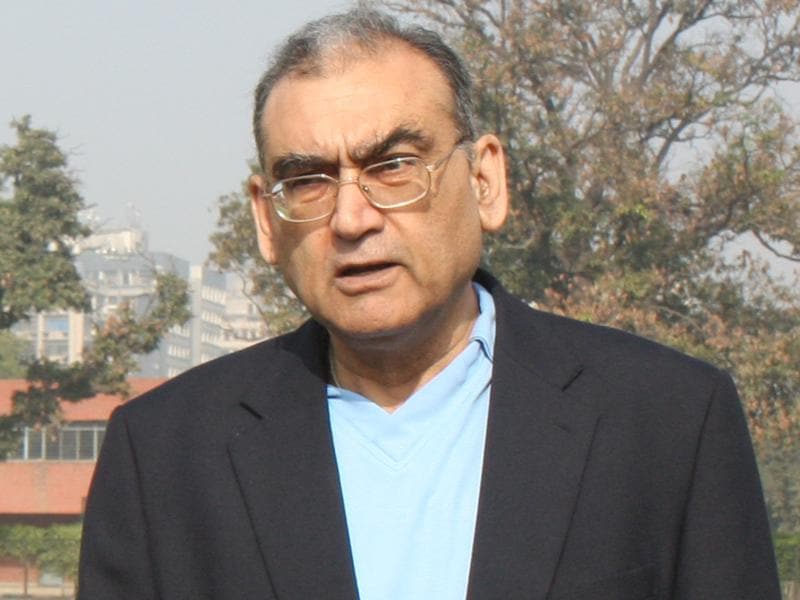
Former Supreme Court judge and commentator-at-large Markandey Katju is in the news again, this time for suggesting that Pakistan could get Kashmir if it agrees to take Bihar also as part of a “package deal”.

 Prefer HTon Google


Former Supreme Court judge and commentator-at-large Markandey Katju is in the news again, this time for suggesting that Pakistan could get Kashmir if it agrees to take Bihar also as part of a “package deal”.
Just last week, Katju’s name trended on social media, after he said superstar Amitabh Bachchan has nothing in his head.
The mercurial ex-judge is no stranger to stoking rows, mostly through his posts on Facebook. HT brings his top eight controversial comments:
Kali magic: Responding to queries on Facebook on the best way to retaliate after the Uri attack, Katju said chanting the Kali Mantra – “the most powerful mantra to destroy enemies”-- a possible sarcastic take.
Gandhi a British agent: In a Facebook post last year, Katju called Mahatma Gandhi a “British agent who did great harm to India”. The former judge blamed Gandhi for furthering the British policy of divide-and-rule, emphasizing Hindu rituals and propagating reactionary economic policies. He also called Netaji Subhas Chandra Bose a “Japanese agent”, triggering a fierce backlash online.
Kashmiris are not fit for freedom: In August during the middle of the current turmoil in the Valley, Katju said Kashmiris are not “fit” for Azaadi (freedom), just as “children are not fit for driving licences”.
90% Indians fools: In his most famous (notorious?) comment four years ago, Katju described 90% Indians as “fools” whose minds are “full of superstitions, communalism and casteism”.
Mother Teresa fanatic: As India celebrated the canonization of Mother Teresa this month, Katju took on the iconic figure, calling her “reactionary semi educated fundamentalist, fanatic and fraud”.
IIT students selfish: Last year, Katju criticized students at IIT-Bombay, saying they were “utterly selfish” with “no patriotism or idealism”.’
SC judges “intellectually low”: In September, the former Supreme Court justice said most judges in India’s top court were “intellectually low” and this had made people lose faith in the judiciary. Earlier, he had called 50% of the SC judges “corrupt”.
Tamil Nadu, learn English: In 2012, Katju said all Indians should learn English for the country’s progress and those in non-Hindi speaking areas – “such as Tamil Nadu” should learn Hindu. His comments caused an uproar in many parts of the country where Hindi is seen as an imposition of northern Indian culture.