
 E-Paper



Largest cattle vaccination drive ever to ramp up milk exports
India’s exportable surplus and milk productivity per animal is lower compared to global leaders, such as the US and New Zealand. Centre believes foot and mouth disease cripples milk output.


To ramp up dairy exports, India is set to embark on the largest cattle vaccination drive ever to immunize livestock against foot and mouth disease, a widely prevalent disease that cripples milk output.
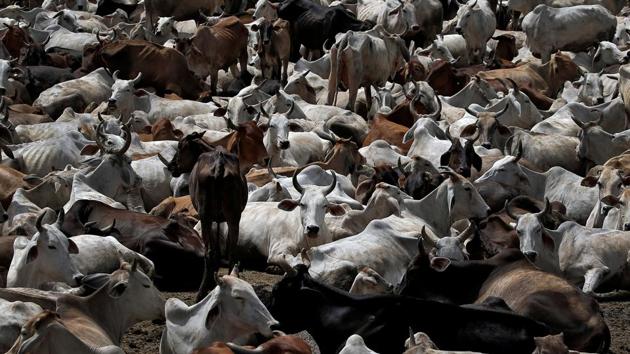
Although the country is the largest milk producer globally, its exportable surplus and +per animal is lower compared to global leaders, such as the US and New Zealand.
Prime Minister Narendra Modi had announced the launch of the scheme during his visit to Mathura on September 11. According to plan, the government will spend nearly Rs 13,000 crore on the immunization plan for the next five years. The proposal was first cleared during the first Cabinet of the present government in May. During 2019-20, the government has budgeted Rs 500 crore, an official requesting anonymity said.
An inter-ministerial committee, which has finalized a rural-sector turnaround plan to be presented to the Prime Minister, has set targets, suggesting phases to cover the entire cattle population, ramping up vaccine production and expanding dairy exports.
“We may boast of being the highest milk producing nation but productivity is low and mainly due to foot and mouth disease. The amount of meat or processed items from livestock is also limited by our disease burden,” the official said.
The government has targeted covering 300 million unvaccinated bovines, 200 million sheep and 10 million pigs during the first phase. As part of the programme also, about 36 million female bovine calves would be vaccinated to protect them against the brucellosis disease.
“Our milk surplus is low, which is about 0.6% of total production. New Zealand’s marketable surplus is nearly 95%, with domestic milk consumption of about 5%,” said RG Chandramogan, the chairman of Hatsun Agro Product Limited.
A review meeting has suggested ramping up vaccine production by at least 400 million doses. India currently produces about 480 million dozes.
A National Artificial Insemination Programme is also currently being undertaken on the instructions of the PMO to breed high productivity milch animals, part of the government’s attempt to double farm income.
The PMO had recently tweeted that workshops would be organized in 687 districts of the country to raise awareness on vaccination and disease-free livestock industry.
India, the world’s largest producer, has seen a spurt in milk output but much of it goes into domestic consumption.
In the past four years, output has grown by over 6% every year. Production was 165.4 million tonne during 2016-17. In 2017-18, it was estimated to be 176.35 million tonne, a 6.5% annual jump.
However, milk farms are usually small and a majority of producers own between two to three cows, affecting productivity levels. According to IFCN Dairy Research Network, on average, Indian farmers produce 1,248 kg of milk per cow annually. US dairy farms produce about eight times more per animal.


