
 E-Paper



Meerut murder: Muskan Rastogi, wife of ex-merchant navy officer, wants to study law from jail, says report
Muskan Rastogi, who hasn’t studied beyond Class 8, must finish senior secondary education first to be eligible for legal studies, say jail authorities.

 Prefer HTon Google


Muskan Rastogi, 28, accused in the murder of her husband, an ex-merchant navy officer, has sought permission from Meerut jail authorities in Uttar Pradesh to study law in order to represent herself in court, The Times of India reported.
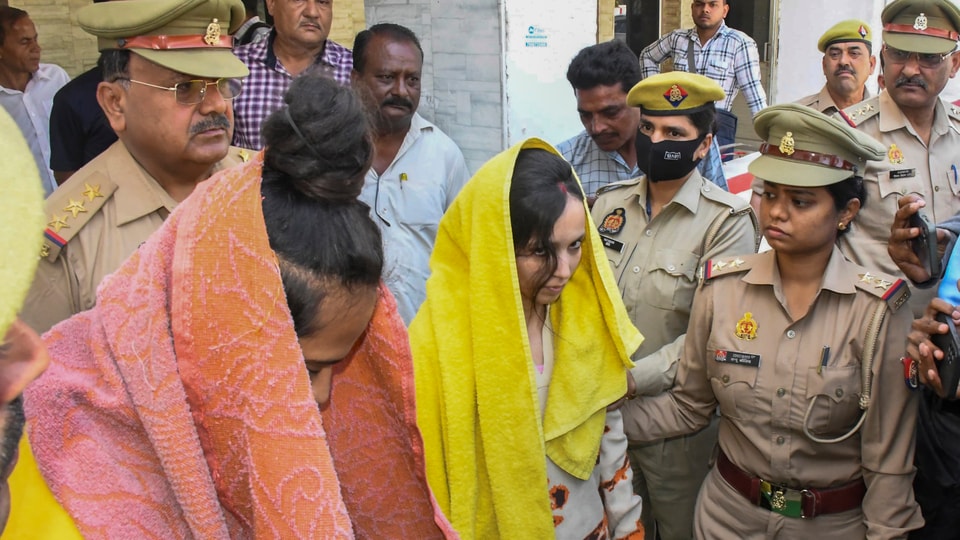
A jail official told the publication that Muskan Rastogi expressed dissatisfaction with the support she received from her lawyer and stated her intention to argue her own case.
Muskan Rastogi and her partner, Sahil Shukla, allegedly killed her husband, Saurabh Rajput, 35, whose dismembered and cement-sealed body was discovered inside a blue drum at his Brahmpuri residence in Meerut on March 18.
The couple was arrested after returning from a trip to Himachal Pradesh. Both were sent to Chaudhary Charan Singh District Jail after a court rejected their bail applications.
Muskan didn't study beyond Class 8
The jail official told The TOI that Muskan Rastogi has not studied beyond Class 8 and lacks a senior secondary certificate, which is a mandatory requirement for pursuing legal studies in India.
Authorities have now begun exploring the steps required for her to pursue legal education. It has been clarified that Muskan would need to complete her senior secondary education before she can be eligible for an LLB course.
According to officials, IGNOU (Indira Gandhi National Open University) offers a variety of educational programmes within the jail system.
Jail superintendent Viresh Raj Sharma told The Times of India, “Since Muskan was lodged in jail, no one from her family has visited her, while Sahil's maternal grandma and brother met him. Now, Muskan has sought the process to study legal education and we are thinking about it. If she wants to study, jail authorities will provide all necessary resources to her.”
Latest development in the case
Earlier this month, Meerut Police filed a detailed chargesheet of nearly 1,000 pages against Muskan Rastogi and her lover Sahil Shukla in the murder case of former merchant navy officer Saurabh Rajput. The chargesheet, submitted 69 days after the discovery of Rajput’s dismembered body, outlines a chilling murder conspiracy involving his wife and her partner, according to a previous report by Hindustan Times.
It includes statements from 34 witnesses – ranging from family members and hotel staff to police officials – that help reconstruct the sequence of events following Rajput’s return from London.
Muskan’s parents, Kavita and Pramod Rastogi, testified against their daughter, holding her responsible for the crime. Their statements have been added to the chargesheet and are expected to bolster the prosecution’s case.
Muskan was also found to be pregnant during a routine medical examination in jail.
How the murder of ex-merchant navy officer was planned
Police said Saurabh Rajput, a resident of Indiranagar, returned to Meerut on February 24 after spending time abroad. Within 10 days of his return, he was murdered in what investigators describe as a premeditated crime involving his wife, Muskan and her lover, Sahil Shukla. On the night of March 3, Saurabh was fatally stabbed in the chest, after which his body was dragged into the bathroom and dismembered.
According to the chargesheet, the accused stuffed his remains into a blue plastic drum and covered them with cement and dust to suppress the odour and hide the crime. Sahil allegedly decapitated Saurabh and carried the severed head in a bag, while the rest of the body was sealed inside the drum.
After committing the murder, Muskan and Sahil fled to Himachal Pradesh, travelling through Shimla, Manali, and Kasol. On March 11, just days after the killing, Muskan was seen celebrating Sahil’s birthday in Manali. Statements from hotel staff who served the couple during their stay proved instrumental in tracing their movements and piecing together the timeline.
The case came to light on March 18, when police recovered the blue drum containing the body parts. Both suspects were arrested the next day and have remained in custody since.
The police gathered a range of evidence – including forensic samples, digital records, and witness statements from 34 people, such as a taxi driver, chemist, landlord, and hotel employees – to build the case


