
 E-Paper



North India under smog grip; Rohtak most polluted place in the world
While Delhi was on the pollution watch radar, it was a small town in central Haryana, Rohtak, that recorded the worst Air Quality Index (AQI) level—a 24-hour average of aggregate pollutants—in the country, according to the Central Pollution Control Board’s online air pollution monitoring system.

 Prefer HTon Google


Thick smog of toxic pollutants engulfed the entire plains of northern India on Sunday beating the previous records of air pollution levels on November 3, making the region’s air most polluted in the world, even as some chief ministers sought the Centre’s “immediate” intervention.
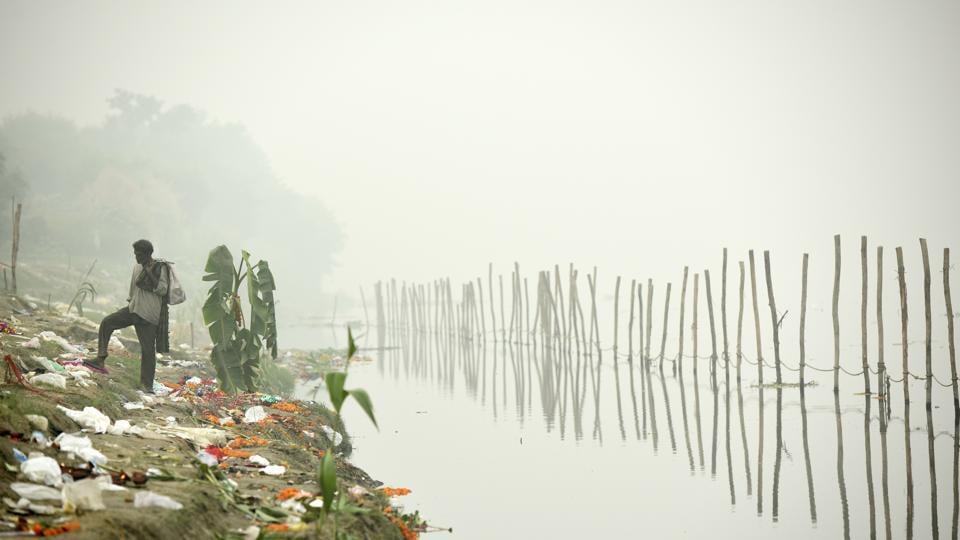
While Delhi was on the pollution watch radar, it was a small town in central Haryana, Rohtak, that recorded the worst Air Quality Index (AQI) level—a 24-hour average of aggregate pollutants—in the country, according to the Central Pollution Control Board’s online air pollution monitoring system.
Rohtak’s AQI was about 498, four points higher than that of the national capital, Delhi.
Most of the towns that reported a severe or severe-plus level of air pollution were in the national capital region (NCR) that extends up to Alwar in Rajasthan on the western side, up to Hapur in eastern and Panipat in the north.
According to global air pollution monitoring website, airvision.com, among the world’s 91 major cities, Delhi’s AQI (767) was highest. Second in the list was Hanoi with AQI of 154.
The live monitoring by the website does not include smaller Indian towns and cities which are on the CPCB tracker.
The website also said that most of the places in the Indo-Gangetic plains of India recorded the highest pollution levels this year in the past week—the post-Diwali period.
An analysis of the air quality in the Indo-Gangetic plains released on Thursday by University of Chicago claimed that an average person living in this region was expected to lose seven years of life because the air quality fails to meet the World Health Organization (WHO) standard of 20 micrograms in cubic meter of air for particulate matter pollution.
In March 2019, a Greenpeace report said that 22 of the world’s 30 most air polluted places were in India and most of them were in the north-plains which is under the grip of yet another round of hazardous air for one’s health. The report was based on an analysis of the air pollution levels in 3400 cities across the world in 2018 by airvision.com.
On Sunday, most of the Haryana towns—Karnal, Panipat, Rohtak, Bahadurgarh, Bhiwani, Jind, Kaithal—recorded highest air pollution levels in the past three years even though the stubble burning cases reported this year were lesser than in 2018.
According to Haryana pollution control board, till November 2, 4350 cases were registered against farmers for alleged stubble burning as against about 4500 in 2018 in the state where 1.1 million hectares of farmland was under paddy cultivation, same as last year.
Most towns in Punjab were also reeling under high levels of pollution although the levels were less than in Delhi and its neighbourhood. In the paddy growing districts such as Amritsar, the AQI was 295 (poor level) and Bathinda 291 (poor). However, the AQI was over 320 higher in the industrial towns of Ludhiana, Jalandhar and Khanna.
Punjab chief minister Captain Amarinder Singh on Sunday said that 2923 farmers were booked for stubble burning till November 1, which is about 20% less number of cases as compared to 2018. He also said that incidents of farm fires being reported this year were about half of those in 2018.
In Uttar Pradesh, Noida was the most polluted city with AQI 495 closely followed by Ghaziabad at 491 and Hapur at 471. Lucknow continued to have polluted air with an AQI of 400, Kanpur 383 and Varanasi 332.
Chief minister Yogi Adityanath on Friday held a meeting and directed district magistrates, especially of western districts of the state, to take stern action against farmers found to be burning stubble. Directions have been issued to sprinkle water on roads and trees, a government official, not willing to be quoted, said.
Rajasthan chief minister Ashok Gehlot on Sunday urged the Centre to take lead and address the air pollution situation after holding a review meeting with the government officials as polluted levels in Jaipur doubled.
“Rising pollution levels in Delhi and in neighbouring states including Rajasthan is a matter of grave concern. People are suffering since long especially children and old people. It is a health emergency, which only Delhi government cannot solve alone, the central government has to take lead,” Gehlot tweeted.
Chief ministers of Delhi and Punjab, Arvind Kejriwal and Captain Amarinder Singh respectively, have sought a meeting of their counterpart in all the northern states to discuss a strategy to deal with a huge spurt in air pollution in the region and ensure its implementation.
Although weather plays the most important role in building smog, stubble burning in Punjab and Haryana along with local polluting sources makes it more toxic.
(With inputs from Chandigarh, Lucknow and Jaipur)


