
 E-Paper



‘On surface, looks like US-Iran war’: Rahul Gandhi's ‘superpower’ analogy for Gulf tensions, warns of India impact
Rahul Gandhi said that with the conflict in the Middle East underway, oil prices are set to get higher, which will trigger inflation and slow growth rate.

 Prefer HTon Google


Though the ongoing conflict in the Middle East appears to be between US-Israel and Iran, the real players are the US, China and Russia, Congress leader Rahul Gandhi said on Friday, even as he tried to sketch an analogy of a "conflict of superpower" in a multipolar world.
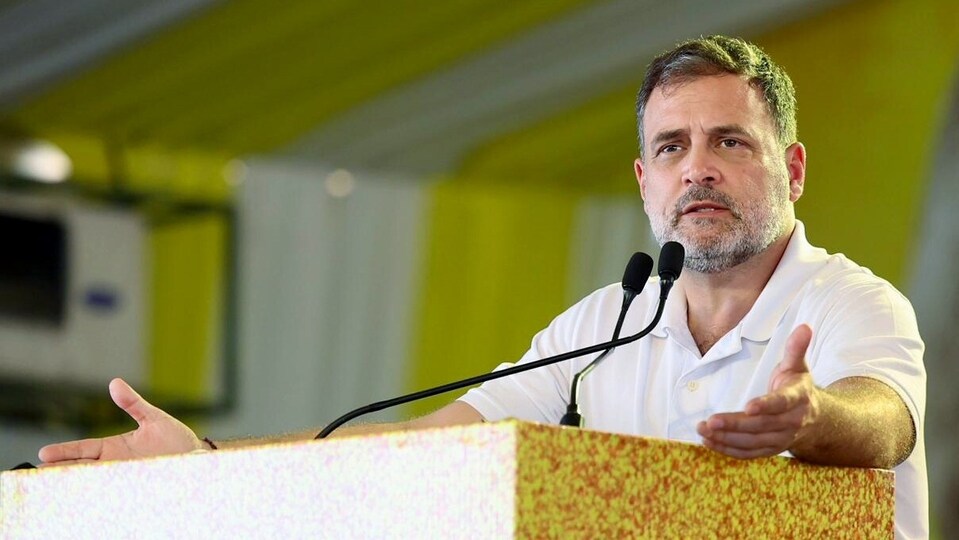
While speaking at an event in Kerala's Idukki, the Leader of The Opposition raised concerns over India's energy security due to the tensions in Middle East, that has already disrupted energy supply from the region after a week of fighting.
Follow latest updates on Iran-US conflict
"On the surface, it looks like a war between America, Israel and Iran. It's actually a conflict between America, China and Russia. And the conflict is taking place in Iran, in Ukraine and in other places. But the big conflict is that we have a superpower called the United States and we have a challenger called China," Gandhi told the gathering.
The remark of Rahul Gandhi comes even as the war between Iran and US-Israel alliance continues to wage since February 28. While more than 1,000 people have been dead in Iran, the missile and drone strikes from Tehran have targeted US bases and energy infrastructure in the Middle East nations, including UAE, Saudi Arabia, Qatar, Bahrain, and Oman.
The Strait of Hurmuz, a key sea route connecting the Middle East oil and gas suppliers to the world, remains close as Iran as threatened to attack vessels crossing the narrow channel.
"The Middle East is the centre of energy production in the world. A huge chunk of energy comes from the Middle East...State of Hormuz is blocked. The Americans are attacking Iran. Iranians are attacking the American assets," Rahul Gandhi said.
Iran-US war has high stakes for India
While talking of the clash between superpowers, the turf of which remains the Middle East or Ukraine, Rahul Gandhi said that the ongoing conflicts have direct impact on India.
He reasoned that the oil prices are set to get higher with falling supply from the Middle East, which in turn will trigger inflation and slowing the growth rate.
"Our energy reliance is on the Middle East. Huge part of oil comes from the Middle East. Prices in India are going to rise. Fuel in India is going to become more expensive. Economic growth in India is going to slow down. And so we have to be very careful about what we do," he said.
He also cautioned that India needs to be "very clear" on its policy positions.
"We have to be very clear on what our policy positions are...Because if we don't and we get caught in the fight, then we're in serious trouble. China's on our border and America's our ally. And they're getting ready to fight. So we have to be very careful where we are standing," he added.


