
 E-Paper



Rafale vs J-20: Ex-IAF chief Dhanoa calls China’s bluff with ‘two simple questions’
Chinese Communist Party’s tabloid Global Times quoted a military ‘expert’ who claimed the Rafale fighter is only superior to the IAF’s Sukhoi-30 MKI jets but a generation below Chinese PLA’s J-20 fighter.

 Prefer HTon Google


Former Air Chief Marshal BS Dhanoa on Friday dismissed claims that the Rafale fighter jets inducted by the Indian Air Force this week had no chance against China’s J-20 stealth fighter.
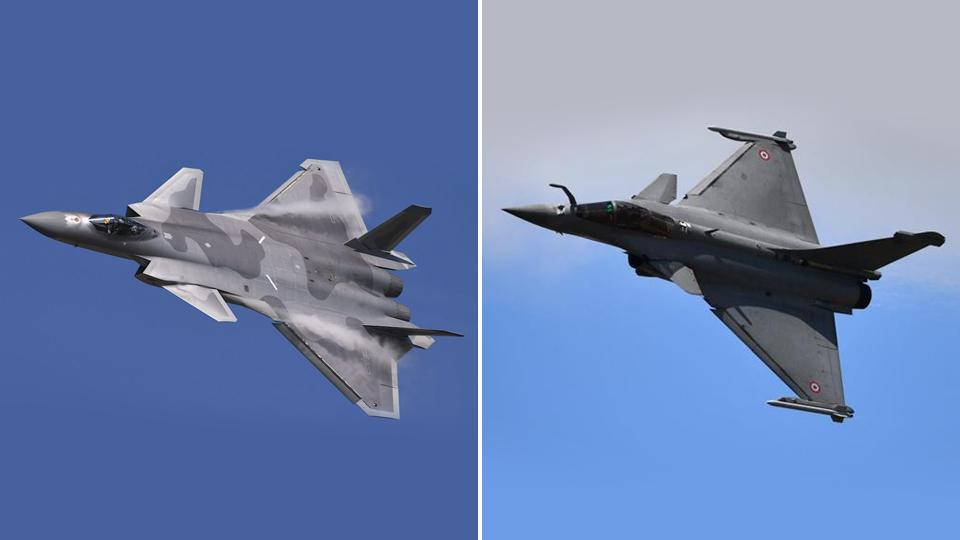
The claims, made by an ‘expert’ in Chinese Communist Party’s tabloid Global Times, said that the Rafale was only superior to the IAF’s Sukhoi-30 MKI jets but a generation below Chinese PLA’s J-20 fighter.
“It is only about one-fourth of a generation more advanced and does not yield a significant qualitative change,” Zhang Xuefeng, who was described by the communist party’s propaganda website as a Chinese military expert, said.
Also Read: Indian Air Force with Rafale has plan to take the fight to China
The website, quoting unnamed experts claimed, that “Rafale is only a third-plus generation fighter jet, and does not stand much of a chance against a stealth, fourth generation one like the J-20”.
Ex-IAF chief Dhanoa, who has described the 4.5 generation Rafale fighter jets as a “game changer for the IAF, responded to the Chinese claim with “two simple questions”.
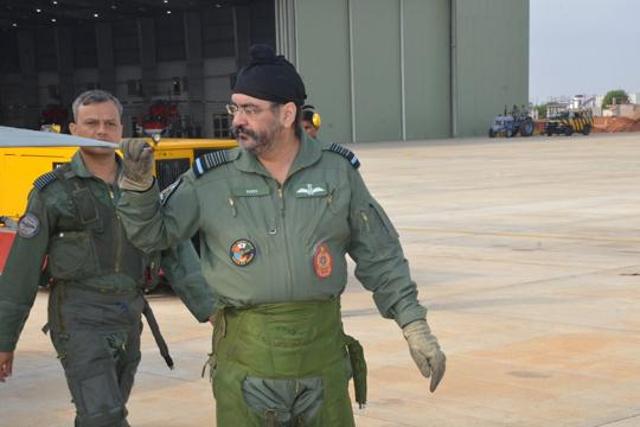
“If the J-20, also called the Mighty Dragon, is indeed a fifth generation stealth fighter, then why does it have canards while genuine 5th generation fighters such as the US’ F 22, F 35 and Russian fifth generation Su 57 don’t,” Dhanoa asked.
Also Watch | Rafale boost for Air Force: How it helps India’s air power amid China tension
Also Read: Rafale is a game changer, Chinese J 20 does not even come close, says former air chief Dhanoa
Canards are fuselage-mounted small, forward wings located forward of the main wing to improve aircraft control and contribute to lift. They are considered to present large angular surfaces that tend to reflect radar signals.
“I don’t think J-20 is stealthy enough to be called a fifth generation fighter as the canard increases the radar signature of the fighter and gives away its position to a long-range meteor missile that the Rafale has,” he said.
The other question the former IAF chief has for the Chinese is: “Why can’t the J-20 supercruise if it is really a 5th generation fighter as its manufacturer Chengdu Aerospace Corporation calls it.”
Supercruise is the ability of a fighter jet to fly at speeds above Mach 1 - the speed of sound - without the use of afterburners, the additional combustion component used on some jet engines to increase thrust.
Also Read: Twin naval exercises with US supercarriers signal QUAD has arrived
“The Rafale has the supercruiseaility and its radar signature is comparable to the best of the fighters in the world,” Dhanoa told Hindustan Times.
Dhanoa has flown top of the line Indian fighter aircraft including Sukhoi 30 MKI. He was the man responsible for targeting the Pakistani intruders on Drass, Kargil, Battalik heights and spearheaded the Balakot air strikes along with National Security Adviser Ajit Doval.
The retired top air force officer had earlier this week shredded the Chinese propaganda of superior air capability, wondering that if the Chinese equipment was so good, Pakistan would have used its Chinese JF-17 and not the F-16 aircraft to attack Nangi Tekri brigade in Rajouri sector on 27 February 2019. But Pakistan used the Chinese JF-17 to merely give air defence cover to its Mirage 3/5 bombers. Or why China’s “iron brother” uses Swedish early air warning platforms up north and the keep Chinese AWACS in the south.
Incidentally, India is expected to get 12 more Sukhoi 30 MKI and 21 MiG 29s next year from Russia. According to diplomats based in Moscow, the Su-30 MKI will “look better, shoot better, and fight better”. The MiG 29 will be used for setting up a new squadron in Jamnagar in Gujarat and will have the same capability as the MiG 29 that India currently has.


