
 E-Paper



Ram Mandir to have 14-ft wide percota; zero discharge policy: Temple map revealed
Groundwater level beneath the Ayodhya temple complex will never go down, the temple complex will not discharge any wastewater outside.

 Prefer HTon Google


With barely a month left before the grand opening of the Ram Temple on January 22, the Ram Temple Trust presented the landscape map of the temple premises giving an overview of the 70-acre complex. The complex is modelled on Aatmanribhar principle as it will have sewer plants, water treatment plants, a fire brigade post and a dedicated power line. The temple will not become a burden on the Ayodhya municipality, Ayodhya Trust's general secretary Champat Rai said.
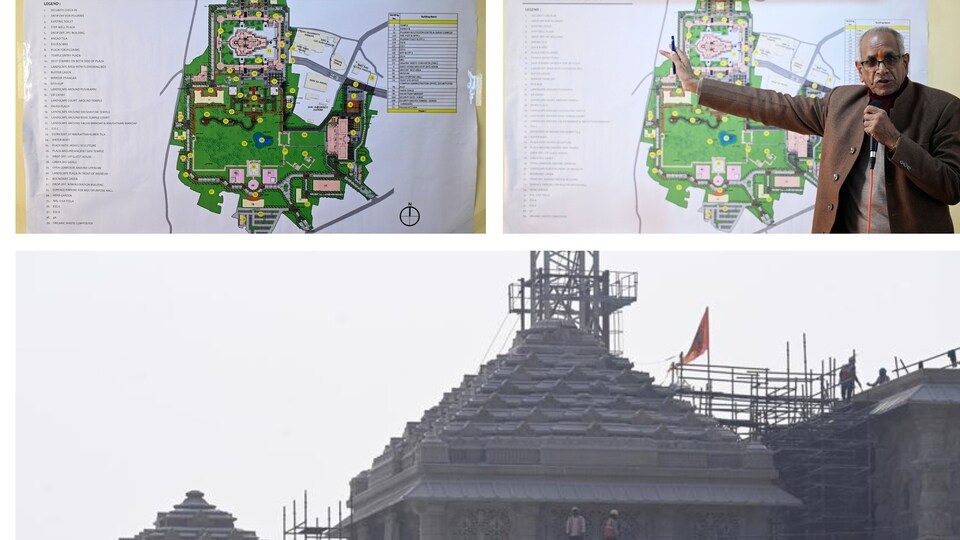
14-foot wide percota around grand temple, zero-discharge complex: Here are top 10 points
1. The entry into the temple will be from the east side, and exit from the south side. The entire temple superstructure will eventually be three storeys.
2. Visitors will have to climb 32 steps from the eastern side to reach the main temple.
3. The temple complex is built in the traditional Nagara style -- 250 feet wide and 161 feet high. Each floor of the temple will be 20 ft high and have a total of 392 pillars and 44 gates.
4. Generally temples in the North do not have percota (outer part around the sanctum sanctorum). But the Ram Temple will have a percota, 14-foot wide and spanning 732 metres.
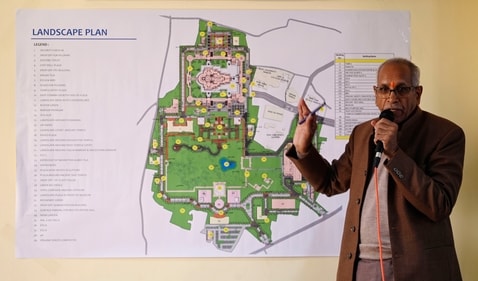
5. The four corners of the 'percota' will be dedicated to Sun God, Maa Bhagwati, Lord Ganesha and Lord Shiva. On the northern side, there will be a shrine for Maa Annapurna and on the southern side, there will be one for Lord Hanuman.
6. Maharshi Valmiki, Maharshi Vashisht, Maharshi Vishwamitra, Maharshi Agastya, Nishad Raj, Mata Shabri and Devi Ahilya each will have shrines dedicated to them. An idol of Jatayu has been installed at Ayodhya’s Kuber Tila.
7. In the complex, there will be a pilgrim facilitation complex with a healthcare centre and a toilet block. A provision has been made where 25,000 people will be able to deposit their shoes, watches and mobile phones before they go for darshan.
8. During summer, separate provisions will be made for the visitors so that they don't have to walk barefoot from the facility centre to the temple.
9. About 70% of the 70 acres of the temple complex will be green areas. There are trees as old as over a hundred years. There is such a dense jungle that the sunray does not reach the ground, Rai said.
10. The complex will have two sewerage treatment plants, one water treatment plant and a dedicated electricity line. It will have a fire brigade post which will source water from an underground reservoir. The groundwater level will never go down. If needed, water will be taken from the Sarayu river, Rai said.


