
 E-Paper



'One more unfortunate case of suicide': Supreme Court on IIT-Delhi student's death
A bench of Justices JB Pardiwala and R Mahadevan referred to the IIT Delhi suicide and hoped the court’s directions were followed

 Prefer HTon Google


The final report of the National Task Force (NTF) that the Supreme Court constituted in March 2025 to examine student suicides across India will be available by November, the court said on Tuesday, as it referred to the August 22 suicide of an Indian Institute of Technology (IIT) Delhi scholar and called it unfortunate. The NTF submitted a status update, saying the final report will be completed by October 31 as per the court’s deadline.
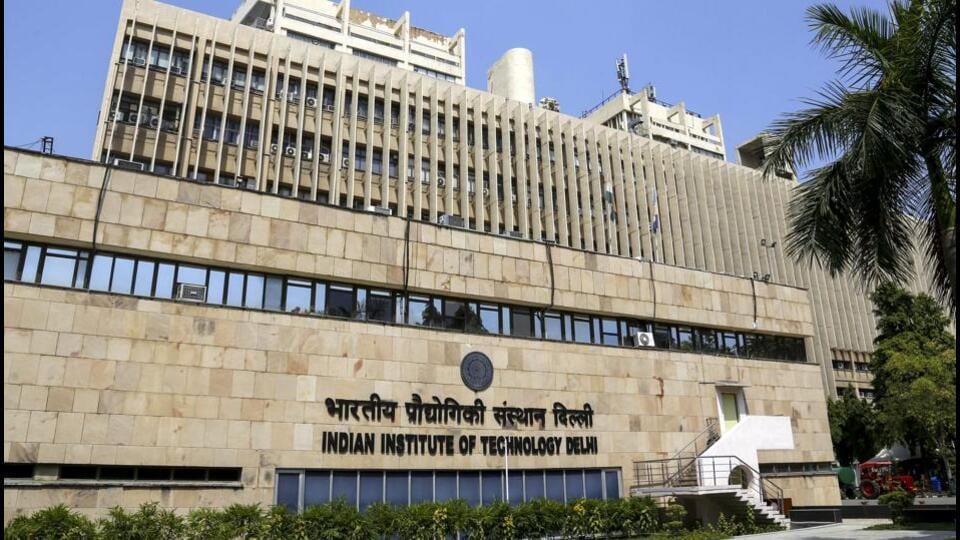
“We read in the newspapers about one more unfortunate incident of suicide. We hope the directions passed by us were followed,” said a bench of Justices JB Pardiwala and R Mahadevan, referring to the IIT Delhi suicide.
In January, the court issued a slew of directions to ensure higher educational institutions (HEIs) are accountable for students’ mental well-being after the NTF submitted an interim report. The NTF recommended making it mandatory for every HEI to report suicide or unnatural death to the law enforcement agencies and provide round-the-clock medical help in residential campuses to prevent such incidents.
Senior advocate Aparna Bhat, who represented the NTF and is assisting the court as amicus curiae, told the bench that the NTF visited IIT Delhi on August 27 and found that the 31-year-old student had mental health issues, citing interactions with students, faculty members, and administration staff. IIT Delhi students took to the streets demanding a fair investigation into the death and compensation for the student’s family.
In its status report, the NTF said the task force members researched issues affecting students by visiting campuses, government departments and authorities, and conducting an online survey of students, faculty members, parents, mental health professionals and higher educational institutions.
The court in January noted a gap, saying there is no mechanism for the implementation of guidelines of the University Grants Commission and the government on ragging, drug abuse, sexual harassment, accessibility, suicide prevention, and mental health. It used its extraordinary powers under Article 142 of the Constitution, which allows the court to pass orders to do complete justice, and directed all HEIs to maintain a registration system for the 15-29 age group. It ordered the National Crime Records Bureau to distinguish student suicides between school-going and higher education students.
In its interim report, the NTF highlighted that suicide is the highest cause of death among women and second highest among men in the 15-29 age group. It added that only 3.5% of 60,383 HEIs responded to the survey it conducted. In more than 70% of HEIs, the NTF found no medical service provider. Fewer than 20% of them had external support.
The NTF found that many institutions refused to allow students from disadvantaged groups to take exams or attend classes due to delays in scholarship disbursal. The court had directed HEIs not to bar any student from appearing in examinations or classes or deny any facility due to delays in scholarship disbursal.
The NTF cited interactions with students and said many of them confided that extremely rigid attendance policies and faculty shortages led to mental stress. Medical students cited their on-call duty hours as an additional cause for mental stress.
The NTF was asked to prepare a model Universal Design Framework or a model Suicide Prevention and Postvention Protocol, incorporating all model standard operating procedures and guidelines on ragging, promotion of equity, sexual harassment, etc.
The task force received nearly 1.3 million responses as part of an online survey. It was analysing them to identify recurring trends, institutional patterns, region-specific concerns, identity-based vulnerabilities, mental health indicators, and accessibility issues. “The NTF is examining the data with a view to identifying systemic gaps, institutional deficiencies, risk factors contributing to student distress and areas requiring policy intervention and institutional reform.”
The NTF has interacted with experts in the UK, Canada, Sweden, South Korea, and Australia.


