E-Paper



Stagnant air keeps Delhi’s AQI in ‘very poor’ zone despite sunny morning
The minimum temperature at Safdarjung around 10am on Saturday was 11.8°C, 0.5 degrees above normal and 0.6 degrees higher than a day ago

 Prefer HTon Google


New Delhi: The national capital saw a relatively clear and sunny Saturday morning, even as stagnant air kept its air quality firmly in the “very poor” category.
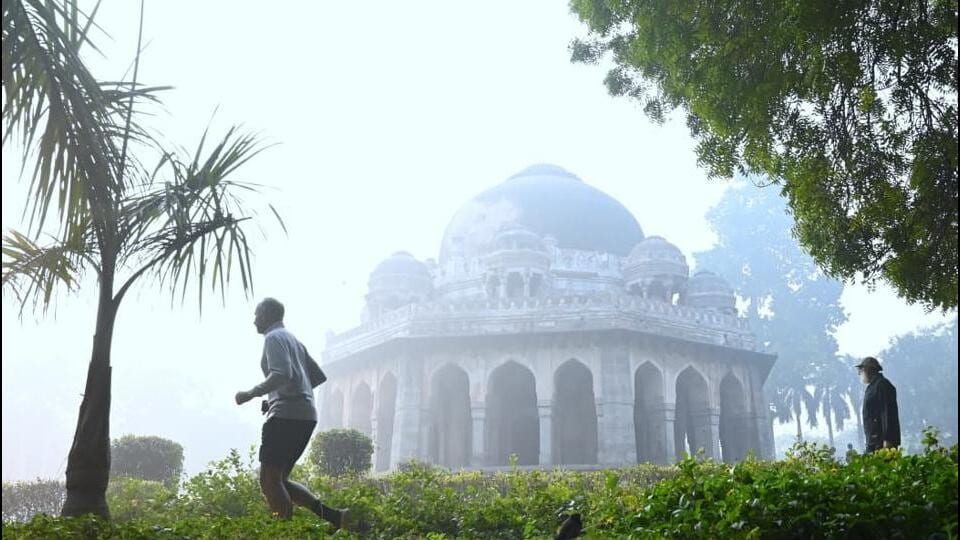
The minimum temperature at Safdarjung around 10am on Saturday was 11.8°C, 0.5 degrees above normal and 0.6 degrees higher than a day ago.
According to the India Meteorological Department, the minimum temperature is expected to linger between 9°C and 11°C over the next few days.
By 10am, the 24-hour rolling average air quality index (AQI) for Delhi was 361, categorised as “very poor” and approaching the “severe” band of pollution. This was marginally lower than the 24-hour average AQI of 364 on Friday evening.
Also Read: Pre-emptive only in name: Why GRAP in Delhi falls short despite updates
Stage 3 of the Graded Response Action Plan (Grap) remains under imposed in Delhi, restricting non-essential construction, demolition, and certain vehicular categories, including vehicles below the Bharat Stage (BS)-IV (emission standards) category.
Residents have been advised to reduce outdoor activity, especially in the early morning and late evening hours. The Delhi government also on Friday instructed all schools and other educational institutions not to conduct any sports or other outdoor physical activities.
Meanwhile, the Municipal Corporation of Delhi’s (MCD’s) standing committee meeting on Wednesday saw members across party lines flagging the failure of the civic body in tackling dust due to damaged roads. They questioned the efficacy of mechanical cleaning of roads, and unchecked open dumping of debris. The committee members said that curbs under Stage 3 of the Graded Response Action Plan (Grap) were openly flouted.