
 E-Paper



Supreme Court judge talks about ‘India we live in': ‘She was forbidden to enter her house’
Justice Karol was speaking on social justice and women's rights when he showed the picture of a menstruating woman to the audience.

 Prefer HTon Google


"This is the India we live in," said Supreme Court judge Justice Sanjay Karol on Saturday as he discussed the story of a woman, who was forced to stay outside her house during her menstrual cycle, calling it a grave reality of our society.
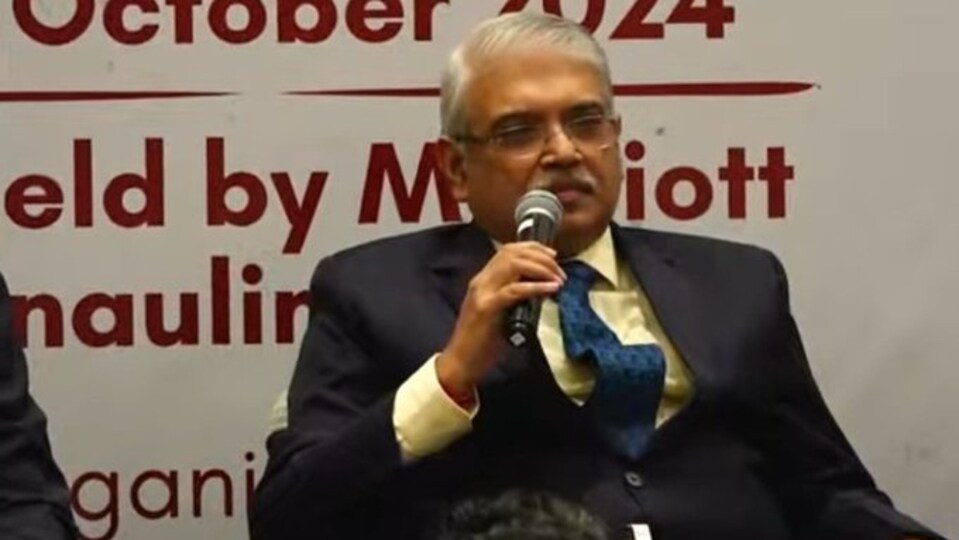
During his address at the first International Supreme Court Advocates on Record (SCAORA) Legal Conference, the top court's judge also showed a photo of the said woman to back his observation.
Hard-hitting reality: Justice Karol shows picture of a rural woman
The photo, featuring a rural woman sitting outside her house in a shanty-like structure, was clicked by him in 2023 in a remote village in India, he said.
READ | 'Sat before God for solution': CJI DY Chandrachud on Ayodhya verdict
"This photograph was clicked by me in a remote village. This lady is forbidden to enter her house for those five days when she is suffering a bodily change (menstrual cycle). This is the India we are living in. We have to reach out to these people," legal website Bar and Bench quoted Justice Karol as saying.
While the judge did not reveal where the picture was taken, he referred to remote areas of Bihar and Tripura which the court system has not yet reached.
SC judge on access to justice for people living in metros
Justice Karol was speaking on social justice and women's rights when he showed the picture to the audience adding examples of courts' interventions, particularly on women's rights and disabled persons.
READ | Woman panchayat member attacked in Gujarat over ‘love affair’: Beaten with hockey, hair chopped off
Pointing out the obvious divide in the society, the judge further added most people who had access to justice, were predominantly educated and living in metros
While pointing to the divide in access to justice and the"metro-centric approach" of the justice system, Justice Karol said. He said that the perception of the Indian society should be limited to cities like Mumbai and Delhi
"India is not Delhi. India is not Bombay. We are the custodians and guardians of the Constitution of India. We, the people, and you and I, have to play a major role in reaching out to those who do not either have access to justice or do not know really what justice is, or are not even aware of the systems which are in place," Bar and Bench quoted him.
READ | Baba Siddique murder: Mumbai police crime branch arrests scrap dealer
Justice Karol also called out for efforts to be made in the direction so that justice and resources can be reached to those who are living in rural and remote areas of the country as well.
The judge emphasised that the Constitution is a living document, capable of adapting and changing and thus, plays a crucial role in promoting social and economic justice.


