
 E-Paper



Telugu film producers discuss ways to attract audiences back to theatres, reduce loss
Telugu film chamber of commerce representatives, who held a preliminary round of discussions on Monday, met again on Wednesday to chalk out an action plan to bail out Tollywood, as the Telugu film industry is called, from the crisis triggered by the Covid-19 pandemic in the past two years.

 Prefer HTon Google


Waking up to the reality that audience footfall in cinema theatres is gradually on the decline and viewership on Over-The-Top (OTT) platforms is on the rise, Telugu film producers have started focusing on reducing production cost to cut down their losses.
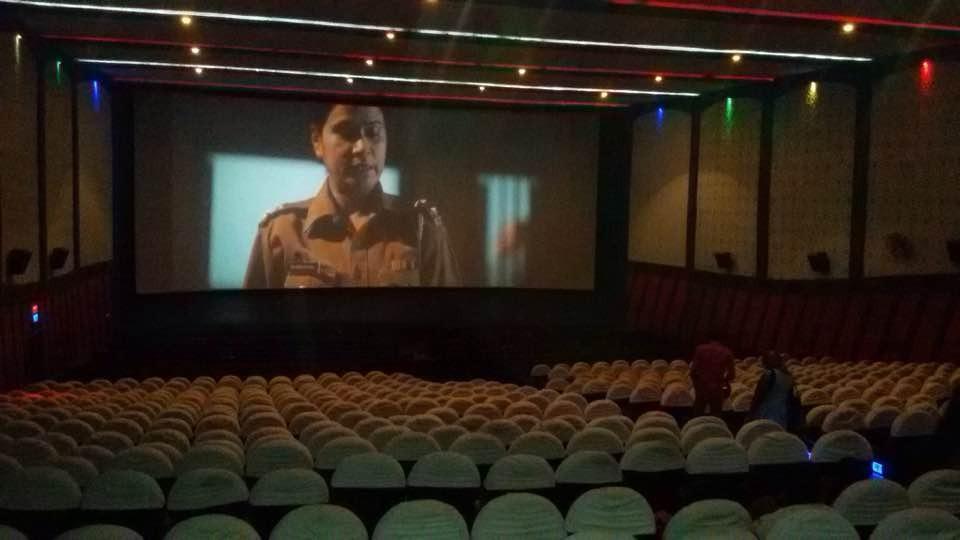
Telugu film chamber of commerce representatives, who held a preliminary round of discussions on Monday, met again on Wednesday to chalk out an action plan to bail out Tollywood, as the Telugu film industry is called, from the crisis triggered by the Covid-19 pandemic in the past two years.
Tollywood is the third-biggest film industry in the country, after Bollywood (Hindi films) and Kollywood (Tamil films) in the number of films produced – it produced 238 films in 2019, only 63 in 2020 and 204 in 2021, with an average turnover of around ₹1,000-1,200 crore annually.
During the pandemic period, theatres were closed for several months, forcing the producers to release their films on OTT platforms. “In fact, the trend on watching films on the OTT began much before the outbreak pandemic and during the pandemic period, audiences got used to watching the films on the small screen,” film critic Ch Murali said.
Even after the reopening of theatres post-pandemic period in the last week of July, 2021, the footfall in the theatres has not increased in the next few months. While in the initial few months, the audiences were still scared of the spread of the virus, there had been no increase in the footfall even after that.
“This is basically because of the exorbitant ticket prices in the theatres. In order to cover up the losses faced by the industry during the pandemic, the Tollywood bigwigs lobbied with the Telangana and Andhra Pradesh governments to increase the ticket prices. Besides, the cost of refreshments and even drinking water shot up substantially,” another film analyst A Venkat said.
As a result, except for a few big-ticket films like Akhanda, Pushpa, RRR and KGF-2, that, too, only for the first week of their release, there were no audiences in theatres. “While megastar Chiranjeevi’s film Acharya turned out to be a mega flop, even the much-hyped film of Mahesh Babu – ‘Sarkar Vaari Paata’ – did not have much viewers in the theatres after the first week,” Venkat said.
As a result, even big film producers started entering into an agreement with OTT platforms much before their release in theatres and got their films released on OTTs within three or four weeks to recover their production cost at least partially.
“When the audiences realised that they can watch the films of their favourite actors on OTTs at a much lesser cost, if they can wait for three or four weeks, they stopped going to theatres which were fleecing them till then,” he said.
During Monday’s meeting, the producers discussed the methods on how to attract the audiences back to the theatres. “One suggestion that came up during the meeting was to see that the big budget films could be released on the OTT platforms only after 90 days of their release in theatres; moderate budget films after 50 days and the small budget films after 24 to 30 days. This will help the theatres attract the audiences,” said a producer, who refused to be identified.
However, some other producers reportedly differed with this idea. “Audiences come to theatres to watch films not based on their richness or production cost, but on whether it is a good film or bad film. A big budget film made with ₹300 crore might not run even for a couple of days, as happened in the case of ‘Acharya’ of Chiranjeevi. If they are prohibited from being released on OTT for 90 days, the producers suffer huge losses. If such films are released on OTT within a couple of weeks, they can at least recover some investment,” Murali said.
At Wednesday’s meeting, the producers reportedly discussed the possibility of reducing the production cost, including requesting the actors to cut down the remuneration which accounts for 60 per cent of the cost. The other issues that were discussed at the meeting include bringing down the ticket prices to affordable rates and reducing the virtual print fee (VPF) charges of the theatres.
Meanwhile, a section of producers under the banner of Active Telugu Film Producers’ Guild on Tuesday announced that they would stop shootings from August 1, 2022, till the issues concerning the industry are resolved.
However, it was strongly opposed by the Tollywood producers’ council. “Stopping of shootings is not a solution, as it will affect the livelihood of thousands of artistes and craftsmen. If any producer wants to stop shooting, he can do it, but it cannot be a collective decision,” council chairman C Kalyan said.
Telugu film chamber of commerce president K Ramakrishna said the chamber was seriously deliberating all the issues concerning the industry and would come out with a workable solution. “Stopping of shootings is not correct,” he added.


