
 E-Paper



What does east-west classification of Uttar Pradesh by Congress mean?
According to senior Congress leaders, East Uttar Pradesh accounts for 42 Lok Sabha seats from the sub-regions of Avadh and Purvanchal.

 Prefer HTon Google


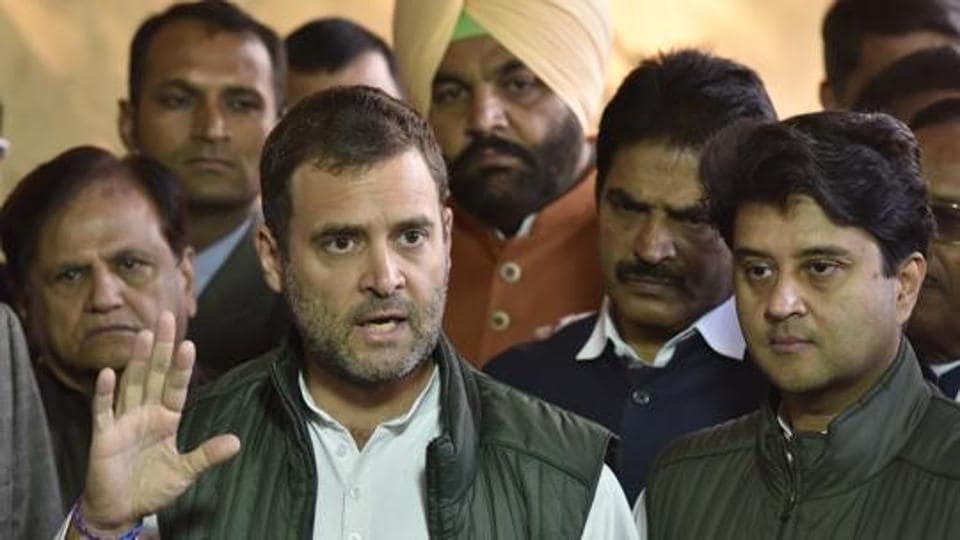
The Congress has appointed two separate general secretaries for Uttar Pradesh: Priyanka Gandhi Vadra and Jyotiraditya Scindia will be in charge of East and West Uttar Pradesh respectively.
According to senior Congress leaders, East Uttar Pradesh accounts for 42 Lok Sabha seats from the sub-regions of Avadh and Purvanchal.
West Uttar Pradesh includes Bundelkhand, Ruhelkhand and western parts of the state and accounts for the remaining 38 Lok Sabha seats in Uttar Pradesh.
A comparison of the 2009 and 2014 Lok Sabha elections shows that the Congress has performed better in East Uttar Pradesh.
Amethi and Rae Bareli, the only two seats won by the Congress in the 2014 elections are in the east as per this classification.
Even in 2009, when the Congress won 21 seats in the state, 15 came from the east.
The party won 4 and 3 seats in east and west regions in the 2017 assembly elections.
To be sure, East Uttar Pradesh also includes Gorakhpur and Varanasi, the strongholds of Uttar Pradesh chief minister Yogi Adityanath and Prime Minister Narendra Modi, respectively.
The Congress’s edge in the east also shows in terms of vote share.
It had a vote share of 10% in East Uttar Pradesh in the 2014 Lok Sabha elections, compared to just 4.9% in the west.
There is also a difference in the performance of other parties in eastern and western Uttar Pradesh.
While the Samjawadi Party and Bharatiya Janata Party (BJP) are stronger in the west, the Bahujan Samaj Party (BSP) performed better in the east in both the 2014 and 2017 elections.
The Bharatiya Janata Party swept all parts of the state in the 2014 election when it won 71 of the 80 seats with a vote share of 42.6% and the 2017 assembly elections when it won 312 of 403 seats with a vote share of 40%.
The analysis has used statistics from the Trivedi Centre for Political Data at Ashoka University.


