
 E-Paper



From local galleries to global fame: Marrakesh Art Fair boosts African artists and attracts global collectors

 Prefer HTon Google


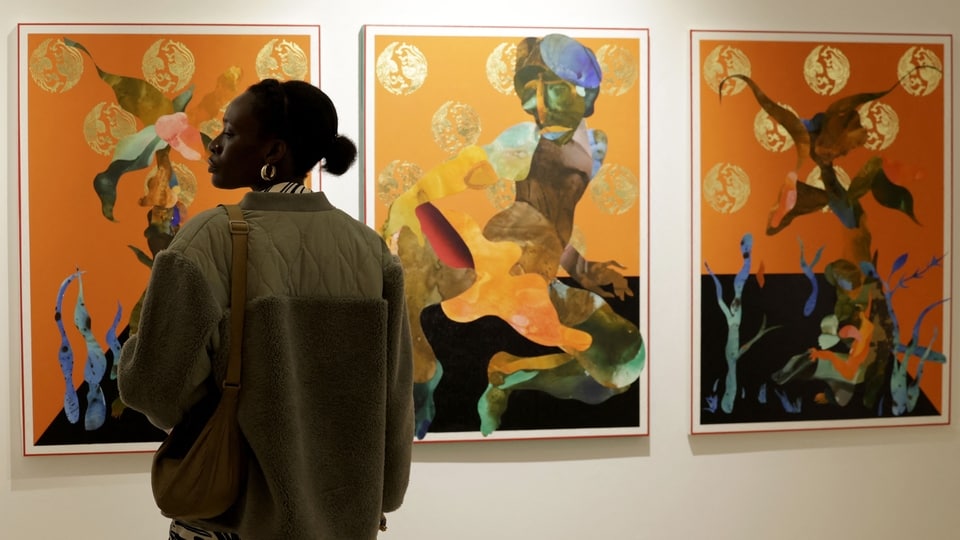
Marrakesh's 1-54 Contemporary African Art Fair has invigorated the local art scene, featuring works from 30 galleries across 14 countries.
In Morocco's tourist hub of Marrakesh, a contemporary art fair has energised the local creative scene. Drawing on the famed city's aesthetic legacy, the fair propels emerging African artists into the global spotlight. The annual 1-54 Contemporary African Art Fair has drawn collectors, curators, and art enthusiasts from across the world, showcasing works from 30 galleries spanning 14 countries, both African and European.
Senegalese designer and curator Aissa Dione said 1-54's Marrakesh edition stands out for being "a restricted, very exclusive space", which "gives more visibility" to the artists. Named in reference to Africa's 54 countries, the fair was launched in London in 2013 before expanding to New York in 2015 and Marrakesh in 2018. This year's Marrakesh edition took place over four days last week.
Marrakesh's exclusive art fair draws global collectors
Unlike larger-scale art fairs such as Art Basel, London's Frieze or Paris's FIAC, it operates on a smaller scale, attracting around 10,000 visitors, including 3,000 from abroad. But its more intimate setting has proven to be an advantage. Claude Grunitzky, a Togolese entrepreneur and collector who travelled from New York to attend the fair, said in other major fairs, "gallery owners are under such financial pressure that, as a collector, you feel a bit harassed".
"What I love about Marrakesh is the sense of conviviality and intimacy, which also allows you to discover artists you may not know," added the collector, who also sits on the boards of trustees of MoMA PS1 in New York and the Massachusetts Museum of Contemporary Art.
Dione said her gallery sold three pieces at the fair for a total of about $30,000. "We received excellent feedback on our artists, and that's important because a fair is not just about sales, it's also about building relationships with future clients," she said.
Canelle Hamon-Gillet, another curator, declined to disclose exact sales figures, but said: "We're very happy because there was great synergy around our artists, and we sold six works."
With the aim of giving "more visibility to African contemporary artists", the fair typically generates "a few million dollars in sales," according to its founder, Moroccan curator Touria El Glaoui. "There's a unique diversity offered by Morocco, thanks to its geographical position and its appeal as a tourist destination, which allows us to draw collectors from around the world," said Glaoui.
'Exceptional' energy
The fair also offered works by a selection of well-known names such as Ghanaian artist Amoako Boafo, whose work was purchased by Britain's prestigious Tate institution at the fair. Yet much of the event focused on the African continent and rising talents from the diaspora.
Among the works exhibited were those of Ethiopian experimental photographer Maheder Haileselassie Tadesse and Sudanese-Somali ceramicist Dina Nur Satti. Figurative paintings also marked a strong presence, with pieces from Nigerian painter Chigozie Obi and Ghanaian artist Adjei Tawiah.
Prices ranged from as little as $50 for screen prints to several thousand dollars for larger works. "The energy this fair brings to the African art scene is exceptional," said French-Moroccan artist Margaux Derhy, who exhibited hand-embroidered portraits with Morocco's Atelier 21 gallery.
Moroccan artists and curators not taking part in the fair have also embraced the momentum of 1-54 as it turned the bustling city into a cultural hub. Nearby galleries and studios held their own exhibitions and visits to capitalise on foreigners flooding into the Ochre City. "If our visitors only went to the 1-54, they would spend an hour there and there would be nothing left to see," said Glaoui in jest.
Galleries from other cities have even expanded to Marrakesh in response to the fair's success. Casablanca-based Galerie 38, for instance, recently opened a space in the city. "The fair was one of the factors that pushed us to establish a presence here," said Fihr Kettani, its founder. "Marrakesh has made enormous strides in artistic appeal over the past few years," said Kettani. "The fair is now an unmissable event."


