E-Paper


Names you should know: The Matilda Project is turning the lens on women in science

 Prefer HTon Google


A tiger researcher, an entomologist, an aerospace engineer with NASA, a physicist who made a Nobel possible... lost stories are finally being told.
Name one legendary woman scientist who isn’t Marie Curie.
It’s hard, and that isn’t your fault.
As suffragist Matilda Joslyn Gage noted in her essay, Woman as an Inventor (1883), women’s contributions to science and technology have been consistently sidelined, ignored or attributed to a nearby man. (This has happened with art too. Click here for an overview of stunning “lost” art by women.)
In Gage’s honour, the phenomenon of side-lining women in science came to be called The Matilda Effect. It was Margaret Rossiter, a science historian at Cornell University, who coined the term Matilda Effect, in 1993.
Now, an online initiative called The Matilda Project is bringing lost stories of such women into the spotlight. And these stories are breath-taking for the scale of work they did, and the ways in which they were forced out of the spotlight.
The Matilda Project is run by Canadian brothers Shehroze Saharan, 27, and Shehryar Saharan, 29, and the idea for it dates to a high-school science class.
“We were learning about the discovery of DNA’s double-helix structure and James Watson, Francis Crick, and Maurice Wilkins, when my teacher pointed out that someone was missing from the book: Rosalind Franklin,” says Shehroze Saharan. Her work in X-ray diffraction had been instrumental in understanding DNA’s structure, yet her contribution hadn’t received the same recognition.
“I remember being quite surprised. Until then, I’d taken what was in my science textbooks at face value,” he says.
He went on to study biomedical science at University of Guelph and, in his fourth year, picked women unacknowledged in science as his digital humanities project. His brother joined him soon after, and their original list of 30 women in 2024 has now grown to over 190.
They work with illustrators to bring the stories to life. Where possible, interview their subjects too.
What bothers them most perhaps, Saharan says, is that the biases live on.
A study by researchers at Yale University, published in the Proceedings of the National Academy of Sciences (PNAS) in 2012, for instance, found that when senior science faculty were given identical candidate portfolios, with just the names were changed to suggest either a man or a woman, over and over the man was found to be “better suited” to the role.
This bias affects admissions, funding, appointments and tenure, all of which continue to serve as barriers of entry.
Their website cannot change this, but getting word out is a good start, Saharan says.
Here are some of the incredible stories they’ve documented.
.
* Left out of a Nobel
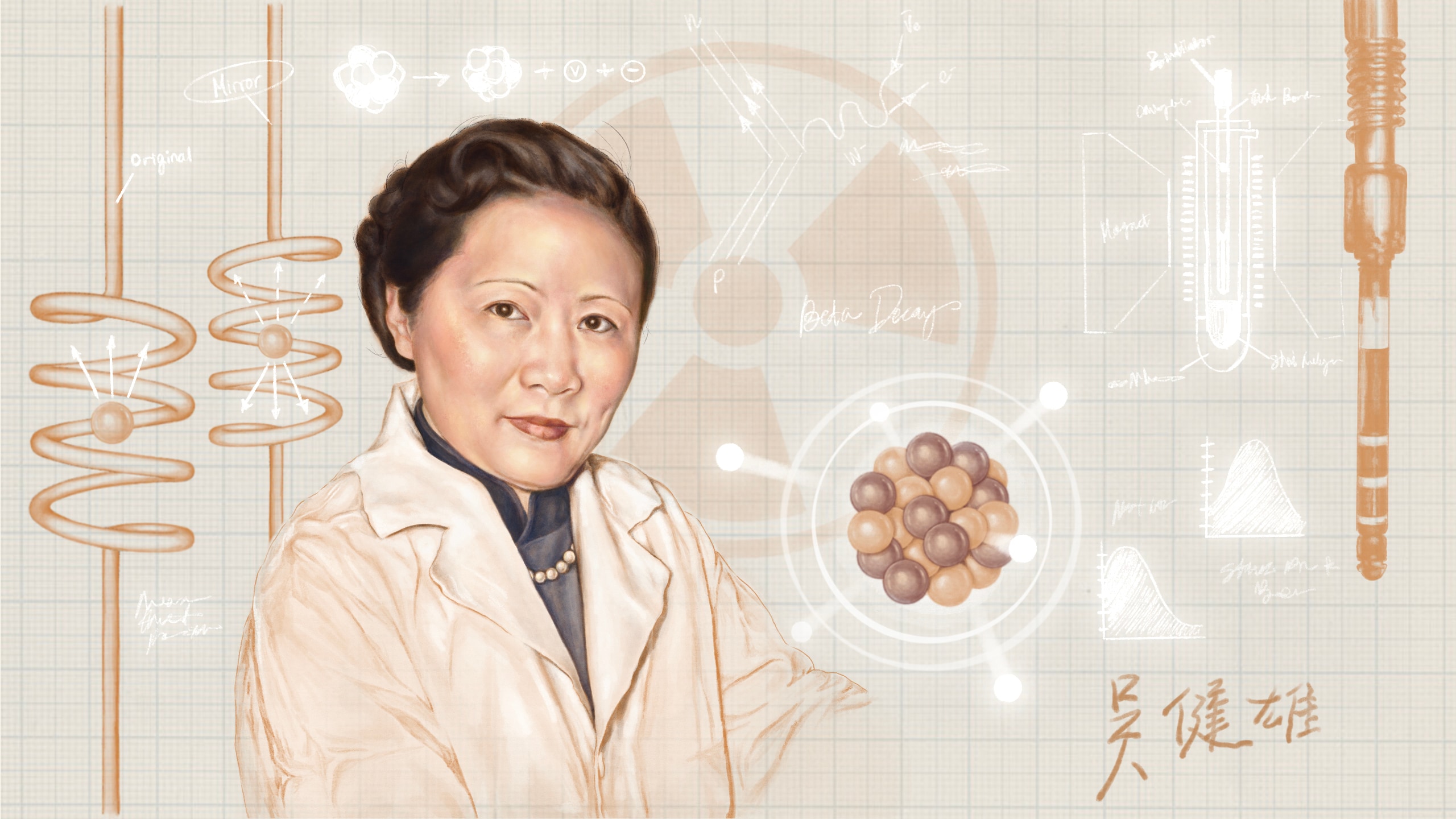
Chien-Shiung Wu (1912-1997) was a Chinese-American experimental physicist who, in 1956, conducted an experiment that disproved the long-standing assumption that the laws of physics always behave the same way under mirror reflection, a principle known as parity conservation. It was a major scientific breakthrough.
In 1957, Tsung-Dao Lee and Chen-Ning Yang received the Nobel Prize in Physics for the theoretical work that Wu had experimentally confirmed. Wu was excluded.
“What’s particularly interesting is that she wasn’t an obscure scientist,” says Saharan. “She was already exceptionally accomplished and her expertise had been essential to establishing the discovery, yet it was possible to leave her out.”
She was eventually awarded the inaugural Wolf Prize in physics, in 1978.
.
* A supersonic struggle at NASA
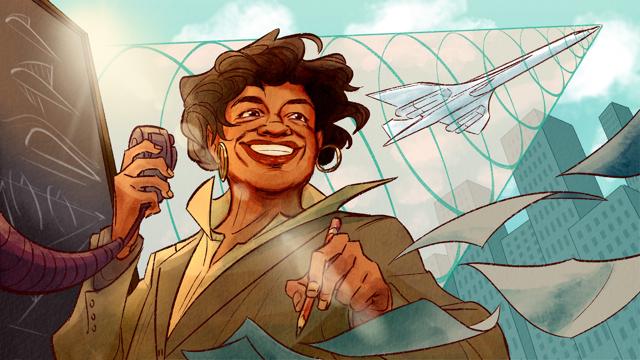
Christine Darden (1942-), an African-American mathematician and aerospace engineer, joined NASA (the US National Aeronautics and Space Administration) in 1967.
Women with advanced mathematical qualifications were often assigned to computing roles, while similarly qualified men entered engineering positions. After five years without a promotion, Darden confronted a supervisor and was subsequently transferred into engineering, where she became a leading researcher in reducing sonic booms in supersonic aircraft. Darden’s computer model became foundational to future research at NASA.
“What we find particularly interesting is that the issue wasn’t her scientific ability. She already had the qualifications. It was how the institution decided to use them,” says Shehroze. “Her story is a reminder that women can be overlooked not only when discoveries get recognition, but also when decisions are made about who gets the opportunity to do the research in the first place.”
.
* ‘That girl in chiffon saris’
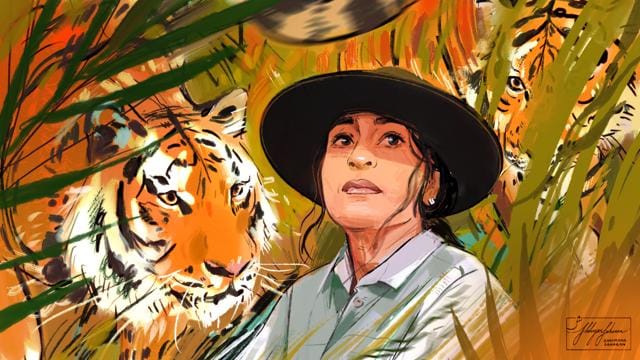
Latika Nath (1970-), an Indian conservation ecologist, was among the pioneering women conducting field research on tigers in India, using emerging technologies such as early camera traps, to study individual animals and their behaviour.
“This is an account we are especially pleased to have documented through direct collaboration with Nath,” Saharan says. “One detail that stayed with us was her account of being dismissed as ‘that girl in chiffon saris’ by people who questioned whether she could handle the physical demands of field research.”
Worse still, an anonymous accusation that she had fabricated data resulted in her research funding being suspended for a year.
Her data was subsequently verified, and the funding reinstated. “It’s astonishing to think about the professional consequences of something like that, especially for someone carrying out demanding fieldwork on an endangered species,” says Shehryar Saharan.
.
* Redefining patient care
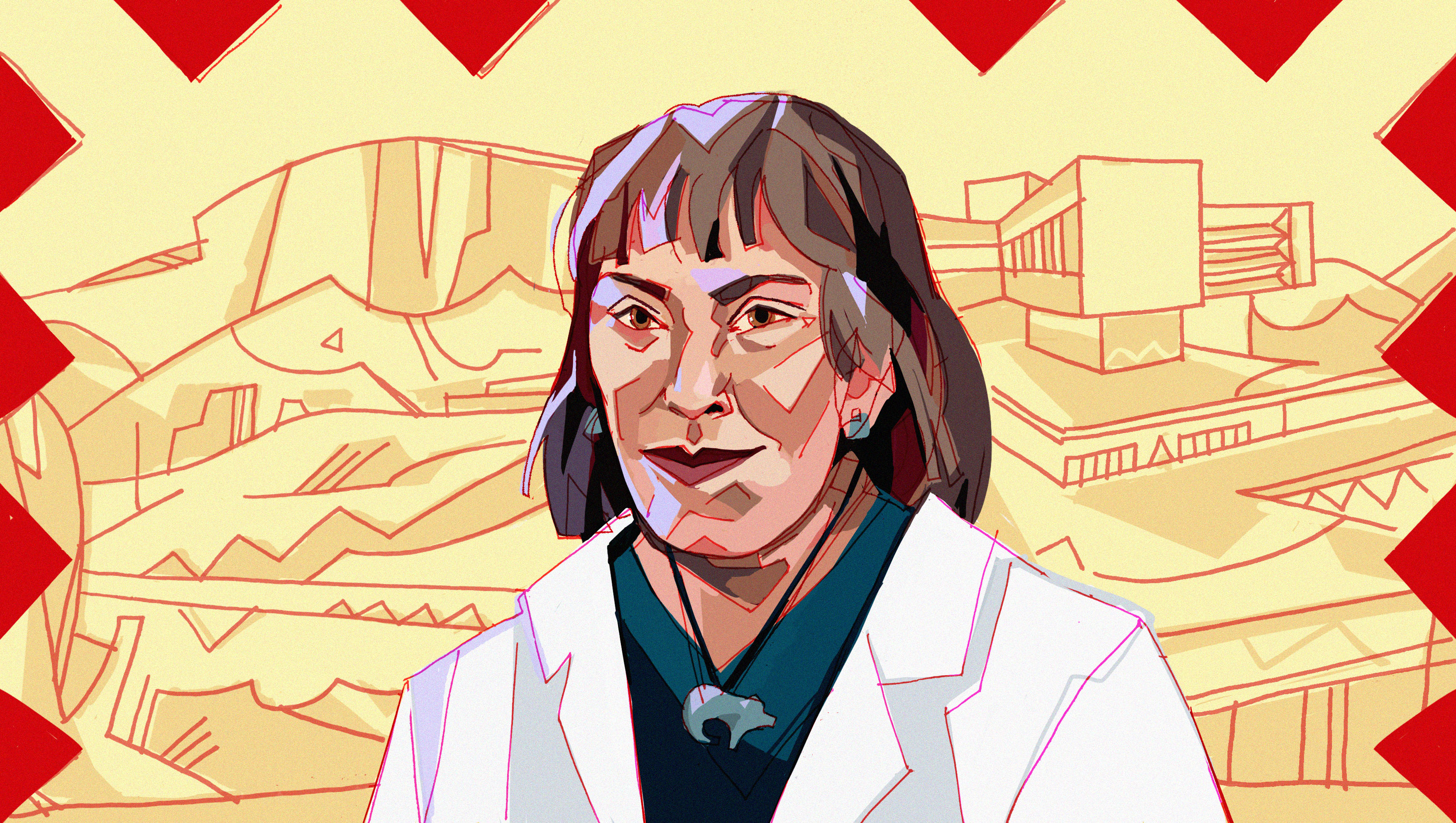
Lori Alvord (1958-), the first Navajo woman surgeon in the US, trained at Stanford and built a career with a special focus on patients from her community.
She selected this as a focus after a spell in hospital herself,
During her surgical residency, Alvord suffered a bout of pneumonia. Admitted to hospital, she found herself uncomfortable with elements such as the frequent direct questions, lack of privacy, and relatively high levels of noise.
She decided to work to make medical care more culturally responsive.
As a surgeon on a New Mexico reservation, she introduced traditional healers and ceremonies into the recovery process, and worked to make the hospital environment quieter, with more direct access to natural spaces, and more room for extended family to turn up for patient care and support.
“Her work reminds us that the history of medicine isn’t simply about who becomes a doctor,” Saharan says, “but also whose perspectives are taken seriously when deciding what good patient care looks like.”
.
* Drawings with a difference
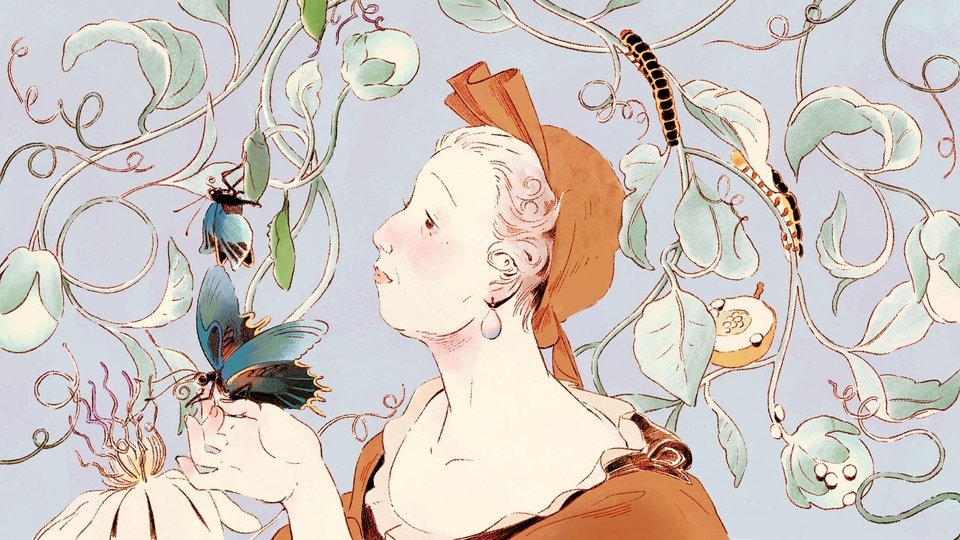
Maria Sibylla Merian (1647-1717) was a naturalist who studied insects and their life cycles at a time when women had limited access to formal scientific institutions.
Among her exploratory trips was one to Suriname in South America, where she observed a large spider preying on a hummingbird, which she depicted in her zoological illustrations.
Naturalists ridiculed her finding, treating it as fanciful and scientifically implausible. Subsequent observations would of course confirm that large spiders can prey on small birds.
“For many years, Merian was remembered more as an artist than as a scientist,” Shehroze says. Yet her 1705 magnum opus, Metamorphosis Insectorum Surinamensium, is still considered a comprehensive account of the ecology of this remote region.
“These stories remind us that the Matilda Effect isn’t limited to one kind of experience,” as Shehroze puts it. “Each story reveals something different about how science has been practised, recognised and remembered.”