
 E-Paper



Cardiothoracic surgeon says ‘every minute without defibrillation drops survival by about 10%,’ explains how AEDs work

 Prefer HTon Google


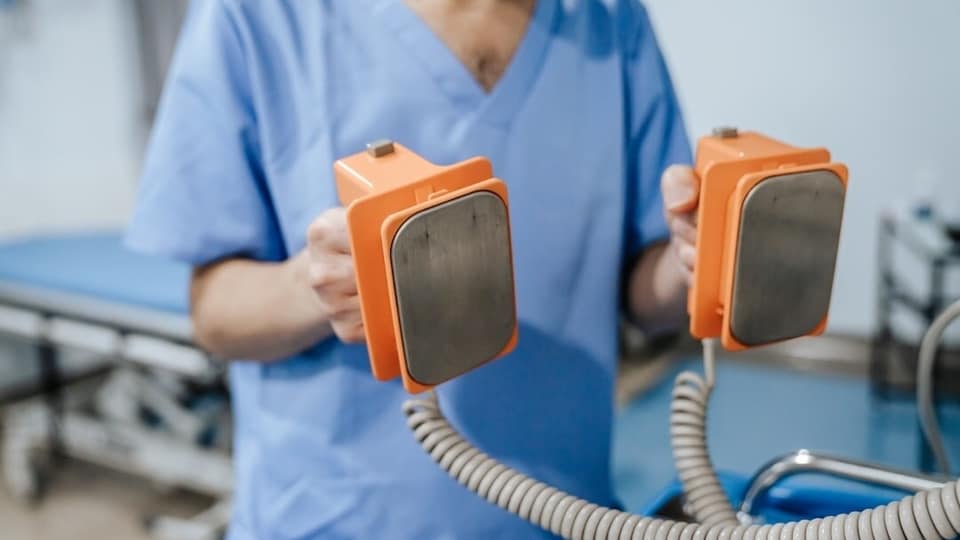
Prompt action is of utmost importance during sudden cardiac arrests and knowing how to use a defibrillator can save lives. Dr London explains how they work.
Defibrillators are life-saving devices designed to restore the heart’s normal rhythm during sudden cardiac arrest. They are widely available in schools, airports, gyms, and public spaces - but despite their accessibility, most people don’t know how to use them. However, even basic knowledge and quick action in an emergency can make the difference between life and death.
Dr Jeremy London, a board-certified cardiothoracic surgeon with more than 25 years of clinical experience, is raising awareness about the crucial role defibrillators play in saving lives during sudden cardiac arrests. In an Instagram video shared on October 22, the cardiologist breaks down how defibrillators work, emphasising that swift action during a sudden collapse can be lifesaving.
How does AED work?
According to Dr London, an AED, or automated external defibrillator, is a simple device commonly found in airports, gyms, schools, and other public spaces - yet most people pass by without a second thought. In critical moments, however, knowing how to use one can literally be the difference between life and death.
The cardiologist explains, “An AED doesn't restart the heart like you see in the movies. It works by delivering a quick electrical shock that depolarises the heart muscle, stopping the chaotic rhythm just long enough for the heart's natural pacemaker to reset and start beating normally again. It's used for sudden cardiac arrest when the heart's electrical system goes haywire and stops pumping blood.”

Knowing how to use AED can save lives
Dr London highlights that time is of the essence when someone experiences sudden cardiac arrest, hence every second matters. He stresses, “Every minute without defibrillation drops survival by about 10%. The good news, AEDs are fully automated and talk you through each step, where to place the pads, when to stand clear, and if a shock is actually needed.”
You don’t need to be a doctor to use an AED - “You just have to know where the AED is and have the courage to actually use it. Because when someone collapses, seconds matter. And you might be the one who saves their life,” emphasises Dr London.
Note to readers: This article is for informational purposes only and not a substitute for professional medical advice. It is based on user-generated content from social media. HT.com has not independently verified the claims and does not endorse them.


Catch your daily dose of Fashion, Taylor Swift, Health, Festivals, Travel, Relationship, Recipe and all the other Latest Lifestyle News on Hindustan Times Website and APPs.


