
 E-Paper



The Trillion-Dollar Bright Spot in China’s Economy: Tourism


 Prefer HTon Google


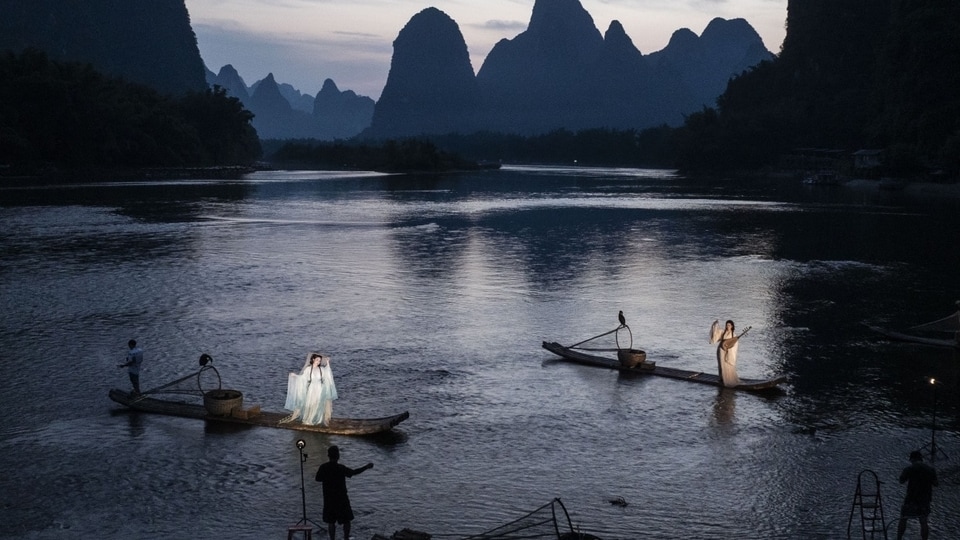
Tens of millions of foreigners visit each year and domestic travel is rising, but some visitors are tightfisted.
GUILIN, China—More than a millennium ago, the Tang dynasty writer Han Yu said of Guilin’s landscape, “The river forms a blue-green silk ribbon, the mountains are like jade hairpins.”
Today, the scene in China’s rugged south is inspiring more than just poets.
Economic planners see the potential for Guilin and other destinations to drive growth. China’s latest five-year plan, released this year, calls for making the nation a “tourism powerhouse.”
Tourism checks a lot of boxes for Beijing’s planners. It is a way of encouraging Chinese people to spend when many are holding back amid slowing economic momentum. When foreign tourists visit, their spending is considered an export—and it is less politically sensitive than the export of manufactured goods that is brewing tensions with China’s trade partners.


Guo Jiehui, a 35-year-old teacher from Shenzhen, recently brought her 9-year-old son to the scenic heart of Guilin for three days. She said she has cut back on buying clothing and the like in recent years but takes a few trips a year to give her son new experiences.
“We are willing to invest in travel,” she said.
Morgan Stanley expects China’s tourism and travel revenue—a figure that covers domestic and foreign visitors as well as business travelers—to make up 6.7% of the country’s gross domestic product by 2030, compared with 4.8% in 2024. If so, China’s tourism revenue would rise to about $1.8 trillion in 2030 from roughly $1 trillion last year.
In recent years, China has expanded visa-free entry, although Americans generally still need a visa to visit. Nearly 23 million foreigners entered China in the first half of 2026, up 20% from the same period a year prior, and more than three-quarters of them entered visa-free, according to China’s immigration agency. Beijing hopes they will bring home favorable impressions, spreading China’s soft power abroad.
Still, a few million additional foreign tourists add relatively little to a huge economy such as China’s. Other countries in the region such as Japan and Thailand are competing aggressively for foreign travelers’ dollars.
As for domestic travel, it is growing too—but many Chinese are stingy spenders on the road. Although Chinese residents made nearly 3.5 billion trips domestically in the first half of 2026, up 5.4% from the same period last year, their spending was up only 2% to around $478 billion, according to China’s Ministry of Culture and Tourism.
At a coffee shop nestled in the rice paddies of Guilin’s Yangshuo county, flocks of visitors from different parts of the country engaged in one of Chinese tourists’ favorite low-cost activities: taking lots of pictures. They posed in front of props such as a hot-air balloon, an upright piano or a staircase going to nowhere.


It is called “da ka,” or punching a card, like workers do to prove they showed up—except here the evidence is needed for tourists’ social-media posts.
Further up the Yulong River, the Fuli Bridge, an old stone arch nicknamed “Moon Bridge” for its round reflection in the water, is another popular spot to pose for pictures or drone videos. But many Chinese tourists nowadays skip the bamboo-raft river cruise, which costs about $30 for two people, according to Wu Fandong, a 45-year-old raftsman.
“They travel more, but they spend less money,” said Wu.


International visitors also tend to spend less in China. China received 35 million foreign visitors last year, roughly half as many as the U.S., and international tourists to China spent about $2,200 each, less than two-thirds of what foreign tourists spent in the U.S., according to an analysis by Trip.com, a Chinese online travel platform.
Trip.com says there is plenty of room to court foreigners and turn tourism into a bigger growth driver.
At Yangshuo Sugar House, a luxury resort housed in a former sugar mill, rooms start at around $300 a night. Guests can lounge at a swimming pool nestled amid the poet’s “jade hairpin” mountains or try a $300-a-person meal. Foreign visitors made up 37% of guests at the hotel this year through July, compared with 21% in the same period last year. International guests tend to stay longer and immerse themselves more than domestic visitors, said the resort’s general manager, Ken Luo.


Isabelle Heizmann, a 36-year-old from Germany, visited China for the first time as part of a tour group making stops in Beijing, Shanghai, Guilin and Hong Kong. She enjoyed the food in China, especially Peking roast duck, and the diversity of scenery, from the skyscrapers of Shanghai to the natural landscape of Yangshuo. A big draw for her was visa-free travel, which China granted to German passport holders at the end of 2023.
“That’s why I didn’t come earlier,” she said.


Write to Hannah Miao at hannah.miao@wsj.com

Catch your daily dose of Fashion, Taylor Swift, Health, Festivals, Travel, Relationship, Recipe and all the other Latest Lifestyle News on Hindustan Times Website and APPs.


