
 E-Paper



Crèches on the crutches
Albeit the guidelines stipulate that these centers must prioritise children’s health, maintain a secure environment

 Prefer HTon Google


With the profound transformation of the contemporary Indian socio-economic fabric, gratifying spurt in the participation of female workforce, and mushrooming of nuclear family units, there is an unprecedented demand for institutional early childhood care. Daycare facilities and crèches are no longer viewed as mere conveniences, but as critical propellants of economic participation and early childhood development. It often takes the form of one-upmanship among corporate colleagues and friends, and no parent wishes to lag behind.
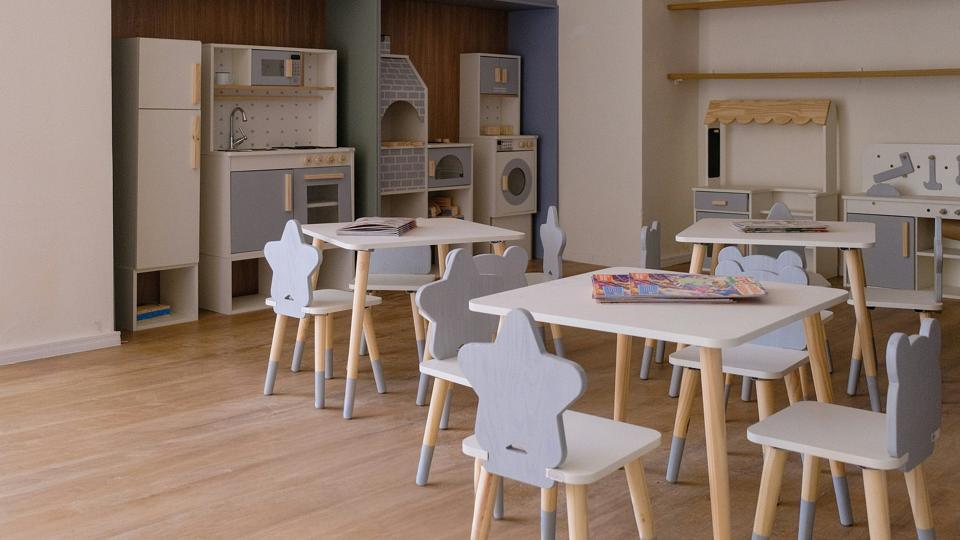
Under the Ministry of Women and Child Development’s (MWCD) National Minimum Standards and Protocol for Crèches, these facilities are legally defined as care centers providing a safe, nurturing environment for children while their parents or guardians are at work. Albeit the guidelines stipulate that these centers must prioritise children’s health, maintain a secure environment, and provide age-appropriate educational activities to boost holistic developmental milestones, however, the rapid proliferation of these facilities has outpaced the implementation of rigorous regulatory oversight. As these centers grow in numbers and enrolments, the cracks in the regulatory regime come out in the open and expose deep fissures in the compliance mechanisms.
The safeguards mandated by the national guidelines fade against the reality of implementation deficits. The recent incident involving allegations of severe child abuse at Little Buds Day Care highlights the dire need for regulatory oversight. According to public reports, caregivers and the facility in-charge subjected young children of employees to horrifying physical and mental abuse. The allegations detailed a draconian environment where children who cried or created a disturbance were confined inside washrooms, doused with water, and subjected to physical assault.
Also Read:Toddlers abused, 5 nannies booked, facility shut temporarily: Inside the Bengaluru daycare case
The Bengaluru case underscores a systemic failure in worker vetting, psychological evaluation of caregivers, and routine administrative oversight. The fact that corporate HR and facility management were oblivious to such sustained abuse within their own premises is a testament to the vulnerabilities of the current compliance models, demonstrating that physical proximity to the workplace does not inherently guarantee child safety or regulatory adherence.
Statutory Provisions and Guidelines Regulating Crèches in India
The turning point for institutional childcare in India was the amendment to the Maternity Benefit Act, 1961, which explicitly mandated every establishment employing fifty or more employees to provide a crèche facility within a prescribed distance. The statute also grants mothers the right to four daily visits to the crèche, inclusive of their regular rest intervals, thereby embedding childcare access into the legal rights of female workers. The modern labour codes, specifically the Code on Social Security, 2020, and the Occupational Safety, Health and Working Conditions (OSHWC) Code, 2020 assimilate and reaffirm these crèche mandates.
The Government of India, in order to standardise these facilities, issued strict operational norms for setting up a crèche, i.e. National Minimum Standards and Protocol for Crèches. These guidelines dictate that crèches must strictly follow all statutory rules, acts, and regulations related to child protection. The installation of CCTV cameras has been made mandatory under these guidelines to ensure active supervision, and parents/guardians should preferably be granted remote access to monitor their children.
The guidelines further provide that only women staff are to be recruited as caregivers and the staff-to-child ratio should be at least one crèche supervisor and one crèche helper for every 20-25 children; all staff must undergo rigorous vetting before recruitment; safety inspections must be regularly conducted by the administrative committee, with special emphasis on verifying and controlling access to CCTV surveillance, visitor logging, and ilk. Notably, the guidelines mandate the formation of a local Monitoring Committee comprising three to four parents, a crèche worker, a supervisor, and an HR/Admin officer to ensure continuous oversight and monitoring.
Yet, the Bengaluru incident reveals a tragic paradox while standard protocols mandate CCTV monitoring and strict administrative oversight through these committees, the heart-wrenching abuse only came to light because bystander video clips were leaked on WhatsApp, indicating a catastrophic failure of internal security and reporting mechanisms, thereby rendering the statutory monitoring committees functionally toothless.
Also Read:Daycare baby abuse case: Bengaluru police chief reveals action over Capgemini facility row
Regulatory Gaps and Lessons India Can Learn from Global Best Practices
There is a glaring lack of mandatory, rigorous state policing and independent surveillance for private and corporate daycares. Currently, penalties for safety violations or non-compliance are minimal and largely reactionary. The absence of an independent regulatory body means that corporate daycares operate in a state of self-policing, which, as the Capgemini incident proves, is highly susceptible to failure. There is a Lack of uniform state-level adoption, as the National Minimum Standards and Protocol for Crèches is only advisory in nature, and only a handful of states have turned these guidelines into strict municipal laws.
While the Government of India has directed all its administrative ministries and Central Public Sector Enterprises to comply with the National Minimum Standards, the private companies are under no such mandate and have been able to successfully evade compliance.
Rather than leaving corporate crèches to self-policing and relying on merely suggestive protocols, India ought to seriously consider codifying daycare operations under strict national safety and child abuse prevention guidelines. We can look to South Korea’s Infant Care Act and Japan’s Child Welfare Act that lay down a slew of preconditions and obligations for a child care center.
Professionalising the role would elevate the social status of caregivers, which directly affects both child safety and the recruitment of qualified personnel. At present, India’s regulations allow individuals with a basic secondary education (10th/12th pass) to work as primary caregivers and helpers, with a preference (but not a mandate) for a diploma in childcare or nursing.
To support working parents more holistically, India can transition toward structured corporate incentives. In Australia, major corporate firms are audited and certified against a set of National Work + Family Standards under the Family Friendly Workplaces initiative which evaluates flexible hours, parental leave, family care, and overall family wellbeing. Japan and South Korea provide dedicated tax breaks and incentives to businesses that support working parents through telecommuting, part-time work, flexible schedules, and extended leave. Furthermore, Japan has spent years reforming paternity leave to encourage fathers to share the caregiving load, recently introducing flexible options to allow fathers to split their leave.
The Government of India recognises the role, participation and leadership of women and men in achieving the vision of ‘Viksit Bharat’. The intent and endeavour of the Government to provide comprehensive childcare in a safe and secure environment cannot be doubted by anyone; the nudge was given to the states and corporates through the National Minimum Standards and Protocol for Crèches; that protocol has outlived itself and must pave way for a systematic shake-up across all sectors.
Abhishek Gupta (Advocate in Supreme Court of India) Shivangi Singh (KIITS Law School, Bhubaneswar, Odisha)
The views expressed are personal.


