
 E-Paper



AI use, faulty intel, dated imagery: The US ‘kill chain’ behind Iran school strike that killed 123
The missile strike on the school in Minab represents the worst incident of civilian harm resulting from US operations in decades.

 Prefer HTon Google


An internal Pentagon investigation has found that the US relied heavily on artificial intelligence in preparation for a strike that hit an elementary school in Iran's Minab earlier this year.
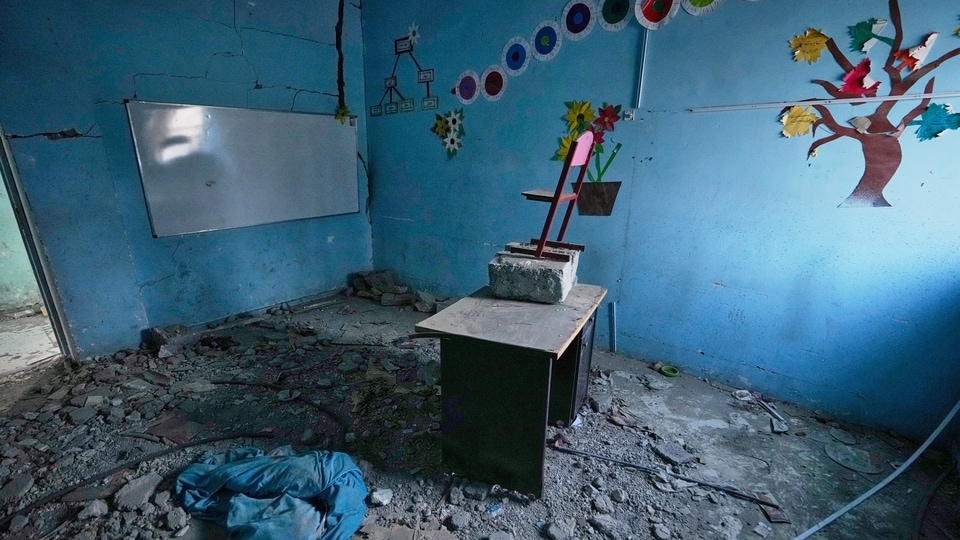
The strike happened at the start of the US war with Iran. According to a report by Bloomberg, Pentagon investigators found that faulty intelligence, dated imagery and heavy dependence on AI contributed to the strike that killed 123 children.
The missile strike on the school in Minab is one of the worst incidents of civilian harm resulting from US operations in decades. The Pentagon said the incident was under investigation in March.
Citing officials involved in the internal investigation, the report said that two Tomahawk missiles hit the Shajarah Tayyebeh Elementary School on February 28. It added that some Pentagon personnel reportedly knew within hours that the US was responsible.
What led to the US strike on Minab school?
The Bloomberg report said officials indicated that the Donald Trump administration's order for an overwhelming air assault at the start of the war with Iran shortened the time available to finalise the targets.
To be sure, more than 1,000 targets were struck by the US in the first 24 hours of the war.
The officials cited in the report also pointed out cuts in civilian-protection personnel and gaps in information about the site, which had once been part of a military compound but was later walled off and operated openly as a school.
Overreliance on AI
Officials said some US Central Command (CENTCOM) personnel relied too heavily on AI, especially Palantir's Maven Smart System, expecting it to flag dated or inconsistent intelligence.
The report noted that Palantir has said it "is not responsible for the underlying data nor identifying intelligence deficiencies", and that there is no evidence its software was at fault for the botched attacks.
The company built new tools after the attack came to light in order to “re-review underlying intelligence to identify factors that would disqualify a target and flag inconsistencies and inaccuracies that human review may have missed,” a source cited in the report told Bloomberg.
UN fact-finding report says US ‘committed war crimes’
A UN-backed fact-finding mission said on Thursday that there were reasonable grounds to believe the US committed war crimes in two February airstrikes in Iran, including the one that hit the school in Minab.
In a report submitted to the UN Human Rights Council in Geneva, an independent fact-finding mission on Iran “found reasonable grounds to believe the United States committed the war crime of launching indiscriminate attacks resulting in the loss of life or injury to civilians or damage to civilian objects.”
The team, which submitted its report to the Human Rights Council in Geneva, examined two strikes: a Tomahawk cruise missile strike on the Shajareh Tayyebeh Primary School in Minab, which killed more than 150 people, and a separate strike that dispersed clouds of tungsten pellets over a sports complex and residential area in Lamerd, killing 22 people.
Even though the 18-page report is not binding, it adds to a growing body of evidence that could eventually be used to pursue accountability in international courts.


