
 E-Paper



India needs a new deterrence doctrine
Deterrence, For decades, prevented war between superpowers, though low-level conflict continued. This principle has, more or less, got eroded now

 Prefer HTon Google


The 81st anniversary of the bombing of Hiroshima passed on August 6 without many in India noticing. But Indians should be particularly concerned, and not just because the use of nuclear weapons has been threatened (implicitly, if not explicitly) one too many times in recent years. More importantly, the world today seems to tolerate the aggregate toll from ongoing wars, which could parallel the death and destruction from a nuclear attack.
Data on civilian casualties are mysteriously unavailable, and every theatre of war is seeing the use of conventional missiles. Suddenly, it is no longer clear where red lines lie for nuclear powers. This raises important questions about what constitutes deterrence for Indian security against two almost entirely different threats.
Let’s first talk about the mounting casualties. The Hiroshima bomb killed some 353,639 people. In Ukraine, British intelligence indicates some 500,000 Russian soldiers have died since 2022, while Kyiv claims some 1.4 million were killed. Ukraine’s own casualty data, however, remains classified, as does Russia’s. Curiously, the West doesn’t provide firm data on Russian civilians killed, though an analysis by the American think-tank, Center for Strategic and International Studies pegs total Russian deaths in the ongoing war as being nine times greater than all Soviet/Russian fatalities in all wars combined since World War II. That may just be point-scoring; after all, no such data on US casualties in the war against Iran or damage to US infrastructure is provided. On the other hand, there are claims of 36,000 people killed by the Iranian regime in just two days, during the January 6-8 crackdown on protests. Nobody seems to have the total casualty count for the Gulf countries. Therefore, aggregates and reports are selective, and the complete ignoring of civilian casualties is dangerous. It prevents a clear assessment by those whose business it is to work out strategy. The bottom line is clear, though. The Hiroshima toll was crossed long ago. And in these wars, one or the other party remains a nuclear power.
Also Read | Pakistan used ‘spies’, sleeper cells to locate S-400 during Operation Sindoor, was ‘desperate’: Air Marshal
Deterrence, in Cold War language, was always seen through a nuclear prism, in terms of an assurance of destruction given to an aggressor that would far outweigh the latter’s gains in a war. For decades, it prevented war between superpowers, though low-level conflict continued, mostly in third countries. This principle has, more or less, got eroded now. Russia, with its massive nuclear pile, could not prevent Moscow and Leningrad from being attacked by Ukraine. Putin has repeatedly threatened nuclear strikes and conducted a revision of the Russian doctrine on nuclear use, which now allows targeting non-nuclear States if they have a nuclear-power ally. The key red line in the new doctrine is that nuclear use can only be activated when “a critical threat to their sovereignty and (or) territorial integrity” is involved. In other words, anything short of that is permissible for an aggressor against Russia. So the country bleeds daily, with attacks on infrastructure and economy — exactly the kind of war the West wants. So, the first lesson in today’s context is: A country’s nuclear weapons are useless when the enemy perceives that an act of aggression or counter-measure is severe, but well short of levels that would make a nuclear response likely. For India, that is a valuable lesson. The question is how would New Delhi react to a conventional missile attack on a border city like Amritsar. One city, one missile. What then?
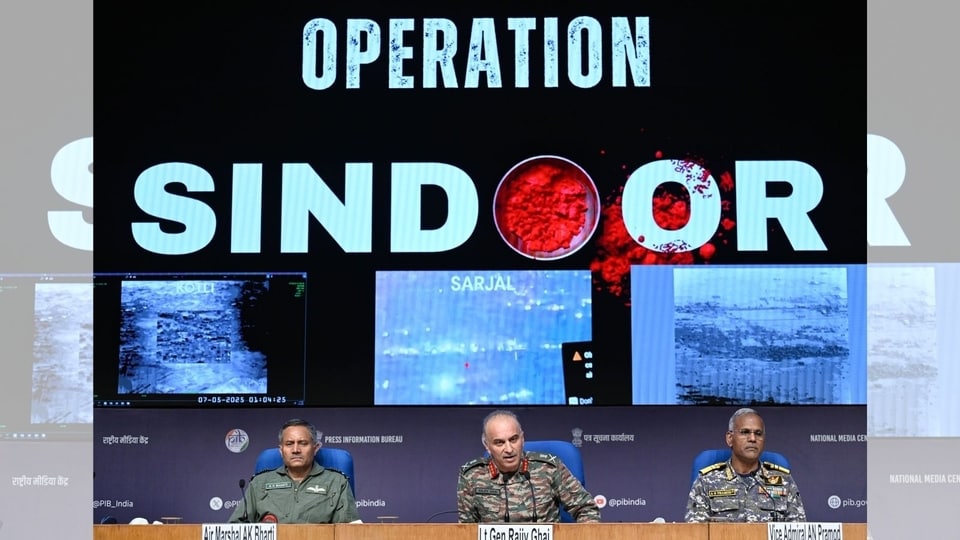
The brilliance of India’s Operation Sindoor came from its brevity and limited message that sponsorship of terrorism has costs. The question then arises: Is Islamabad willing to risk another such operation? Apparently, yes. In an important shift, Islamabad hived off conventional missiles out of its nuclear arsenal, with a new Army Rocket Force Command — this leaves it free to use long range missiles without risk, circumventing the earlier problem that since New Delhi had no way of knowing whether a missile carried a conventional or nuclear warhead, instant and devastating retaliation was certain. Holes are also being plugged with precision missiles such as Fateh 2, a 600-km anti-ship Taimoor missile, and some six satellite launches over 16 months, according to the Takshashila Institution. India is responding similarly, including with a whopping $2-billion earmarked for a panoply of drone and counter-drone systems. Both Pakistan and India’s nuclear commands are vested with the tri-services — but only one country’s is under political control. Rawalpindi clearly controls everything, including Pakistan’s Prime Minister. India has proposed an Integrated Rocket Force, with the non-nuclear Pralay as a clear candidate for the arsenal and others such as Brahmos also considered. It’s expensive business, since entire systems would have to be duplicated to avoid co-location with nuclear assets. Each service will want its own missiles, but the use of even one short-range missile will need political acquiescence. It is just far too risky. In opting for this, however, India loses strategic ambiguity, particularly with regard to China, which co-locates its nuclear and conventional missiles.
Also Read | ‘It didn’t leak from us’: Ex-CDS hints Pakistan may have leaked Operation Sindoor ceasefire details to US
The question is whether that is a good idea for either battlefront. Stand-off, high-tech capability is good for a range of warfare options, but it certainly erodes those red lines. How many deaths and number of cities hit constitute victory? That is a vital question for the political leadership. Public perception also matters, and any “off ramp” needs to consider that.
All in all, it seems that a new doctrine is needed to decide on such issues, that blends with the existing nuclear doctrine crafted by the brilliant K Subrahmanyam. But among other things, that earlier steel separation between conventional and nuclear use might have to be rethought. A Pralay is clearly conventional, but its range of 500 km means it can hit Pakistani cities or air bases, and vice versa with Pakistan’s Abdali. That’s a strategic conventional option. Esoteric nuclear debates don’t take this reality into account. It is time to think about deterring destruction as a whole, with clearly marked red lines that apply to both conventional and nuclear fields. The alternative is just too alarming.


