
 E-Paper



Mind the Gap: The price of justice
The death of a student in Balasore after she set herself ablaze alleging sexual harassment by a professor is an indictment of institutional failure.

 Prefer HTon Google


The 20-year-old student told her college principal that her head of department Samir Kumar Sahu was asking her for sexual favours and, when she turned him down, began harassing her and threatened to fail her.
Principal Dilip Ghose did nothing.
She put in a complaint with her college internal complaints committee (ICC) and reportedly wrote that if the college authorities didn’t act, “I will commit suicide.”
Nothing.
She filed a complaint with the police.
Still nothing.
On Saturday July 12, after the second year B.Ed student of the Fakir Mohan (autonomous) college in Balasore, Odisha doused herself with kerosene and set herself ablaze, suddenly something. Finally, the principal and the professor suspended from the college and arrested.
Next, police swings into action saying that it will investigate the role of the nine-member ICC to examine criminal liability and administrative inaction.
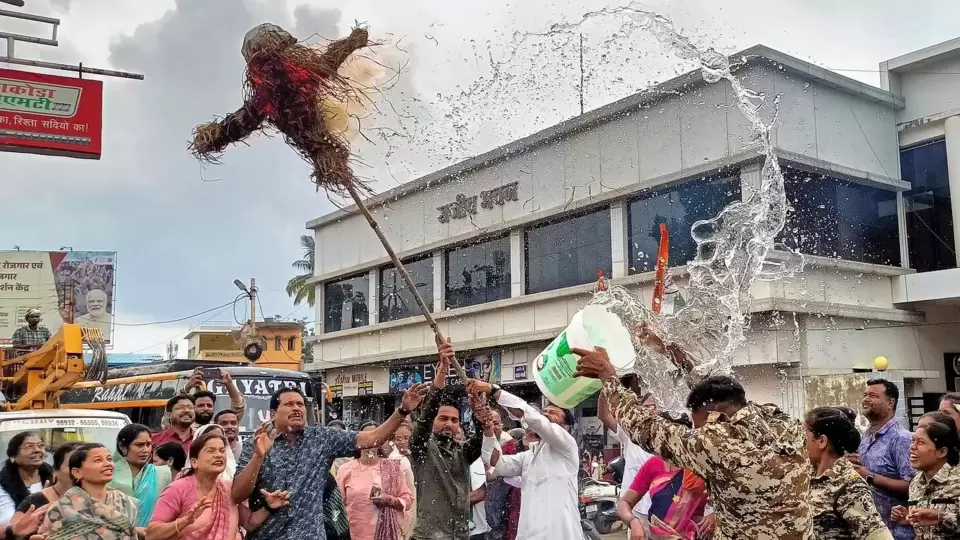
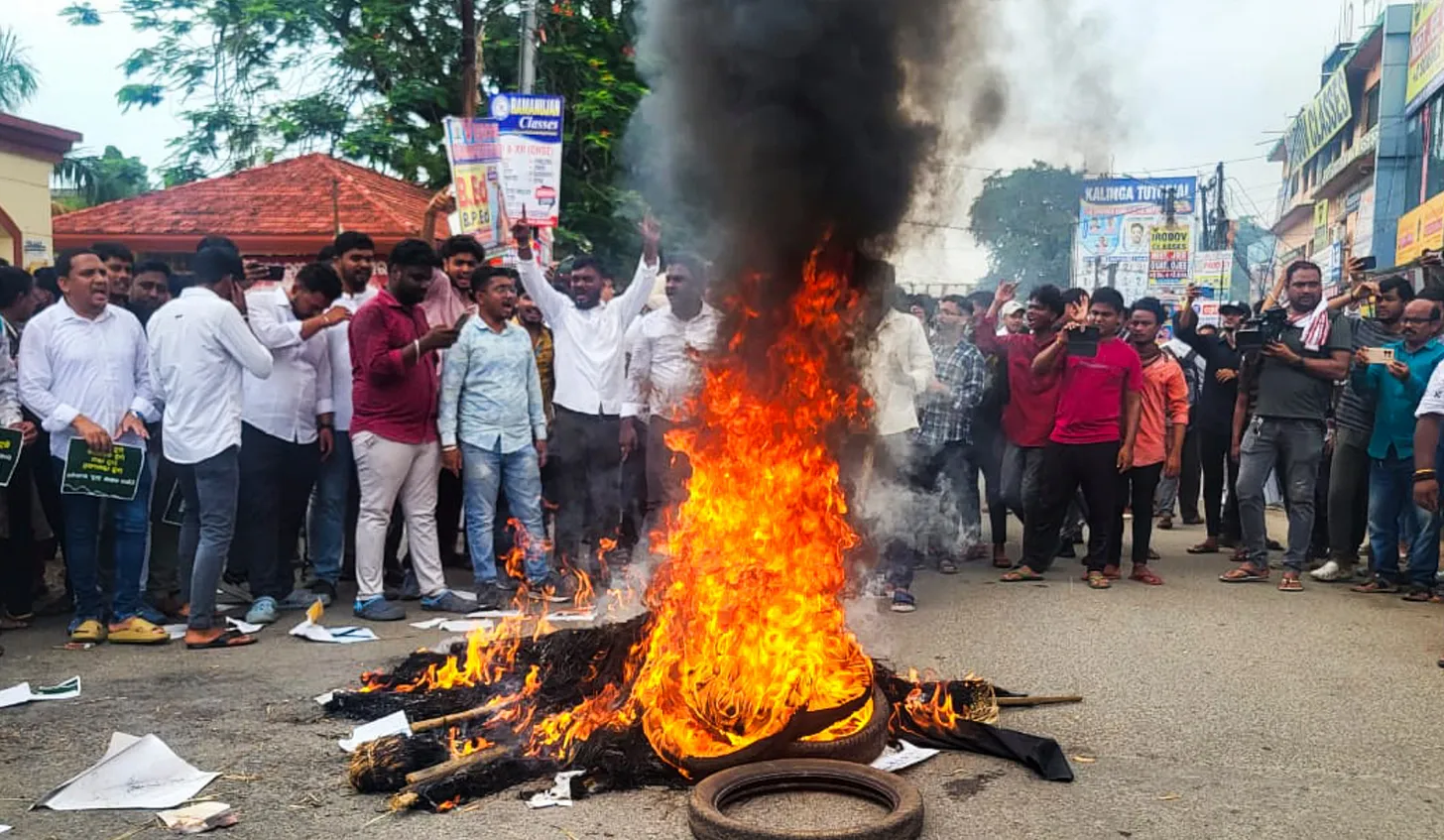
Finally, in the face of student protest and anger, Odisha chief minister Mohan Charan Majhi promises “strict legal action” against those found responsible and announces ₹20 lakh ex-gratia compensation to the student’s family.
A UGC fact-finding committee is set up to assess institutional redressal systems.
“Planned injustice,” former chief minister Naveen Patnaik says. His party the Biju Janata Dal calls for a strike.
“Nothing less than a murder by the BJP’s system,” adds Congress leader Rahul Gandhi.
The BJP responds with its own cliches. “No one will be spared” etc. And on it goes.
Does it really take the gruesome death of a student to shock the system to respond? The student sought justice but was thwarted at every step despite following due process and taking recourse to laws designed to protect people like her.
Why did justice elude her?
Multiple failures
The first failure is institutional. The ICC mandated by the Prevention of Sexual Harassment (POSH) law reportedly recommended the transfer of Samir Kumar Sahu to another department but did not act on it.
Given her obvious distress, there seems to have been no counselling available to her. Empathy was conspicuous by its absence. Instead, says the student’s father, principal Ghose asked her to withdraw her complaint. She set herself ablaze reportedly soon after this meeting.
There is failure too of the police to act. There is no evidence so far that the student’s complaint led to even a preliminary inquiry. What were they waiting for?
In cases of sexual harassment there is a power asymmetry at work. Who do you choose to believe? Student or professor? The student’s father claims his daughter was not the first to complain against Sahu. If this is true, then the lapse by the ICC and the college is shocking.
If despite a law and institutional mechanisms to protect the vulnerable, if despite an individual’s personal courage to speak up and complain, justice still fails, then the system is broken. We need an overhaul.
But there’s a larger failure here and it is the failure of society to believe women when they speak up. Asking her to withdraw her complaint as if sexual harassment by a teacher is some trivial irritation is a typical patriarchal response. Don’t speak up. Don’t complain. Let it go. That is the lesson.
Cautionary tales
On June 25 this year, a 24-year-old first-year law student at the South Calcutta law college was gang-raped inside college premises. She was beaten with a hockey stick, filmed naked and threatened with the release of the video if she complained. She filed a police complaint anyway.
As it turns out, the main accused, Monojit Mishra had been expelled from the same college in 2012. Despite 11 criminal cases against him, Mishra made his way back to the college in 2017 and even became an officer bearer for the TMC’s student wing (he was subsequently thrown out).
Inexplicably, the college named him as a pointsperson for student queries on a public notice last year.
What was the due diligence by the college in hiring a man, even in an ad hoc job, when there are criminal charges pending against that man? These are serious institutional lapses in a state where student union elections have been suspended for over a decade.
Even as I write this, there is more tragic news, the death by suicide of a second-year student at Sharada University in Noida on Friday, July 18. In her suicide note, the student has mentioned two faculty members who she says mentally harassed and humiliated her. Both faculty members have been arrested following her death.
In Mumbai’s state-run J J Hospital, a 28-year-old female senior resident doctor has reportedly taken an overdose of sleeping pills after being told by a teacher that she would not be allowed to take the exams. The teacher, it is alleged, has been harassing the student for a while.
Colleges need to do better. Most, however, are clueless. In Cuttack, following the Balasore incident, Ravenshaw University said all women, even faculty, must leave campus by 5.30 pm. The notice caused an uproar—restricting women’s movements is not a solution to safety concerns—and was withdrawn within hours.
Chief minister Majhi has now announced safety measures in all government-run colleges in Odisha. These include empowerment cells, managed by women students where students will be made aware of their legal rights and can, through an app, connect with both an ICC and mental health experts. Faculty will have to undergo gender sensitisation.


