
 E-Paper



New frontiers for India, Nepal to work together
Many of the challenges we face are the same: Drug trafficking, cybercrime, terrorism, and natural disasters do not stop at national borders

 Prefer HTon Google


When I travelled to New Delhi for the first BIMSTEC Home Ministers’ Meeting, I had a clear goal: to explore how Nepal and its neighbour could work together to solve problems that affect ordinary people. Our countries may have different priorities, but many of the challenges we face are the same: Drug trafficking, cybercrime, terrorism, and natural disasters do not stop at national borders.
What matters in this context is whether and how we turn dialogue into action: sharing information faster, closing gaps that criminals exploit and preventing harm.
The historical and continuing connections between the two countries — our communities, cultures (including shared heritage), business and trade, employment and livelihoods — have survived political change on both sides of the border. This lasting friendship must help us make families safer, businesses stronger, communities better prepared for disasters, and opportunities more accessible. This must begin with working to address common challenges.
To start with, the two countries must turn their attention to drug trafficking and addiction. I spent much of my youth in Thamel, Kathmandu’s well-known tourist district. Growing up there exposed me to many sides of society, including the harm drugs can cause to individuals and their families.
My position on drug trafficking is clear: Those who produce, finance, and distribute illegal drugs must face the full force of the law. Wealth, influence, and political connections must not shield anyone from justice. At the same time, we must distinguish between those who profit from this trade and those who struggle with addiction. Strong law enforcement must go hand in hand with prevention, treatment and rehabilitation.
Nepal and India can strengthen cooperation by sharing intelligence, tracing trafficking routes, following the money, and pursuing the networks behind the trade — not just those caught carrying drugs. Our open border is a valuable part of our relationship. It supports families, livelihoods and businesses. So, we must prevent criminals from exploiting it without making life unnecessarily difficult for ordinary people. Better technology, timely information-sharing and coordinated investigations can help us keep the border open to legitimate movement while mounting a stronger response to crime.
Terrorism and violent extremism present another shared challenge. Extremist networks can use online platforms, misinformation and personal grievances to influence and recruit vulnerable people. We need to understand how these networks operate, raise money and spread their influence. Our agencies should share relevant information and strengthen their ability to investigate and prevent violence.
In border areas, attention must be given to the potential exploitation of religious, ethnic, and cultural identities by actors pursuing political, ideological, criminal or geopolitical objectives. The focus must remain on unlawful conduct, incitement to violence, and the networks that facilitate it.
Public trust is equally important. People are more likely to cooperate with law enforcement when they are treated fairly. Security measures are most effective when strong institutions work alongside communities. Our goal should be to prevent violence while protecting the rights and dignity of the people we serve.
A third challenge, cybercrime, shows how quickly a threat can cross borders. A fraudster operating far away can steal a family’s savings through a phone call, a message, or an online transaction. By the time the crime is reported, the money may have passed through several accounts and countries. Our response must be as fast and connected as the crime itself.
Nepal and India can improve cooperation through faster information-sharing, stronger digital investigation skills, and more effective cross-border procedures to trace stolen money and identify those responsible. India’s experience in digital governance and technology-enabled public services offers valuable lessons for Nepal. More practical exchanges between our police officers, investigators and technical experts are certainly called for.
A strong partnership recognises what each country can learn from the other. Nepal has valuable experience in community mobilisation, disaster response, and working in difficult Himalayan terrain. We should not wait for an emergency to begin preparing.
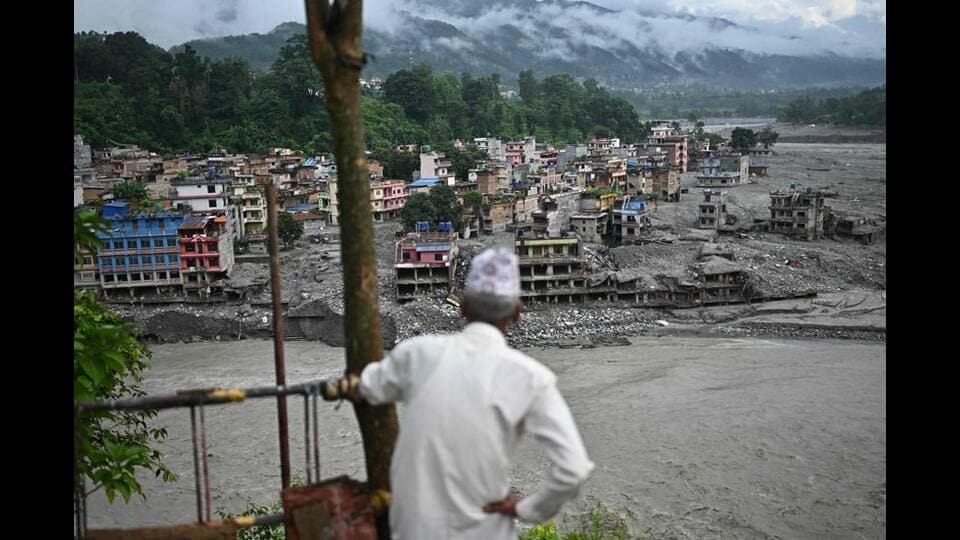
Earthquakes, floods, landslides and glacial lake outburst floods can affect communities across borders. Better early-warning systems, timely sharing of weather and river data, and joint rescue exercises could help save lives and reduce damage. For this, we need reliable communication channels, clear arrangements for cross-border assistance, and close coordination among disaster management authorities.
At the BIMSTEC meeting, I proposed a regional framework for disaster preparedness and response. I hope it leads to practical arrangements for countries to prepare together and provide assistance quickly.
Cooperation should also create better opportunities for businesses and workers. During my meeting with home minister Amit Shah, I raised the difficulties faced by Nepali exporters in obtaining certification from the Bureau of Indian Standards (BIS). Nepal and India should explore greater mutual recognition of product certifications, subject to agreed-to quality and safety requirements. This could reduce unnecessary costs, avoid repeated testing, and make it easier for businesses on both sides.
Security and economic opportunity are closely connected. When people can earn a living and trade can flourish, communities have more opportunities to build a stable future.
Nepal is going through political change, accompanied by strong public expectations for honest leadership, accountable institutions and better public services. The recent engagement between Rastriya Swatantra Party chairman Rabi Lamichhane and India’s leadership has created another opportunity for dialogue. Nepal Prime Minister Balendra Shah’s proposed visit to India could provide further momentum.
Neighbours will not always agree on every issue. That is natural. What matters is whether we can discuss our differences honestly, respect each other’s positions and work together where our interests meet. A strong partnership does not require one country to follow the other. It requires both to recognise the value of cooperation.
For Nepal and India, the priorities are clear: Better communication between security agencies, fewer opportunities for criminal networks, easier and fairer trade, and stronger protection for communities facing natural disasters. These goals require trust, practical cooperation and the determination to deliver on our commitments. Nepal and India have inherited a friendship built over generations. Our task is to make that friendship more meaningful for the next generation.
Sudhan Gurung is Nepal’s minister for home affairs. The views expressed are personal


