
 E-Paper



Shakti sidelined: Missing women in India’s workforce
Navratri celebrates Shakti, feminine power, as the force that sustains the world. India’s economy needs that power to achieve greatness

 Prefer HTon Google


Economic progress in India is said to have demographic winds at its back. Half of Indians are under 29, and the working-age population will keep growing until about 2040. But a demographic dividend depends on how many working-age adults have jobs. By the weekly measure in the government’s own labour survey, only a third of Indian women are in the labour force. That is among the lowest rates in the world, below even Saudi Arabia’s. None of the East Asian economies that reached upper-middle income had female labour force participation much below 45%. In China, Thailand, Malaysia and Indonesia, young women staffed the factory floors that turned surplus labour into export earnings. The Indian government has set a target of 70% female participation by 2047, but there is no clear pathway to reach it.
Lack of education is not what holds women back. Young women now enroll in college at higher rates than young men. For two decades, women’s education rose while their employment fell. University of Maryland academics Esha Chatterjee, Sonalde Desai and Reeve Vanneman explain this as the result of a shortage of jobs that womenand their families find acceptable, meaning jobs close to home and seen as respectable. Those conditions rule out much of the retail, hospitality, and transport work that employs women in other countries.
Ironically, as poor families become better off, women often leave the workforce, a pattern that is not unique to India. They return when education opens up white-collar jobs. Nobel laureate Claudia Goldin documented this U-shaped pattern across countries and in America’s own history. The challenge in India’s case is that many women are on the downward side of that curve, and there are too few of the jobs that would bring them back. Caste makes the dip more pronounced.
In rural India, if a woman works outside the home, especially as a wage labourer, the family is seen as low status. As a result, when households get wealthier, many withdraw women from outside work to claim higher standing, adopting the seclusion norms of the castes above them. This does not mean that Indian women prefer to stay home. When acceptable paid work is available, the data show that women take it, and their families’ norms adjust accordingly. In one study, recruiting village women for outsourcing jobs near Delhi raised their employment and schooling and delayed their marriages.
Lack of control over earnings is another reason why women don’t seek work outside the home. According to the National Family Health Survey (2019–21), only about 18% of married women who earn a cash income decide on their own how to spend it, down from 24% in 2005-06. When a woman’s wages go straight into a household pot that she has little say over, working outside the home offers her little in return and can carry a social cost. An experiment in Madhya Pradesh tested this directly and found that depositing women’s MGNREGA wages into accounts in their own names, rather than the accounts of male household heads, increased women’s work. The effects were concentrated among women whose husbands disapproved of their working, and the intervention also shifted gender norms in a more favourable direction.
Safety is one of the biggest constraints on women joining the labour force. Girija Borker found that women students in Delhi chose lower-ranked colleges to avoid routes they considered unsafe. Districts with a higher perceived risk of sexual violence tend to have lower female employment, while better roads and public transport are linked to more women in the workforce. Transport and safety may do more for growth than measures that get far more attention.
Tamil Nadu shows what is possible. According to the 2021–22 Annual Survey of Industries, of the 14.9 lakh women in India’s registered factories, 6.3 lakh, about 42%, work in Tamil Nadu. The state has approved night shifts for women and required creches in apparel parks. It built Thozhi hostels near industrial zones, a public-private venture backed by the World Bank. Similarly, electronics makers around Sriperumbudur have built dormitories housing thousands of young women from rural districts and have been able to address the main concern of families about safe housing and travel for their daughters. Even this remarkable workforce in Tamil Nadu represents only about 2% of the state’s working-age women and is a reminder of how much further this model needs to go.
At the other end are Uttar Pradesh, Bihar, Punjab, Haryana, and Delhi, the states with the lowest female participation. Bihar’s official rate rose from 4.1% in 2017-18 to 30.5% in 2023-24. There is no clear evidence of a change in jobs or norms that could produce such a remarkable sevenfold rise in six years, and participation in urban Bihar is still only about 13%. Much of the recorded increase appears to be rural, part-time or unpaid work, partly picked up by changes in how women’s work is counted. When the statistics are this unreliable, it is hard to know which policies are working.
Delhi is the outlier in this picture. With almost no farm work, it is effectively an urban economy, and it is one of India’s richest regions. Yet despite high levels of education, only about 13% of its women are in the labour force. Higher family incomes have not brought Delhi’s women into work. Safety concerns and limited control over earnings may help explain the gap.
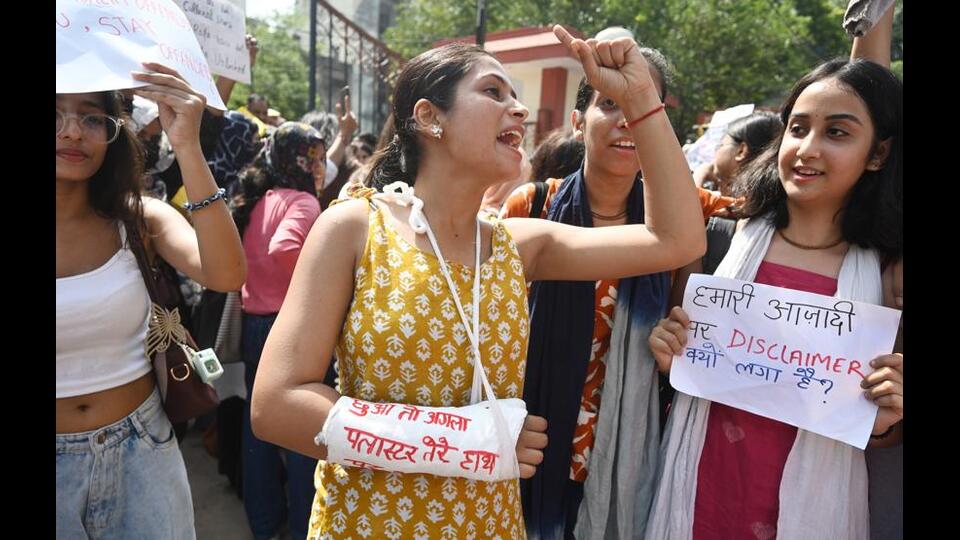
Although the main thrust of the current youth protests is about voter rolls and the credibility of the Election Commission, there are parallel protests about women’s safety and agency over their lives. The gap between rising education and scarce jobs, which has been shown to drive youth unrest worldwide, may be widest among young women in India. This is an important demand of young women, many of whom rightfully see earning a living as part of what it means to be a full citizen.
Navratri, which ended this week celebrates Shakti, feminine power, as the force that sustains the world. India’s economy needs that power to achieve greatness. Whether the country makes room for it is still an open question.
Ramanan Laxminarayan is the author of Bacteria to Buddha: How Cooperation Shaped Consciousness — and Makes Us Human. The views expressed are personal


