
 E-Paper



The potter, the broom, and the flame
Diwali is the smell of ghee warming in a kitchen at four in the afternoon and the knowledge in a grandmother’s wrist of how far to press a wick into oil

 Prefer HTon Google


Ujaale apni yaadon ke hamare saath rehne do, Na jaane kis gali mein zindagi ki shaam ho jaye - Bashir Badr
The man behind the mithai counter is stacking kaju katli into boxes faster than the boxes can be sold. A customer, phone in hand, reads out a forward from a family WhatsApp group. “Bhaiya, suna? Diwali ab UNESCO ki list mein aa gayi hai.” The shopkeeper does not look up. “Achha? Kaunsi list? Aap aadha-kilo bol rahe the na?” The customer laughs and nods, and the ribbon goes on the mithai ka dabba, while the queue behind him lengthens into the lane. Overhead hangs a string of lights that the shopkeeper put up a week early.
In December 2025 a UNESCO committee inscribed Diwali on the Representative List of the Intangible Cultural Heritage of Humanity. The decision reads like every file in every government office. A practice is identified, its communities are said to have been consulted, and a safeguarding plan is attached. The listing confers no legal protection, and no prize money. What it confers is a line on a register kept in Paris, beside flamenco and the French baguette. A festival that outlasted the Raj has now been shown to a committee and found to exist.
The word on the certificate is intangible, and it suits Diwali better than its drafters may have known. Diwali is the smell of ghee warming in a kitchen at four in the afternoon and the knowledge in a grandmother’s wrist of how far to press a wick into oil. The stories around Diwali are plural. Ayodhya’s lamps greet Ram in the north, while the south wakes to Krishna’s victory over Narakasura. Jains keep the night of Mahavira’s nirvana, and Sikhs mark Guru Hargobind’s release from Gwalior as Bandi Chhor Divas. Every Hindi family drama has a Diwali scene in which the estranged son comes home, and the diyas do the forgiving. A listing needs one description. The festival has always declined to supply it.
The grandmother’s version of the festival has no title and no sponsor. A lunar month and a pandit’s almanac decide its date between them, and nobody consults a committee.
The convention behind the list recognises practices compatible with sustainable development. Diwali’s habits are less obliging. By the morning after, the sky over Delhi is most years the colour of dishwater, and every phone carries the same grim number. The smoke lingers for days, long after the sweets are eaten and the boxes thrown out. The listing certifies the diyas and says nothing of the cracker, which is what the sky remembers. A committee can bless the light. The smoke remains a municipal matter.
Recognition travels well. It becomes a banner on an official feed and a line in the programme of an event in a city abroad, where families who have kept the festival alive for decades now find it blessed from outside. Advertisers will borrow the word heritage before the month is out. The pleasure in the news is real and a little odd, like being told by a visitor that your own house is lovely.
Leicester switches on its Golden Mile, and Little India in Singapore lights up, and neither city waited for a committee to tell it what the diyas meant.
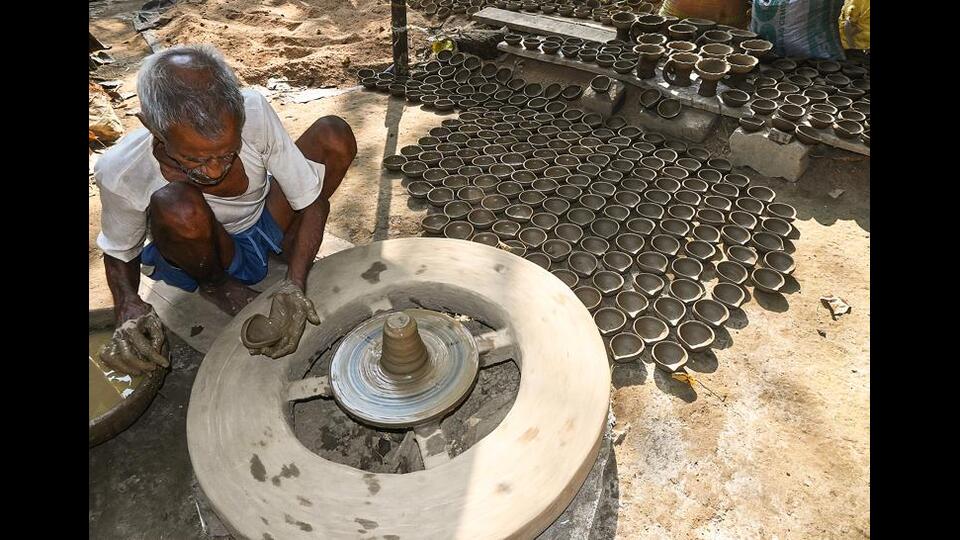
Closer to home sits the potter. His wheel in a kumhar colony turns out the diyas the festival cannot do without, and his season lasts a few weeks of the year. If safeguarding ever comes to mean orders and fair wages, he is where it should arrive first. Until then, the diya sells by the dozen for a few rupees, and the hands that shaped it are rarely mentioned.
Sunday night will end the way it always has. The diyas burn down at their own pace, and the last wick leans in its own oil and goes out. A cat crosses the lane in the dark, and somewhere a late cracker goes off like a cough. The string of lights over the mithai counter is still on, burning for nobody, and the speaker on the pavement has finally fallen silent. At dawn, a municipal worker sweeps the lane, and the spent clay and burnt paper go into the same handcart. Nobody has told him the festival is now heritage. The lane is heavier to sweep after a good night, which is how he knows it was one. His broom turns up a few unburnt wicks, and he sets them upright on a wall, in case anyone wants them.
Pranav Jain is an IPS (P) officer. The views expressed are personal
(This is a Hindustan Times digital exclusive)


