
 E-Paper



Why we must cheer the Nobel for Goldin
Claudia Goldin's research on women's labor force participation challenges traditional economic assumptions

 Prefer HTon Google


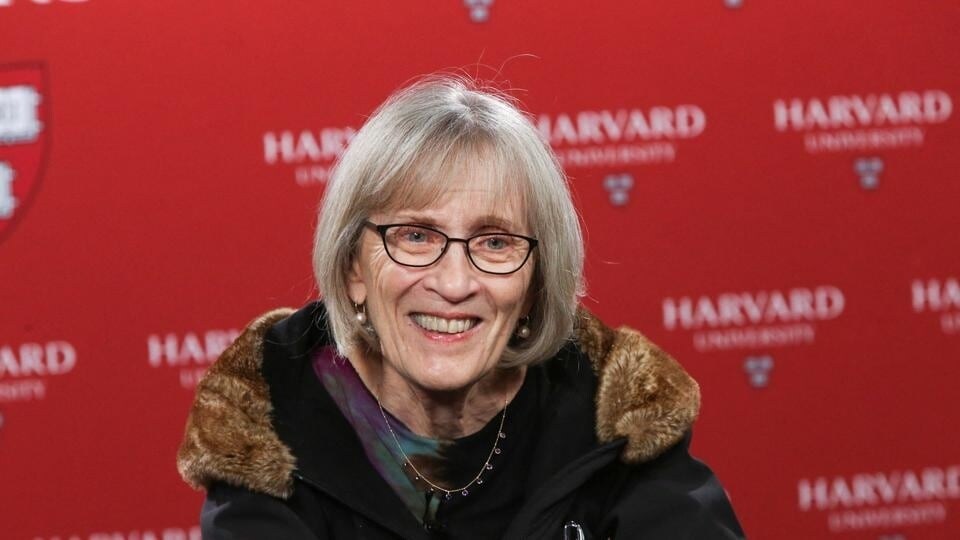
I can think of three reasons to celebrate Claudia Goldin’s win of the Economics Nobel Prize—or the Sveriges Riksbank Prize in Economic Sciences in Memory of Alfred Nobel to use its proper name. She’s only the third woman to be awarded an economics Nobel and, unlike Esther Duflo and Elinor Ostrom, the first to get it on her own without a male colleague.
Moreover, Nobel 2023 has seen four women honoured this year; for peace (Narges Mohammadi), medicine (Katalin Kariko jointly with Drew Weissman), physics (Anne L’Huillier with Pierre Agostini and Ferenc Krausz) and economics. Given that in 121 years, from 1901 to 2022, only 60 women had won the prize, this is quite a haul.
It’s the third reason that I’m cheering the loudest. An economic historian at Harvard University, Goldin, now 77, has since the 1970s been looking at a topic that has gained currency in recent times: Women’s labour force participation. Until the Second Wave Feminism’s raised consciousness of the 1970s, the history of economics had been written by men. The assumption, notes the Economist, was that economic growth led to a more level playing field.
Goldin’s work put that assumption on its head. “She had to be a detective,” Randi Hjalmarsson, a member of the prize committee said. What she unearthed was a narrative arc of women’s lives and employment that was quite different from that of men’s. The shift from agrarian to factory economics, she found, resulted in women dropping off paid employment as they found it difficult to balance home responsibilities with long factory shifts. It was only with the rise of the services sector in the 20th century that women bounced back to paid work, in what Goldin and other economists call the U-curve.
As a woman, Goldin asked questions rarely, if ever, asked before. Did the contraceptive pill impact labour force participation? Yes, obviously.
When it came to the gender wage gap that persists well into the 21st century, she looked at the possible reasons. Perhaps the fault lay with ‘greedy’ professions like law and consulting that demand long hours. When women become mothers, they either drop out of work, or take a salary hit because they simply don’t have enough hours to put in the time.
Her findings told the world the story of the other half. It’s a story that needs to be told; a story that visibilises the invisible and valuable work of women.
“Feminist economists have long argued for the need to recognize the paramount value of ‘reproductive labour’ that most often is performed by women, that allows the ‘productive economy’ to function smoothly,” said Prof Ashwini Deshpande, head of the economics department at Ashoka University.
All women work, but not all women are paid for their work. And yet it is women’s unpaid work in cooking, cleaning and taking care of the kids, elderly and sick that enable men to pursue paid work. Or, to put it another way, the more time women spend on unpaid care work, the less time they have for paid work.
Goldin’s research is limited to the US market. There are differences with India where women bear one of the world’s largest burdens of unpaid care work. This explains to a certain degree the mystery of the missing women from our workforce. In the post-liberalisation years when the economy was opening up and new opportunities were presenting themselves, at a time when 24.3 million men went to work, women were quitting paid work in droves. A 2017 World Bank report noted that partly this was due to the fact that girls were opting to stay on in school. But partly it had to do with how we saw women’s place in society.
Over a year in 2017, I wrote a series of articles trying to understand the roadblocks to women’s employment. The first dip came not from motherhood but from marriage. There were other issues, the lack of safe and affordable public transport, a not-unjustified perception of public safety, and the distrust of women’s agency.
These were stories that could never be understood or told, unless you were actively looking at gender implications. Alongside there was a growing body of work that studied the likely impact on economies and GDP if women worked at par with men. All of this led to a new and growing conversation on the need to look at policy changes that would enable women to stay the course.
For far too long we had viewed economics as if gender didn’t matter. Now, we know and acknowledge that it does. Goldin’s work has not just shown the need for this conversation but opened the path for scores of younger feminist economists to examine, question and rewrite received wisdom about women and work.
Namita Bhandare writes on gender. The views expressed are personal


