
 E-Paper



Photos: On Assam’s Majuli island, monks keep an ancient tradition alive
On Majuli, an island on the Brahmaputra in Assam, Satras or monasteries, emerged in the medieval period as an institution to spread neo Vaishnavism, the teachings of Sankardev, for congregation and to promote socio-cultural exchange. Of note were the resident Vaishnava monks who believe the way to salvation is through dance, drama and music. Five hundred years later, more than 20 such Vaishnavite monasteries on the island carry forward an ancient tradition of dance and other forms that melds worship with the arts.
Updated on: Sept 12, 2018 12:26 PM IST


Share via


Copy link

1/7
 View Photos in a new improved layout
Updated on Sept 12, 2018 12:26 PM
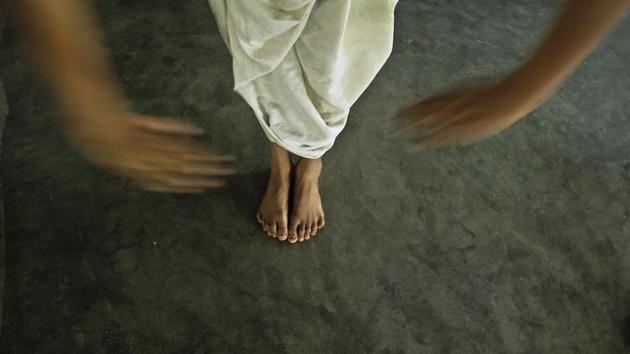
A young monk practices Mati Akhora, a devotional performing art at a Sat ra or Vaishnavite monastery in Majuli, Assam. The Neo-Vaishnavism movement started by Shankardeva in the medieval period focused on an egalitarian community and lead to a major renaissance in Assamese society. Over time, Satras became an important institution for socio-cultural exchange and propagating Neo-Vaishnavite values. (Anupam Nath / AP)
2/7
 View Photos in a new improved layout
Updated on Sept 12, 2018 12:26 PM
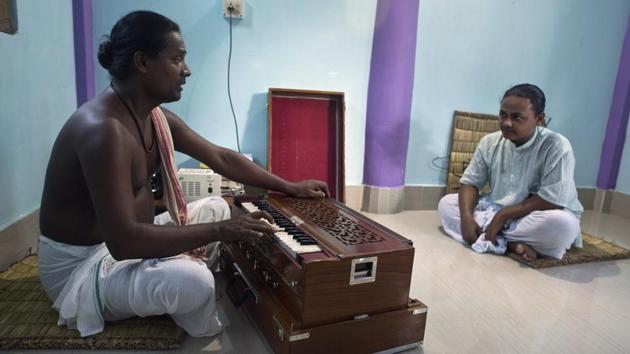
A monk learns Borgeet, an Assamese classical song from a Guru at a Satra. Majuli island is home to more than 20 Vaishnavite monasteries dedicated to the god Vishnu. Inside the monasteries, thousands of monks are keeping alive an ancient tradition that melds worship with the arts. (Anupam Nath / AP)
3/7
 View Photos in a new improved layout
Updated on Sept 12, 2018 12:26 PM
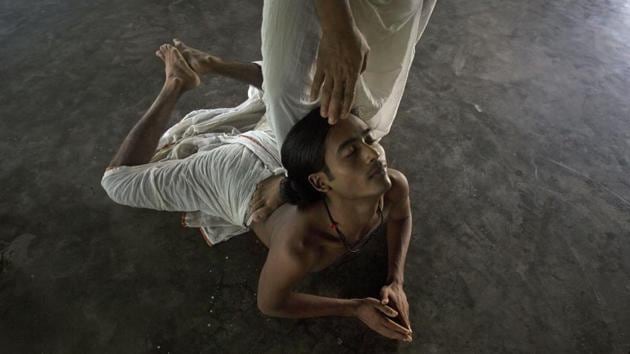
A teacher helps a young monk practice Mati Akhora which is the foundation of the Sattriya dance. The dance is generally performed in the namghar or prayer hall of the Satra and its themes center around Radha and Krishna-- sometimes other Vishnu avatars such as Rama and Sita. (Anupam Nath / AP)
4/7
 View Photos in a new improved layout
Updated on Sept 12, 2018 12:26 PM
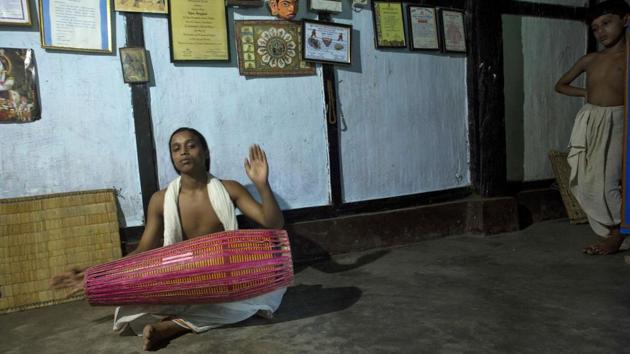
A monk practices on the Khol, a traditional Assamese instrument. Vaishnava monks believe the way to salvation is through dance, drama and music. The young monks, many of whom come from poor families, perform the dances at Krishna festivals across India and around the world. (Anupam Nath / AP)
5/7
 View Photos in a new improved layout
Updated on Sept 12, 2018 12:26 PM
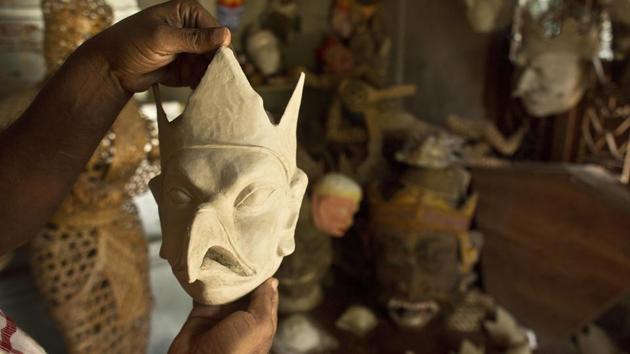
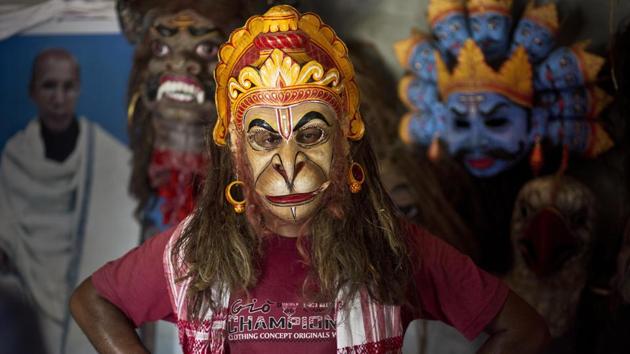
Vaishnavite practice is credited with preserving the culture of mask-making, an integral part of the dance dramas or Bhaonas. At the Samaguri Satra, the monks create three-dimensional bamboo frames and develop a contour using a mixture of clay, cow dung and paint to depict characters from Indian mythology. These masks are worn during Ras leela and Bhaona. (Anupam Nath / AP)
6/7
 View Photos in a new improved layout
Updated on Sept 12, 2018 12:26 PM
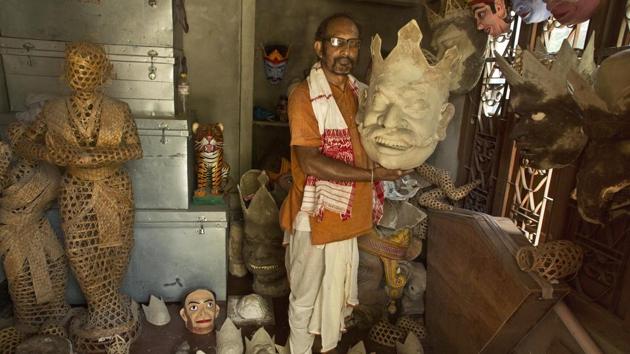
Traditional mask maker Hemachandra Goswami holds up a mask at Samaguri Satra. “Our Maha (great) guru Srimanta Sankardeva had established this art in the 15-16th centuries. He started with painting stories and that gave birth to Bhaona. The masks are essential for Bhaonas,” said 60-year old Goswami. (Anupam Nath / AP)
7/7
 View Photos in a new improved layout
Updated on Sept 12, 2018 12:26 PM


