

 E-Paper


Step by step: It’s intricate work, making wigs from real hair
1 / 6

 View Photos in a new improved layout
Updated on May 12, 2017 11:31 pm IST
Anyone can donate hair anywhere. All you have to do is make sure it’s at least 12-15 inches long, collect it carefully when you cut it so the ends are not mixed up with the roots, and then send it to an NGO that collects hair for wigs. (Satyabrata Tripathy / HT Photo)
2 / 6
 View Photos in a new improved layout
Updated on May 12, 2017 11:31 pm IST
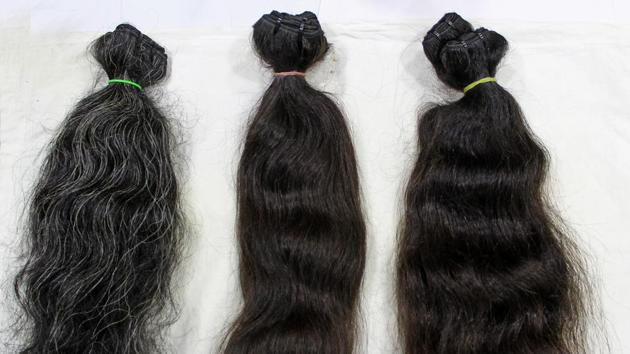
Donated hair is sorted carefully into ‘plaits’ based on length, colour and texture. Each plait is then brushed carefully to remove all knots. It is now ready to be rooted into a ‘cap’. (Satyabrata Tripathy / HT Photo)
3 / 6
 View Photos in a new improved layout
Updated on May 12, 2017 11:31 pm IST
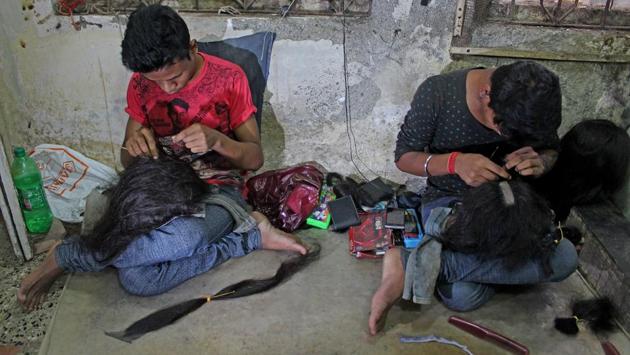
Here, two labourers knot the hair into the wig base or ‘cap’. Each cap is made to fit a specific person’s head, using monofilament net imported from Korea (Satyabrata Tripathy /HT Photo)
4 / 6
 View Photos in a new improved layout
Updated on May 12, 2017 11:31 pm IST
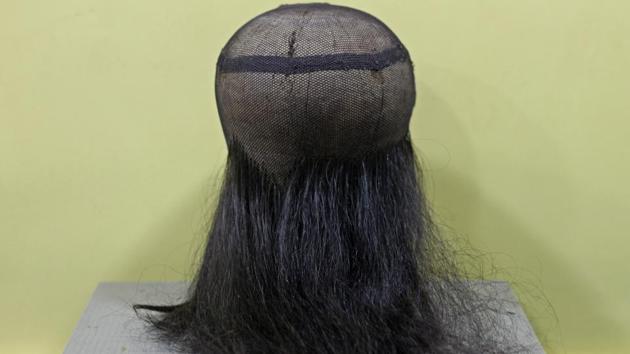
Two or three strands of hair at a time are knotted into the net. The knotting techniques used at the base and the crown are different. (Satyabrata Tripathy / HT Photo)
5 / 6
 View Photos in a new improved layout
Updated on May 12, 2017 11:31 pm IST
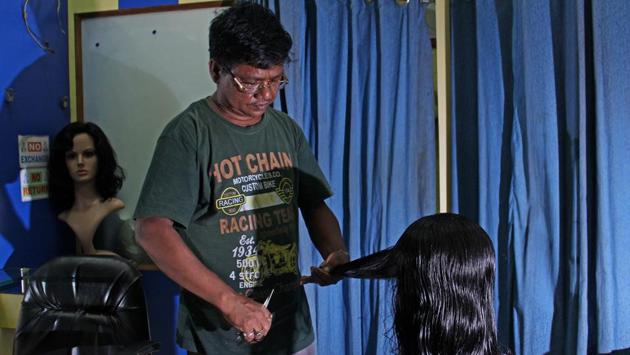
After the knotting, the hair is cut, shampooed, conditioned and styled just as it would be in a salon — except that no hair dryer is used. Hair, once separated from the scalp, becomes dry and gets brittle if exposed to intense heat or friction. (Satyabrata Tripathy / HT Photo)
6 / 6
 View Photos in a new improved layout
Updated on May 12, 2017 11:31 pm IST