
 E-Paper



Photos: Inside a Dinka pastoral camp with the cattle grazers of South Sudan
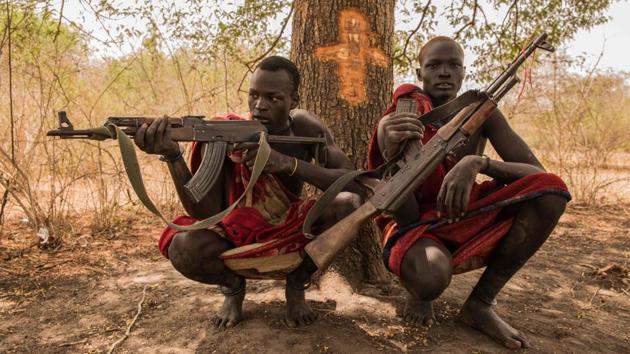
The Dinka are the most populous of South Sudan's tribes and also the most politically influential. Nomadic pastoralists, they live with cattle camps at the heart of the community. Theses camps offer an insight into a traditional way of life in South Sudan where culture and history is derived from the importance of cattle: as the source of wealth, prestige, and when pastures are scarce, conflict.
Updated on: Mar 10, 2018 11:46 AM IST


Share via


Copy link

1/13
 View Photos in a new improved layout
Updated on Mar 10, 2018 11:46 AM
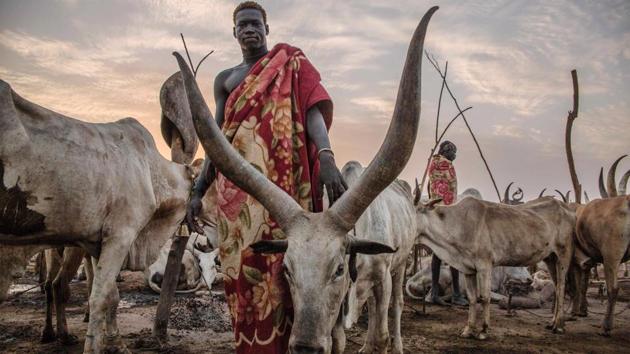
A Sudanese Dinka man poses between cows in the early morning at their cattle camp in Mingkaman, Lakes State, South Sudan. During four months of South Sudan’s dry season between December and May, the Dinka pastoralists from the highlands move down close to the Nile, where they set up big cattle camps in a unique display of harmony with their cattle. (Stefanie Glinski / AFP)
2/13
 View Photos in a new improved layout
Updated on Mar 10, 2018 11:46 AM
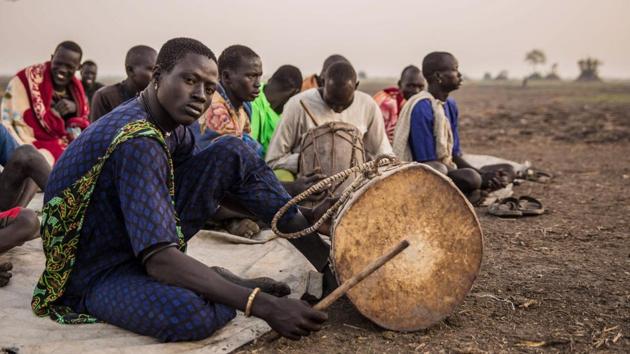
Dinka people gather for church prayers in the early morning at the cattle camp. Unlike the Arabised Islamic population in the north, the population in the south of Sudan, of which the Dinka are a majority, maintained animist religious beliefs which were mixed into Christianity in the 19th century. These differences were exacerbated in the Sudanese civil wars that began in 1955. (Stefanie Glinski / AFP)
3/13
 View Photos in a new improved layout
Updated on Mar 10, 2018 11:46 AM
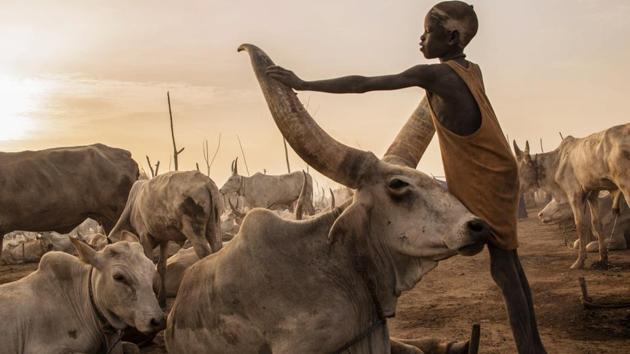
A boy touches the horns of a cow at a cattle camp in Mingkaman. For children the cattle camp is a period of learning and enjoyment. Days are filled with games as well as understanding the responsibilities of caring for the herds. The Dinka’s bond with their cattle blooms at an early age. (Stefanie Glinski / AFP)
4/13
 View Photos in a new improved layout
Updated on Mar 10, 2018 11:46 AM
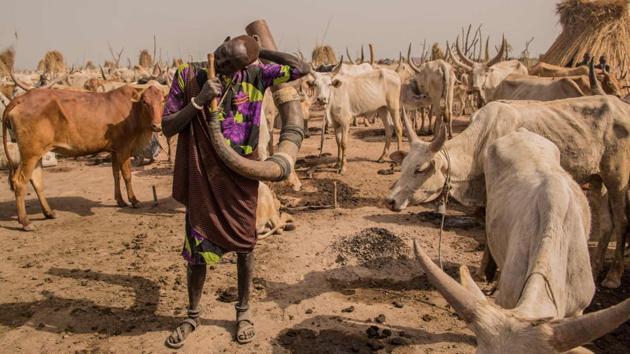
A man blows on an instrument made from a cow's horn. Sacred to the Dinka people, the rearing of cows is the primary profession with cattle considered a link to god. Reared for their milk, dairy is considered the best of the Dinka diet, supplemented with foraged wild foods and fish from the Nile in the dry season. (Stefanie Glinski / AFP)
5/13
 View Photos in a new improved layout
Updated on Mar 10, 2018 11:46 AM
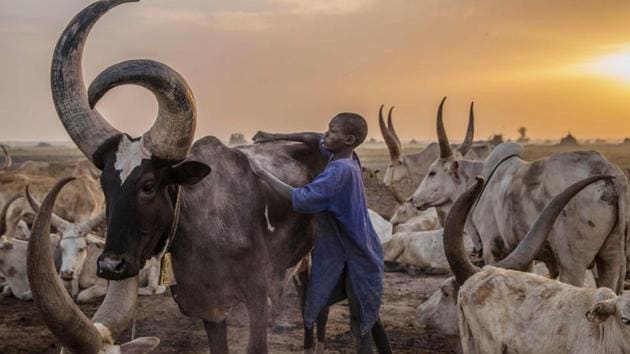
To identify one’s cattle, herders train the horns into distinct shapes by cutting them for growth in a desired direction. The poetic curves of the horns find expression in many words and gestures in the Dinka language with over 400 words related to cattle. (Stefanie Glinski / AFP)
6/13
 View Photos in a new improved layout
Updated on Mar 10, 2018 11:46 AM
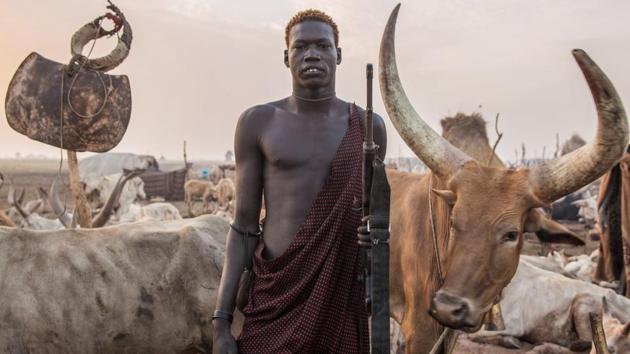
A Dinka herdsman poses with a rifle next to a bull. To mark the coming of age, men are given a bull, known as the namesake ox because the owner is given a name after it. The bond between the two is special and the herdsman emulates the behaviour of his namesake to the extent that the two are believed to be one. (Stefanie Glinski / AFP)
7/13
 View Photos in a new improved layout
Updated on Mar 10, 2018 11:46 AM
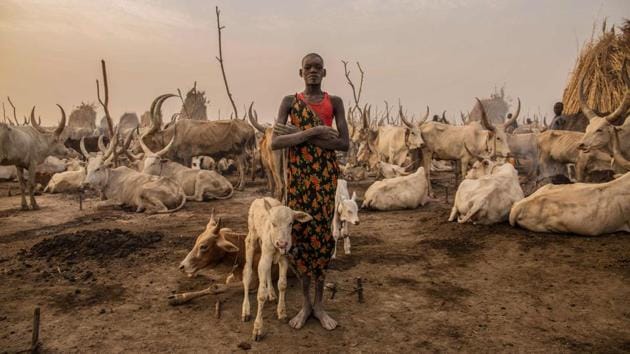
Den, 14, a Dinka girl works as a cattle keeper with her brother. The dry season camps also provide space for young people to meet freely. A Dinka man is judged not just by his deeds but also the stature of his bull. The animal accompanies him while courting a girl, when songs are sung extolling her beauty and also the virtues of the suitor’s ox. (Stefanie Glinski / AFP)
8/13
 View Photos in a new improved layout
Updated on Mar 10, 2018 11:46 AM
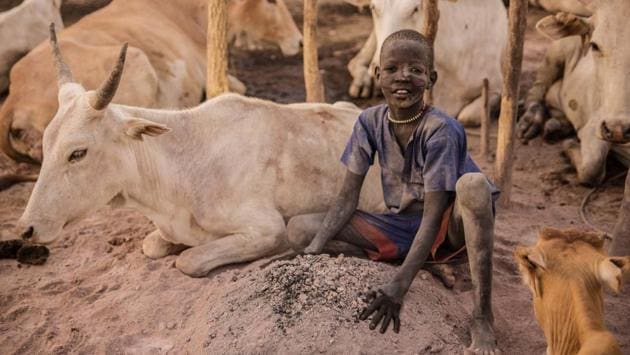
During camp season each day begins with the milking of the cows and ends with tending to them at sunset. At night, young boys gather the calves by fires fed by the day’s dung and sleep next to the animals as a family. The smoke that fills the air is a natural mosquito repellent. (Stefanie Glinski / AFP)
9/13
 View Photos in a new improved layout
Updated on Mar 10, 2018 11:46 AM
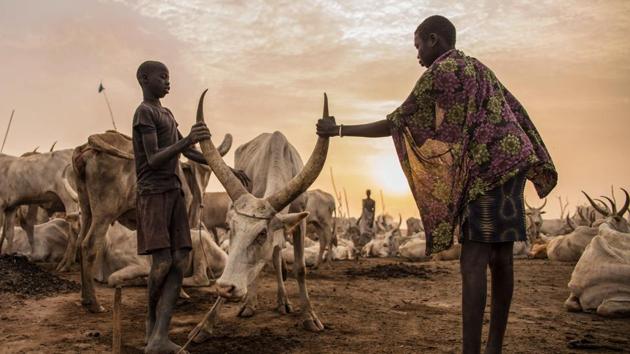
The following day, ash from the same fires is rubbed by the Dinka over themselves and their animals in beautification and protection. Men powder their hair with ash to lighten it after it has been bleached with cow urine over time. Early explorers described the ashen Dinka as ghostly giants. (Stefanie Glinski / AFP)
10/13
 View Photos in a new improved layout
Updated on Mar 10, 2018 11:46 AM
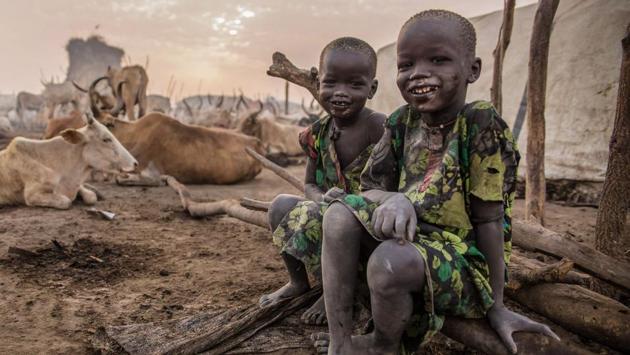
The Dinka believe in encouraging rather than reprimanding as a form of teaching their young. Until the 1930s the community passed on knowledge solely on an oral tradition and until a few decades ago tribe members were known for their outfits made entirely of beads signifying rank, age and station. (Stefanie Glinski / AFP)
11/13
 View Photos in a new improved layout
Updated on Mar 10, 2018 11:46 AM
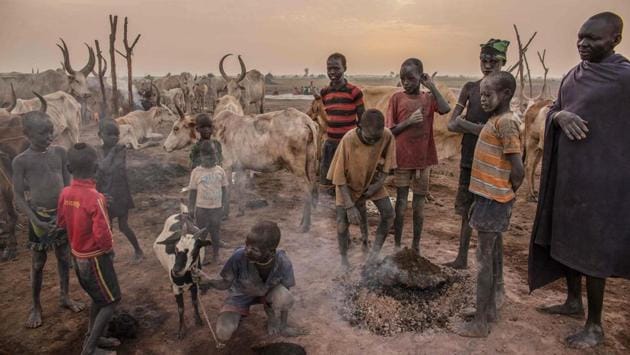
Each morning the tribe heads out with hundreds of cattle in search of grazing ground. While the animals graze, the Dinka can spend hours discussing variations and markings on their herd with appreciation similar to fine art. (Stefanie Glinski / AFP)
12/13
 View Photos in a new improved layout
Updated on Mar 10, 2018 11:46 AM
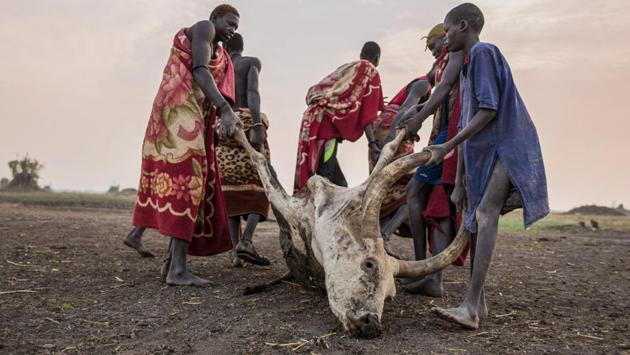
Sudanese Dinka men drag away a dead cow, poisoned by a scorpion bite. When camp is moved is search of water of pastures, the DInka leave behind all extra weight and move ahead carrying their entire wealth in material possessions. (Stefanie Glinski / AFP)
13/13
 View Photos in a new improved layout
Updated on Mar 10, 2018 11:46 AM


