
 E-Paper



Photos: Protest graffiti fills Beirut’s posh downtown
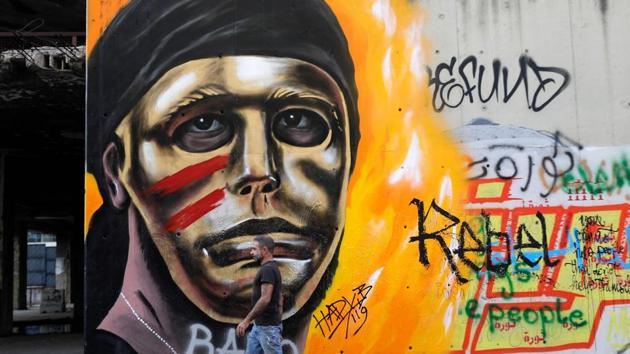
It is since October 17, the chantingof tens of thousands of Lebanese denouncing, the political elite has shaken the normally staid district around two Beirut squares -- Martyrs' and Riad Al Solh.As Lebanon's uprising enters its second month, graffiti has enveloped thecapital's posh downtown. Artists want to preserve the paintings and also considerthem as a memory of uprising and revolution.
Updated on: Nov 18, 2019 10:29 AM IST


Share via


Copy link

1/9
 View Photos in a new improved layout
Updated on Nov 18, 2019 10:29 AM
Street artist Hady Beydoun walks by his graffiti depicting the face of revolution in central Beirut. A majestic phoenix spreads its wings as Hayat Nazer adds a splash of colour to a Beirut wall. As Lebanon’s uprising enters its second month, graffiti has enveloped the capital’s posh downtown. Since October 17, the chanting of tens of thousands of Lebanese denouncing the political elite have shaken the normally staid district around two Beirut squares -- Martyrs’ and Riad Al Solh. (JOSEPH EID / AFP)
2/9
 View Photos in a new improved layout
Updated on Nov 18, 2019 10:29 AM
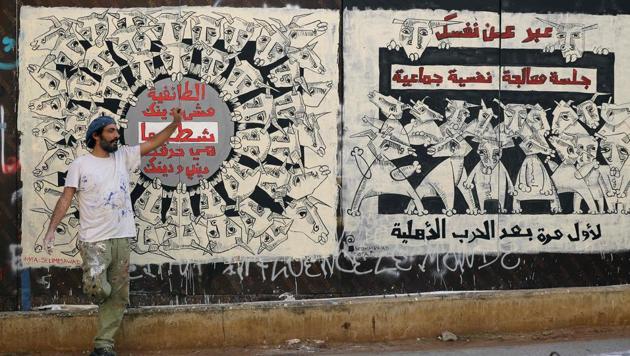
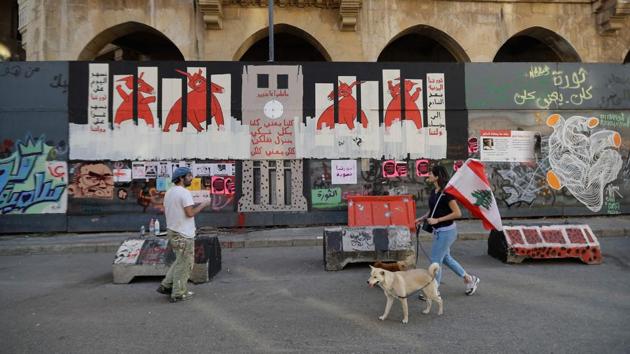
Lebanese artist and rights activist Selim Mawad seen in front of his mural paintings in central Beirut. “This city has become an icon of capitalism,” said Mawad. He jumped onto a plastic barricade to retouch a mural of stylised bulls alongside the slogan: “What is the future of our revolution?” (JOSEPH EID / AFP)
3/9
 View Photos in a new improved layout
Updated on Nov 18, 2019 10:29 AM
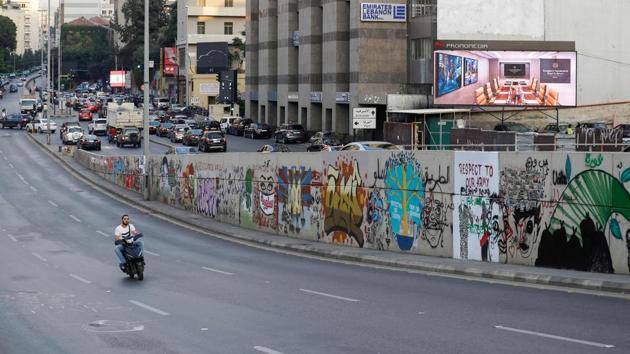
A man rides his motorcycle past a wall covered with graffitis. Nazer, a 32-year-old artist, is one of the protesters who would not normally frequent the area, famed for luxury boutiques and elegant buildings. But the unprecedented protests also offered her a first experience with street art. “I decided to go out in the street to be inspired by the people,” she said during a cigarette break, standing next to pots of red, green and yellow paint. (JOSEPH EID / AFP)
4/9
 View Photos in a new improved layout
Updated on Nov 18, 2019 10:29 AM
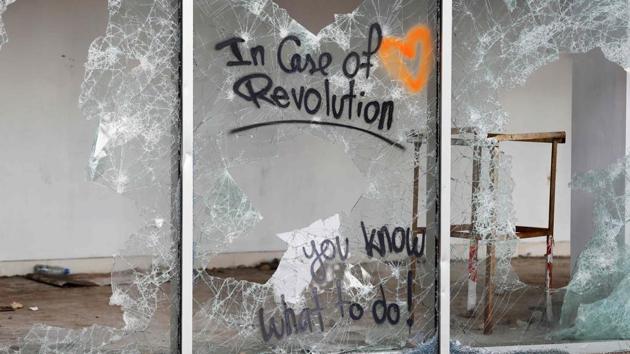
A graffiti is sprayed on a smashed glass facade. A ballerina pirouettes under shells, accompanied by the slogan “Rise up”. Further down, a big purple hand flashes a V for victory. On nearby buildings, various causes are championed with spray-painted and stencilled slogans: “Our revolution is feminist”; “LGBT rights, love is not a crime”; and “We will burn your palaces”. (JOSEPH EID / AFP)
5/9
 View Photos in a new improved layout
Updated on Nov 18, 2019 10:29 AM
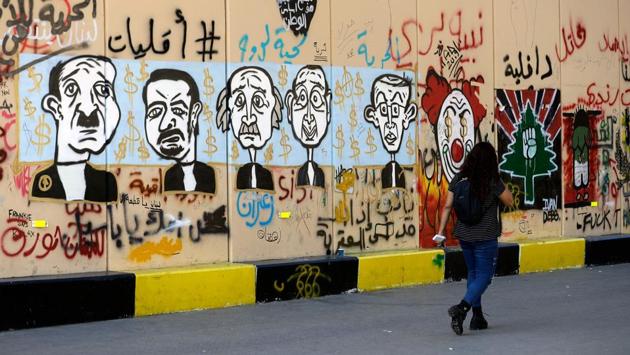
The long concrete barrier Nazer was painting protects a United Nations building, but has been named the “wall of the revolution” for the graffiti adorning it. Political leaders are lampooned in caricature, including outgoing Prime Minister Saad Hariri, longstanding parliament speaker Nabih Berri, and central bank governor Riad Salameh. The contrast is striking compared with the nearby opulence of a district that was controversially rebuilt after being ravaged during the 1975-1990 civil war. (JOSEPH EID / AFP)
6/9
 View Photos in a new improved layout
Updated on Nov 18, 2019 10:29 AM
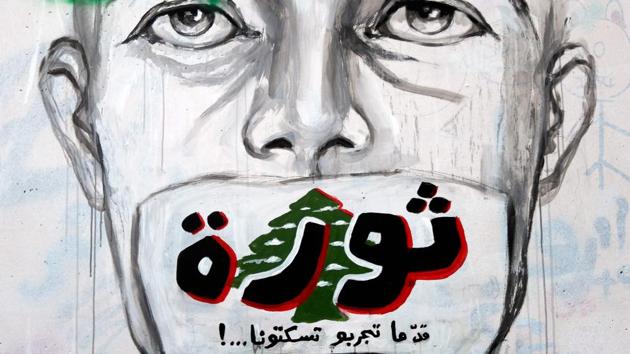
A graffiti reading "Revolution...even if you try to silence us" is sprayed on a wall in central Beirut. Lebanon’s uprising -- like protests elsewhere in the Middle East and Latin America -- is both political and social. “It’s also about personal liberation, which is the foundation of a revolution,” Mawad said. He sees symbolism in graffiti. (JOSEPH EID / AFP)
7/9
 View Photos in a new improved layout
Updated on Nov 18, 2019 10:29 AM
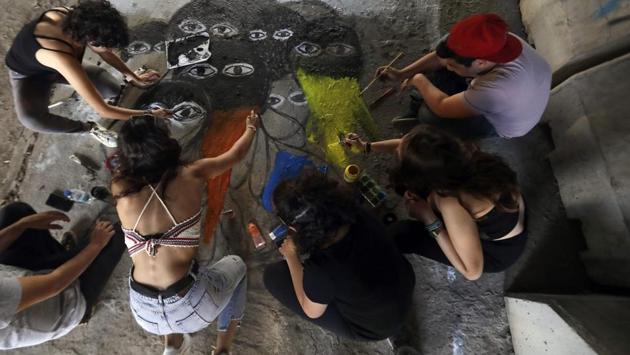
Lebanese anti-government protesters paint a graffiti on the ground in central Beirut. “People say, ‘I can’t touch this building, I can’t live there, so I’ll leave my mark on it’,” the paint-spattered artist said. One day, assailants attacked the protesters in the area where Mawad was painting his mural. He was beaten and his bicycle stolen.“Give back the stolen money -- and don’t forget the bike,” he later painted next to a picture of a bull brandishing a red bicycle. (JOSEPH EID / AFP)
8/9
 View Photos in a new improved layout
Updated on Nov 18, 2019 10:29 AM
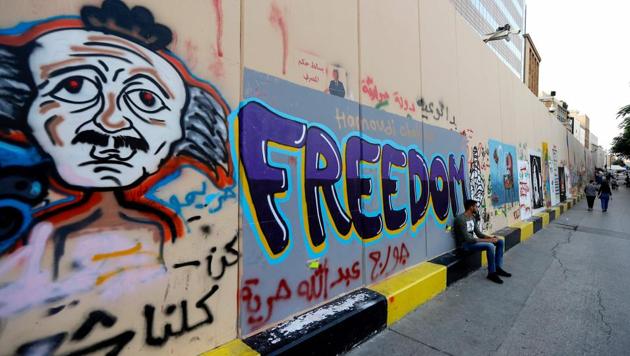
A man sits under a wall covered with graffitis. Artists hope that these paintings will be preserved and it will be a memory of an uprising. (JOSEPH EID / AFP)
9/9
 View Photos in a new improved layout
Updated on Nov 18, 2019 10:29 AM


