

 E-Paper


Photos: Total solar eclipse stuns skywatchers over South America
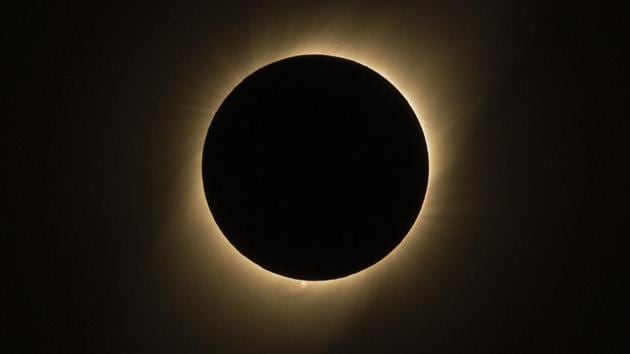
Solar eclipses happen when the Sun, the Moon and Earth line up, allowing the Moon to cast its shadow on Earth. A rare total solar eclipse plunged a vast swath of Latin America's southern cone into darkness on Tuesday, briefly turning day into night in Chile and Argentina. Thousands of people cheered and clapped the moment when the disc of the Moon closed over the Sun and blocked it out completely for more than two and a half minutes.
1 / 7
 View Photos in a new improved layout
Updated on Jul 04, 2019 10:04 am IST
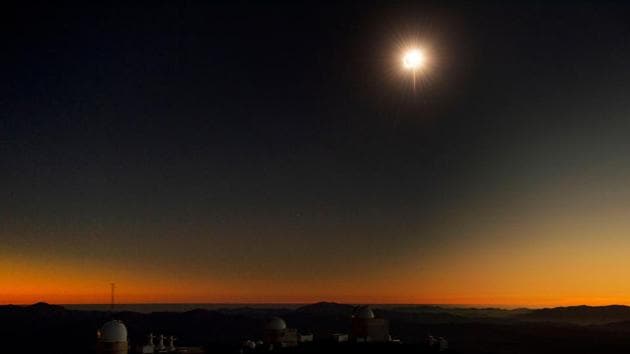
A rare total solar eclipse plunged a vast swath of Latin America’s southern cone into darkness on Tuesday, briefly turning day into night and enthralling huge crowds in much of Chile and Argentina. (Martin Bernetti / AFP)
2 / 7
 View Photos in a new improved layout
Updated on Jul 04, 2019 10:04 am IST
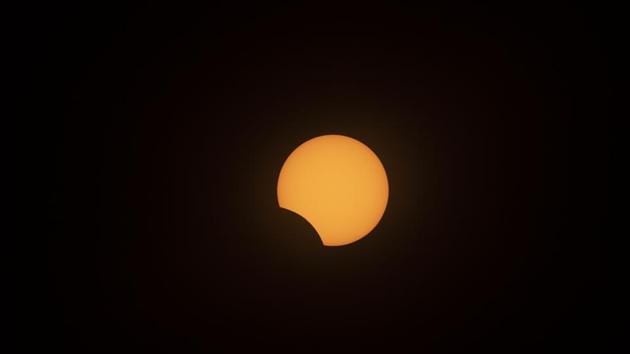
Total solar eclipses are rare, but what was even rarer about this event is that it occurred directly over an area of the Earth most prepared to witness and study the heavenly bodies. (Martin Bernetti / AFP)
3 / 7
 View Photos in a new improved layout
Updated on Jul 04, 2019 10:04 am IST
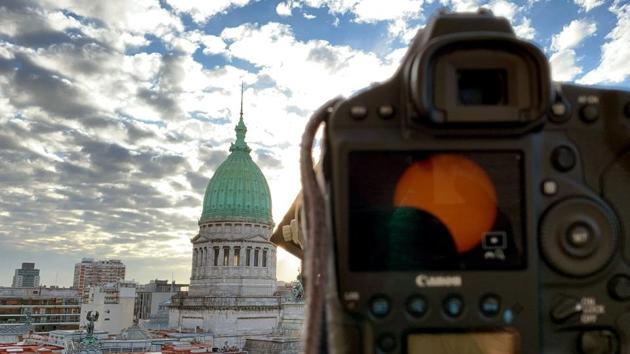
View of the Congress during the solar eclipse, in Congreso neighbourhood in the city of Buenos Aires, Argentina. People massed to look into the sky in parks and on tourist trails in the western Cuyo wine producing region, which had the country’s longest exposure to the eclipse. However little could be seen in the Argentine capital Buenos Aires, where overcast weather blocked the view. (Alejandro Pagni / AFP)
4 / 7
 View Photos in a new improved layout
Updated on Jul 04, 2019 10:04 am IST
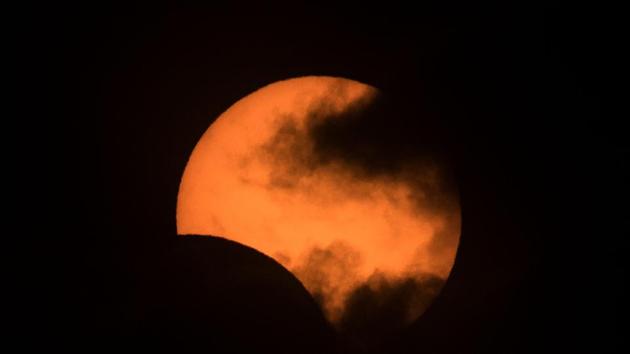
Chile’s Coquimbo region near the Atacama desert festooned with some of the planet’s most powerful telescopes was situated directly on the eclipse’s 100-mile-wide “path of totality.” “The truth is that even if one knows what’s going on, it is shocking the minute that the shadow of darkness begins to come and that silence begins,” said astronomer Sonia Duffau. (Alejandro Pagni / AFP)
5 / 7
 View Photos in a new improved layout
Updated on Jul 04, 2019 10:04 am IST
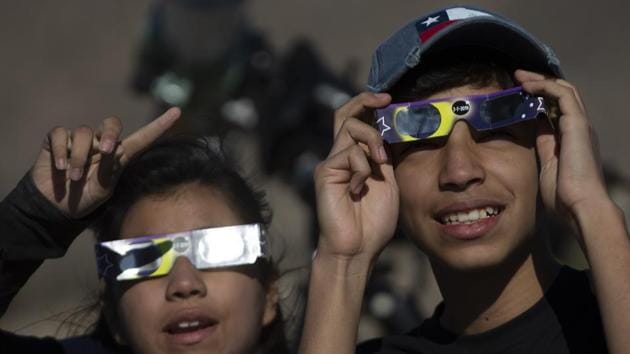
Children watch the solar eclipse from Puclaro, Coquimbo Region, Chile. President Sebastian Pinera said Chile was “the capital of the world in terms of astronomy, we are the eyes and the senses of humanity, being able to look, observe and study the stars and the Universe.” (Claudio Reyes / AFP)
6 / 7
 View Photos in a new improved layout
Updated on Jul 04, 2019 10:04 am IST
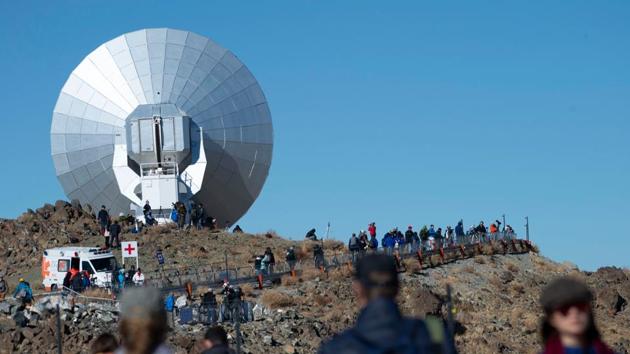
The eclipse began at 13:01 (17:01 GMT) in the Pacific Ocean, and a 150 kilometers wide band of total darkness reached Chile’s coast at 4:38 pm (20:38 GMT), before crossing into southeastern Argentina and into the wastes of the South Atlantic. The observatory and its fleet of powerful telescopes live streamed the event and opened the site to the public, hosting school tours along with talks and workshops. (Martin Bernetti / AFP)
7 / 7
 View Photos in a new improved layout
Updated on Jul 04, 2019 10:04 am IST