
 E-Paper



Photos: Women sushi chefs break the norm in Japan
In Japan, sushi chefs have been known to repeat claims that women’s hands are too warm to keep raw fish fresh, or that menstruation alters their sense of taste. Others say the job is unsuitable for women because of the long and late hours. To shatter such myths, a growing number of women in the country are training and working as sushi chefs in some of most revered restaurants. Although there is no official data on the gender breakdown of sushi chefs in Japan, it is estimated that women make up "less than 10 percent."
Updated on: Apr 9, 2020 9:11 PM IST


Share via


Copy link

1/8
 View Photos in a new improved layout
Updated on Apr 9, 2020 9:11 PM
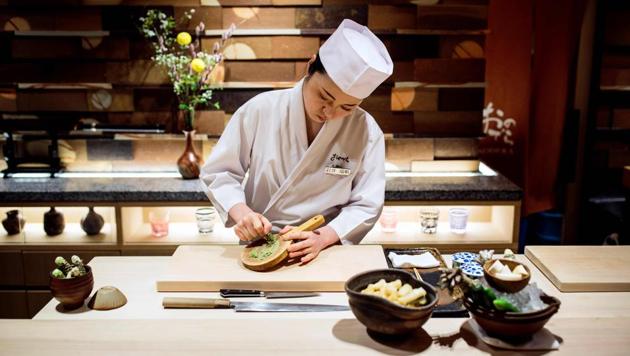
Mizuho Iwai, an apprentice at Sushi Ginza Onodera restaurant, grinds wasabi at the restaurant in Tokyo. A growing number of women in Japan are determined to shatter the opinions of some who believe women can't be sushi chefs. (Behrouz MEHRI / AFP)
2/8
 View Photos in a new improved layout
Updated on Apr 9, 2020 9:11 PM
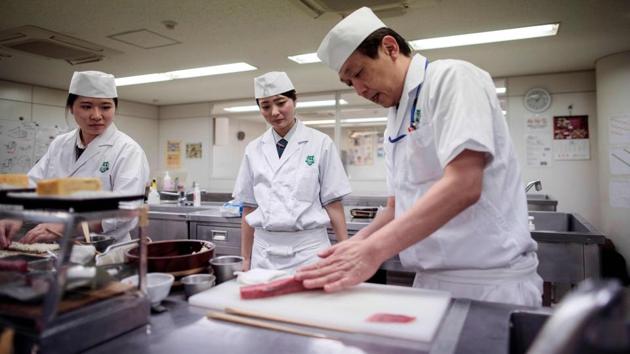
Fumimasa Murakami (R), a teacher at the Tokyo Sushi Academy, shows his student Yuki Noguchi (C) how to cut the fish for sushi. Japanese kitchens have long been dominated by men, more so than Italian or French cuisine, according to Murakami. (Behrouz MEHRI / AFP)
3/8
 View Photos in a new improved layout
Updated on Apr 9, 2020 9:11 PM
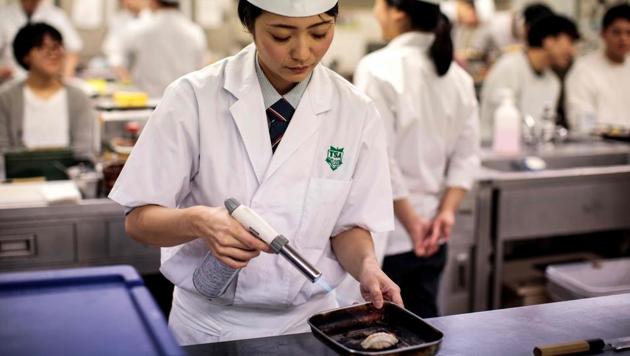
Yuki Noguchi, a student at the Tokyo Sushi Academy, uses a small blowtorch to flame-grill a fish to make sushi. The work can be gruelling and requires years to master. Apprentices must learn everything from the names of different types of fish to removing scales and slicing properly. “In Japan, it is still strongly believed that it is women who take care of family. But sushi chefs work in the evening so it’s difficult for women,” said Noguchi. (Behrouz MEHRI / AFP)
4/8
 View Photos in a new improved layout
Updated on Apr 9, 2020 9:11 PM
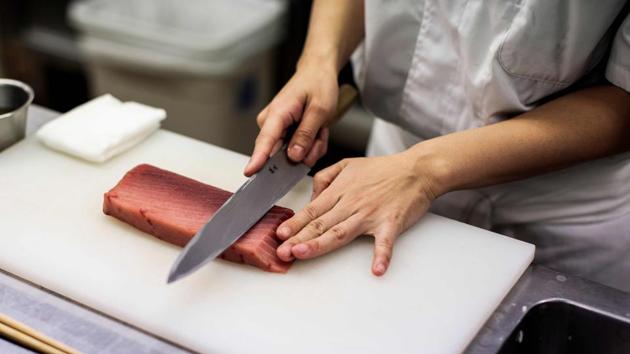
Yuki Noguchi, a student at Tokyo Sushi Academy, cuts a fish fillet to make sushi. Sushi chefs have been known to repeat claims that women’s hands are too warm to keep raw fish fresh, or that their periods alter their sense of taste. Others say the job is unsuitable for women because of the long and late hours. (Behrouz MEHRI / AFP)
5/8
 View Photos in a new improved layout
Updated on Apr 9, 2020 9:11 PM
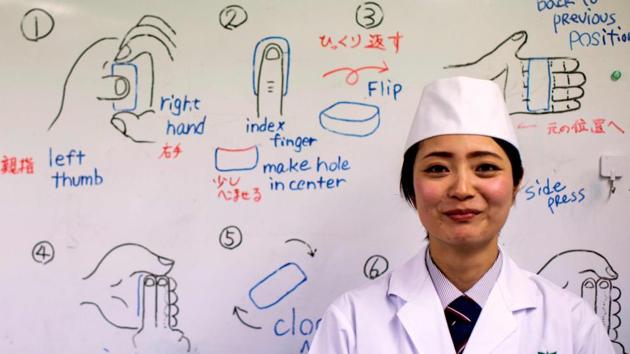
Yuki Noguchi, a student at the Tokyo Sushi Academy, poses in front of a white board bearing technics of making sushi. (Behrouz MEHRI / AFP)
6/8
 View Photos in a new improved layout
Updated on Apr 9, 2020 9:11 PM
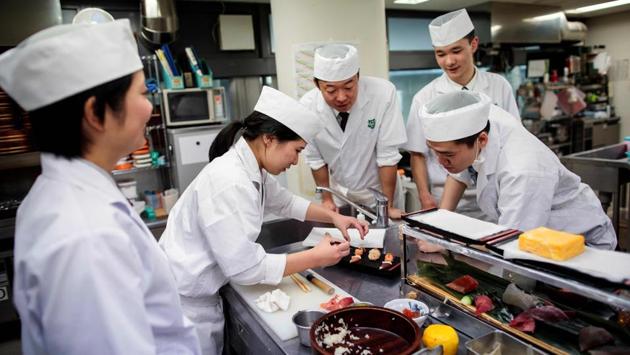
Fumimasa Murakami (C), a teacher at the Tokyo Sushi Academy, watches his students decorating a sushi set .“I think there are a few (women) chefs but it’s rare. But I wanted to challenge things because of that,” Mizuho Iwai, a trainee told AFP. (Behrouz MEHRI / AFP)
7/8
 View Photos in a new improved layout
Updated on Apr 9, 2020 9:11 PM
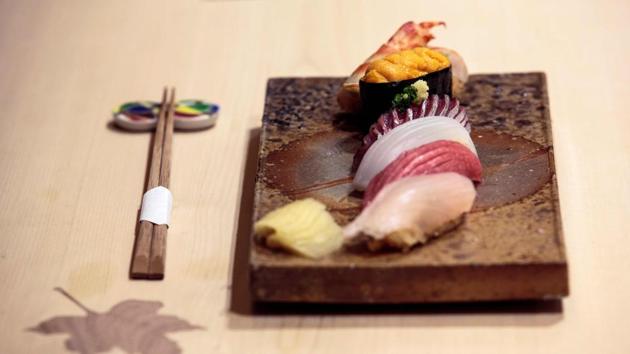
A sushi set at the Sushi Ginza Onodera restaurant in Tokyo. Fuka Sano, the other female apprentice at Onodera, said she didn’t think too much about the lack of women in the field when she decided to become a sushi chef. “I guess women think a sushi chef is a man’s job because there are so few women,” she said. (Behrouz MEHRI / AFP)
8/8
 View Photos in a new improved layout
Updated on Apr 9, 2020 9:11 PM


